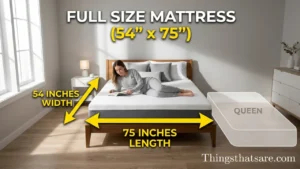
Most people pick a mattress by price — not by measurement. That’s the mistake that leads to cramped bedrooms, uncomfortable nights, and returns.
This guide gives you every full size mattress measurement you need — exact dimensions, room fit rules, comparison data, and answers competitors rarely cover. Read this before you buy anything.
⚡ Quick Answer
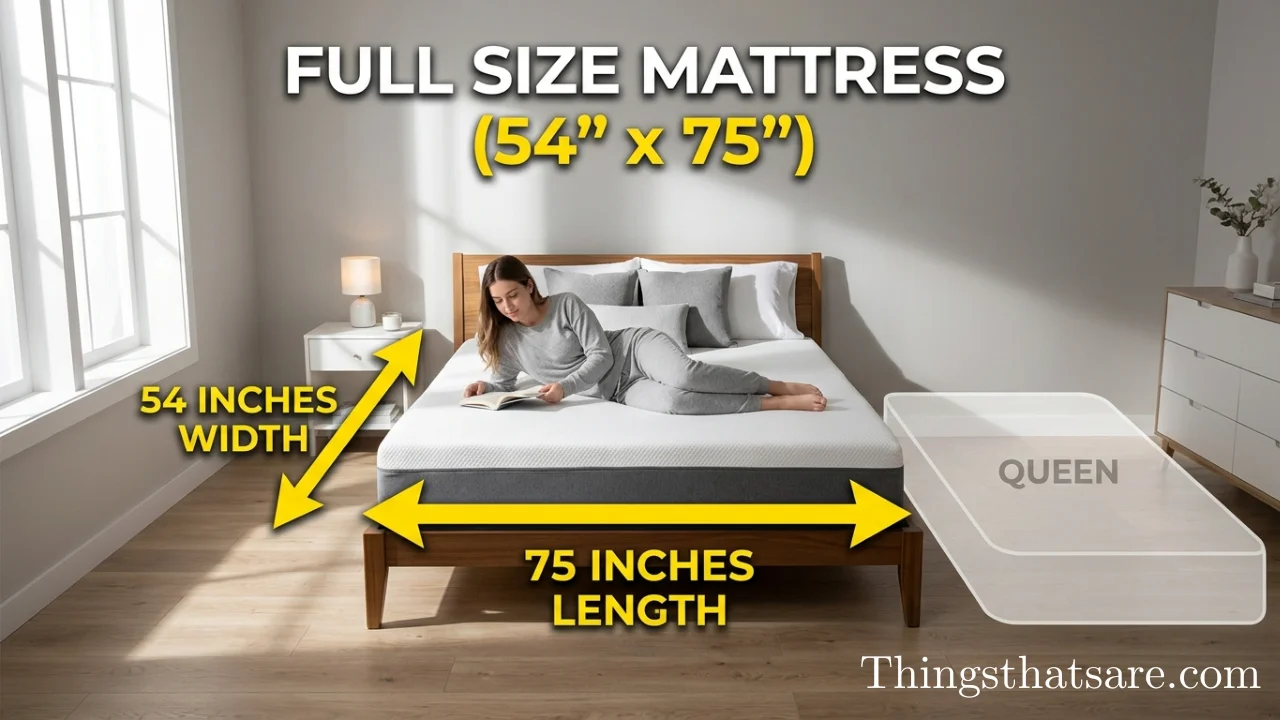
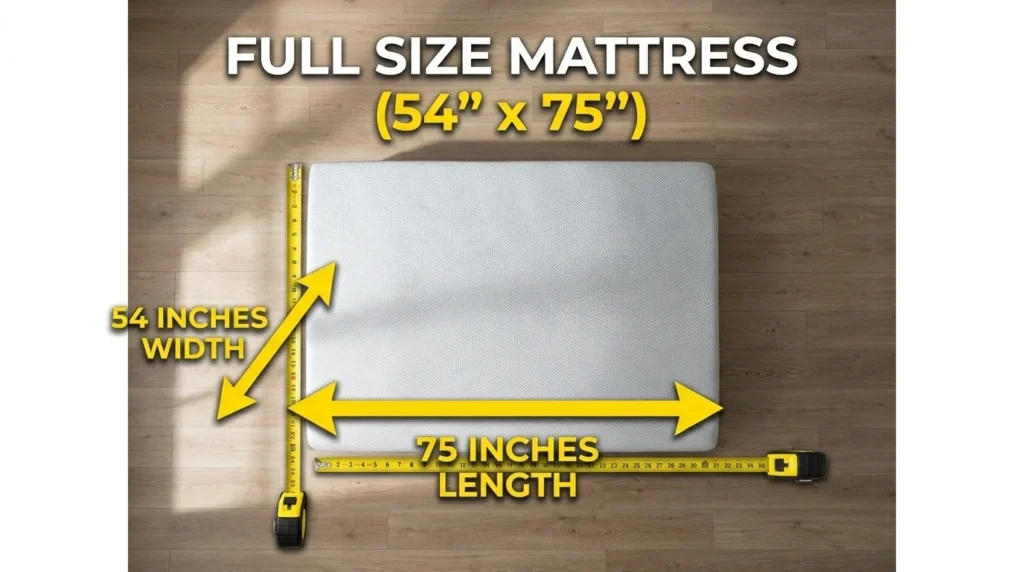
A standard full size mattress measures 54 inches wide and 75 inches long (137 cm × 191 cm). It is also called a double mattress. Surface area equals 4,050 square inches — giving each couple just ~27 inches of personal space, about the width of a baby crib.
54″
Width (137 cm)
75″
Length (191 cm)
27″
Per-person space (couple)
~6–14″
Thickness range
Exact Full Size Mattress Dimensions — All Measurements You Need
The full mattress dimensions are straightforward, but the details matter. Here is every number you will need for planning your bedroom, buying bedding, or choosing a bed frame.
Standard Full Mattress Width
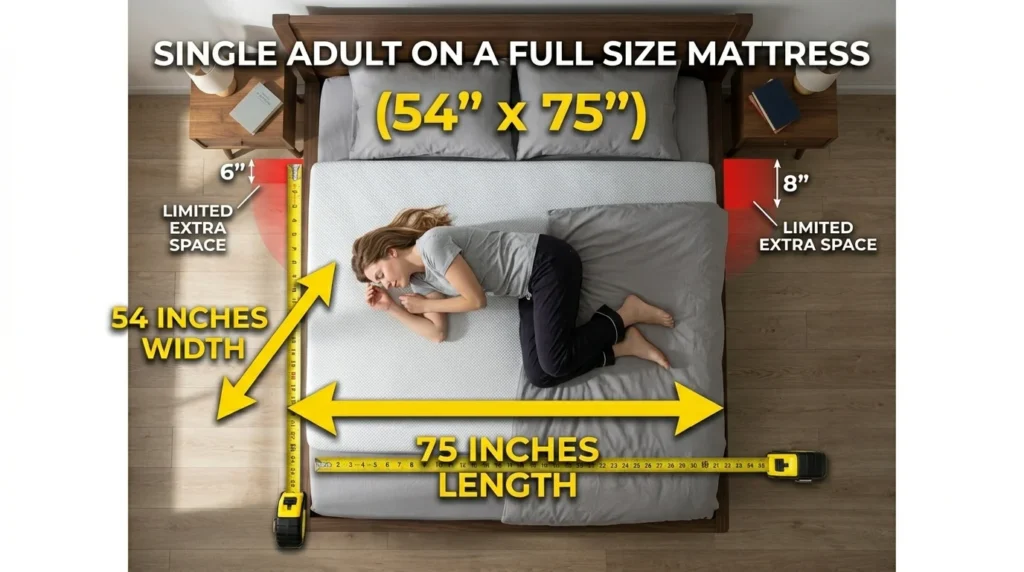
A full size bed width is 54 inches, or 137 centimeters. That is exactly 16 inches wider than a twin and 6 inches narrower than a queen. The extra width over a twin makes a big difference for a single adult — but it is still tight for two.
Standard Full Mattress Length
The full bed length is 75 inches, or 191 centimeters. If you are taller than 6 feet, your feet may hang off the edge. This is a real limitation the Better Sleep Council and other sleep authorities consistently flag for tall sleepers.
Full Mattress Thickness
Mattress thickness ranges from 6 inches (low-profile, ideal for bunk beds or platform beds) all the way to 14 inches (high-profile, plush comfort layers). Medium-profile mattresses — between 8 and 12 inches — are the most popular choice for full size beds in American homes.
Thickness affects more than comfort. It determines what sheet pocket depth you need. A mattress over 12 inches requires deep-pocket fitted sheets — usually 15 to 18 inches deep — to avoid popping off during sleep.
Full Mattress Surface Area
The total sleeping surface area is 4,050 square inches. For context, a queen gives you 4,800 square inches and a king gives 6,080. That 750-square-inch gap between full and queen is larger than most people expect.
| Measurement | Inches | Centimeters |
|---|---|---|
| Width | 54 in | 137 cm |
| Length | 75 in | 191 cm |
| Low-Profile Thickness | 6 in | 15 cm |
| Medium-Profile Thickness | 8–12 in | 20–30 cm |
| High-Profile Thickness | 12–14 in | 30–35 cm |
| Surface Area | 4,050 sq inches | |
Full Size vs Other Mattress Sizes — Complete Comparison Chart
Knowing how a full size bed compares to other mattress sizes helps you decide with confidence. This is the clearest size-to-size breakdown you will find.
| Mattress Size | Width | Length | Surface Area | Best For |
|---|---|---|---|---|
| Crib / Toddler | 27″ | 52″ | 1,404 sq in | Infants & toddlers |
| Twin (Single) | 38″ | 75″ | 2,850 sq in | Kids, bunk beds, daybeds |
| Twin XL | 38″ | 80″ | 3,040 sq in | Tall teens, college dorms |
| Full / Double | 54″ | 75″ | 4,050 sq in | Single adults, guest rooms, teens |
| Full XL | 54″ | 80″ | 4,320 sq in | Tall single sleepers |
| Queen | 60″ | 80″ | 4,800 sq in | Couples, spacious singles |
| King | 76″ | 80″ | 6,080 sq in | Couples wanting max space |
| California King | 72″ | 84″ | 6,048 sq in | Very tall sleepers, large rooms |
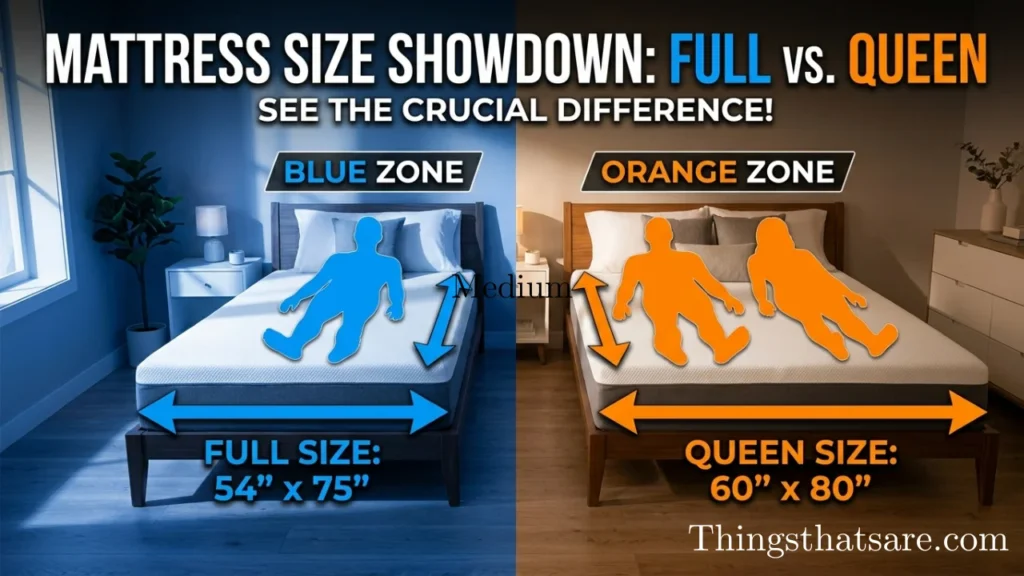
Key insight: The Better Sleep Council notes that a couple sharing a full mattress each gets only 27 inches of personal sleep space — nearly identical to a baby crib. A queen mattress raises that to 30 inches per person. A king mattress gives each person 38 inches — the same as a twin bed all to themselves.
Must Visit: Buttload Measurement Explained: How Much Is a Buttload Really?
Full vs Queen: The Most Searched Comparison
The full vs queen mattress debate comes down to two things: budget and space. A queen is 6 inches wider and 5 inches longer. That difference feels small on paper but enormous in practice — especially for couples. If your bedroom allows it, most sleep experts recommend jumping to a queen rather than settling for a full.
Full XL: The Variation Most Blogs Miss
A Full XL mattress measures 54 inches wide × 80 inches long. It adds 5 extra inches of length over the standard full. This is the ideal solution for a tall single sleeper who wants more legroom without the wider footprint of a queen. It is harder to find in stores but widely available online.
Full Mattress Room Fit — Minimum Room Size & Bedroom Planning
The mattress dimensions are only half the story. The other half is how your full size bed fits in your actual bedroom.
Minimum Room Size for a Full Bed
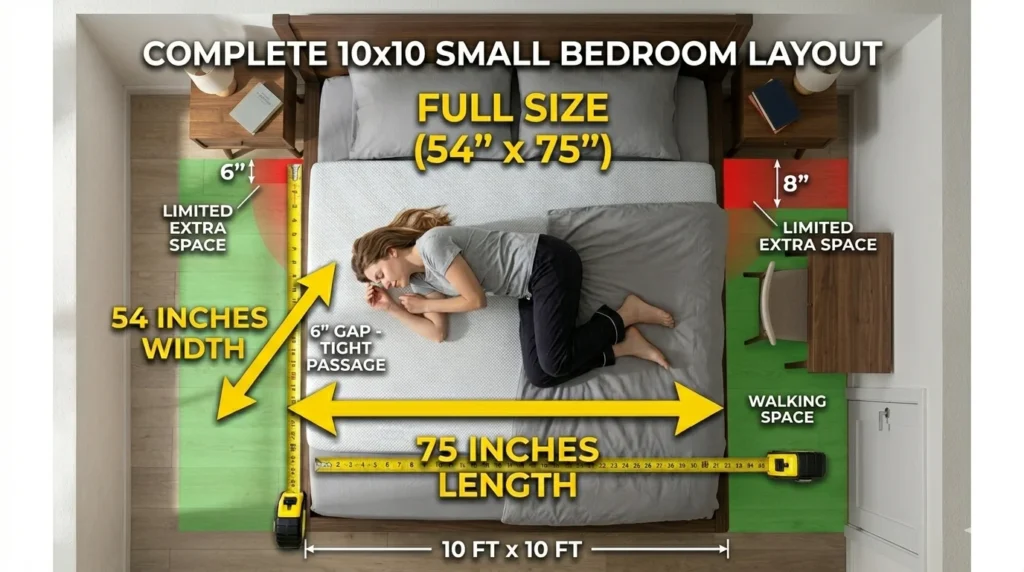
The recommended minimum room size for a full mattress is 9 feet × 10 feet for basic placement. For comfortable movement and furniture access, aim for at least 10 feet × 10 feet.
You need at least 2 feet of clearance on each walkable side of the bed. Less than that and the room feels cluttered and movement becomes awkward every single morning.
What Adds to Your Bed’s Real Footprint
Your full mattress is 54 × 75 inches — but your bed frame adds to that number. Here is what changes the real footprint:
- Bed frame rails typically add 2–6 inches beyond the mattress on each side
- Upholstered headboards can add 4–8 inches of depth from the wall
- Footboard designs may add 3–5 inches at the foot of the bed
- Thick comforters & quilts drape over the sides, making the bed look even wider
- Nightstands need at least 18–24 inches of width alongside the bed
Always measure your room before you buy. Measure the mattress dimensions plus frame, then mark the floor with tape. Walk around it. That is the only way to know if the fit is truly right.
Who Actually Fits Best on a Full Mattress?
🛏
Single Adults
54 inches gives a single sleeper plenty of room to sprawl — especially in studio or one-bedroom apartments.
🧑🎓
Teenagers
Parents increasingly choose full over twin for teens — more room to grow into without overwhelming a smaller bedroom.
🏠
Guest Rooms
A full mattress accommodates most adult guests comfortably while leaving floor space for a dresser and luggage.
💑
Couples (Tight Fit)
Technically fits two, but only 27 inches per person. Most couples should seriously consider a queen.
Full Mattress Fit for Special Needs — What Most Guides Don’t Tell You
Competitor blogs cover dimensions but skip the most practical questions — the ones real people are searching for. Here are the facts.
Best Mattress Height for Seniors
According to occupational therapists, the ideal bed height for seniors is 20 to 23 inches from the floor — that includes mattress plus frame. This height allows easy sit-to-stand movement without strain on the hips and knees.
A full mattress with a 10-inch medium-profile thickness placed on a standard bed frame (typically 7–14 inches high) usually lands within this ideal range. Adjustable bases are a strong option for seniors who need customized height and head/foot elevation.
Most Comfortable Bed Height for Most Adults
For general adult comfort, most sleep professionals recommend a bed height of 16 to 24 inches from floor to mattress top. The knee height rule is simple: when you sit on the edge of the bed, your feet should rest flat on the floor and your knees should bend at roughly a 90-degree angle.
Best Mattress Type for Scoliosis
For people with scoliosis, spinal alignment during sleep is critical. A medium-firm hybrid mattress or a memory foam mattress that contours to spinal curves is generally recommended. The mattress should prevent the spine from sinking too deeply or remaining on too rigid a surface.
A full size mattress works well for a single scoliosis sleeper because it allows freedom of movement without the wide gap of a larger bed causing alignment issues when rolling. Always pair a suitable mattress type with an adjustable base for the best postural support.
Best Mattress for Osteoporosis
People with osteoporosis — a condition affecting over 10 million Americans according to the NIH — need a mattress that provides firm support without pressure point pain. A medium to firm innerspring or hybrid mattress is typically best.
Soft mattresses can create poor spinal alignment and increase fall risk when getting out of bed. A full size mattress at the right height (20–23 inches total) reduces the risk of falls at the bed’s edge.
Best Bed Type for Older Adults
For older adults, platform beds with low frames combined with medium-thickness mattresses (8–10 inches) often work best — provided the final height reaches that 20–23 inch range. Adjustable bases are highly recommended by geriatric care specialists because they allow elevated head and leg positions that reduce acid reflux, improve circulation, and ease joint pain.
Avoid very high platform beds or very thick mattresses that push total bed height above 25 inches for elderly sleepers.
Full Size Mattress Variations — Including the One Most Guides Skip
Beyond the standard full, there are two important full mattress size variations worth understanding before you finalize your purchase.
Full XL Dimensions (54″ × 80″)
The Full XL is 5 inches longer than the standard full — measuring 54 inches wide by 80 inches long. It matches the length of a queen and king mattress. Perfect for anyone over 6 feet tall who sleeps alone and has a narrower bedroom. Not all retailers stock it, so check online availability first.
Three-Quarter Bed (48″ × 75″)
The three-quarter bed measures 48 inches wide and 75 inches long. It sits between a twin and a full. This size is rare today — mostly found in antique bedroom sets or older homes. Finding bedding for this size is genuinely difficult. If you have one, custom sheets or full-size sheets tucked under are your best option.
Bottom line: Unless you are working with a vintage frame, stick with standard full or Full XL. Both have widely available bedding and accessories.
Must Visit: Precision Counter Measurement: How to Count Accurately (Tools, Methods & Pro Tips)
Frequently Asked Questions
Is a full bed 53 or 54 inches wide?
A full size mattress is 54 inches wide — not 53. The Better Sleep Council and all major mattress manufacturers confirm this standard measurement. Some older sources cited 53 inches due to rounding, but the correct and current industry standard is 54 inches (137 cm). Always verify with the manufacturer’s spec sheet before ordering.
What type of mattress is good for scoliosis?
For scoliosis, a medium-firm hybrid or memory foam mattress is generally best. It should conform to the natural curvature of your spine without letting your hips sink too deeply. Side sleepers with scoliosis benefit from slightly softer surfaces.
What mattress is best for osteoporosis?
People with osteoporosis typically sleep best on a medium to firm innerspring or hybrid mattress. These provide consistent support without pressure points that can cause pain on fragile bones. Avoid pillow-top mattresses that are extremely soft — they can cause spinal misalignment and increase fall risk when rising.
What is the best bed height for seniors?
The ideal bed height for seniors is 20 to 23 inches from the floor to the top of the mattress. This range makes it easy to sit down and stand up without excessive strain on joints. Occupational therapists recommend that a senior’s feet should rest flat on the floor when seated on the bed’s edge, with knees at approximately a 90-degree angle.
What is the most comfortable height for a bed?
For most adults, the most comfortable bed height is 16 to 24 inches from the floor. The easiest test: sit on the edge of the bed. Your feet should lie flat on the floor and your knees should form roughly a right angle. Too low and getting up is difficult. Too high and there is a fall risk, especially for older adults and children.
What type of bed is best for older people?
For older adults, an adjustable base paired with a medium-firm hybrid or latex mattress is widely recommended by geriatric care experts. Adjustable bases allow head and leg elevation, which reduces acid reflux, improves circulation, and eases joint pain. The total bed height should stay between 20–23 inches.
Conclusion
A full size mattress measures 54 × 75 inches. It works well for single adults, teenagers, and guest rooms — but it is tight for couples and short for anyone over 6 feet. The Full XL (54 × 80 inches) solves the length problem without adding width.
Always factor in your bed frame, room clearance, mattress thickness, and who is sleeping on it. For seniors or anyone with health conditions like scoliosis or osteoporosis, the type and height of mattress matters as much as the size. Measure twice, buy once.