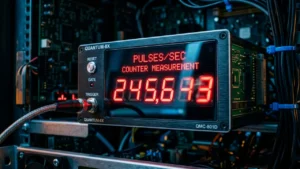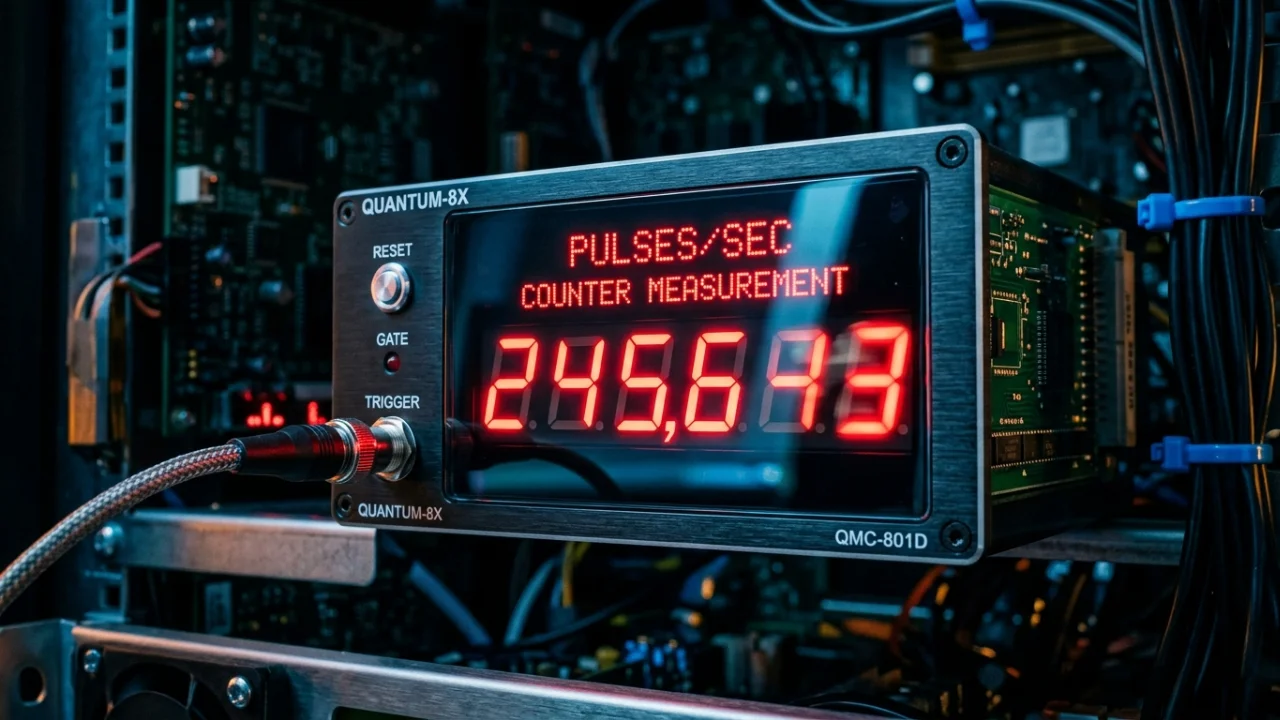
Counting wrong costs money. In manufacturing, a single miscounted meter of cable or fabric can waste hundreds of dollars per shift. That’s exactly why precision counter measurement exists — to eliminate guesswork and replace it with reliable, repeatable data.
Whether you’re running a textile mill in Texas or a radiation lab in California, the right counter measurement device makes the difference between quality output and costly error.
What Is Counter Measurement? (Definition & Core Concepts)
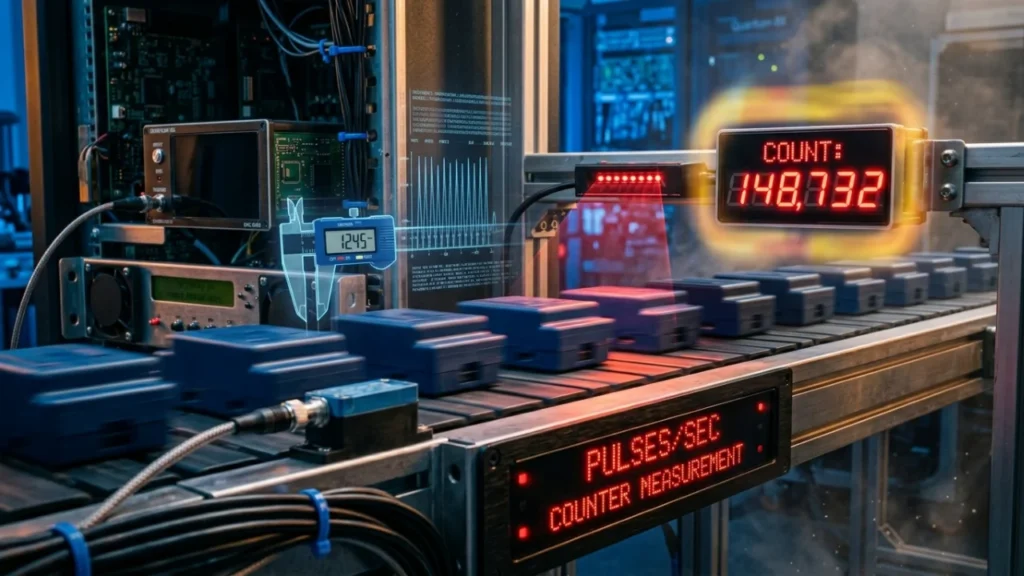
Counter measurement is the process of detecting, recording, and displaying specific quantities — such as length, distance, events, revolutions, or radiation — using a mechanical, electronic, or digital device.
It’s not just about having a counter. It’s about using it correctly, in the right context, with the right calibration.
The key distinction most people miss: A “counter” is the device. “Counter measurement” is the discipline — the science of counting accurately under real-world conditions.
What does a counter actually measure?
Counters track a surprisingly wide range of parameters:
- Material length — fabric, cable, wire, paper, plastic film
- Distance traveled — vehicles, conveyor belts, robotic arms
- Rotational events — shaft RPM, revolution counting
- Ionizing radiation — alpha particles, beta particles, gamma rays
- Biological cells — blood cell differential counting in labs
- Electrical pulses — frequency measurement in signal processing
- Fluid volume — gas and water meters in utility systems
This directly connects to the 7 SI base measurements — the international standard units recognized globally. Counter measurement primarily operates within length (meter), time (second), and electric current (ampere) — three of the seven fundamental quantities.
📌 According to the International System of Units (SI), the 7 base quantities are: length, mass, time, electric current, thermodynamic temperature, amount of substance, and luminous intensity. Most industrial counters operate within at least two of these domains simultaneously.
Types of Counter Measurement Devices — Mechanical, Digital & Specialized
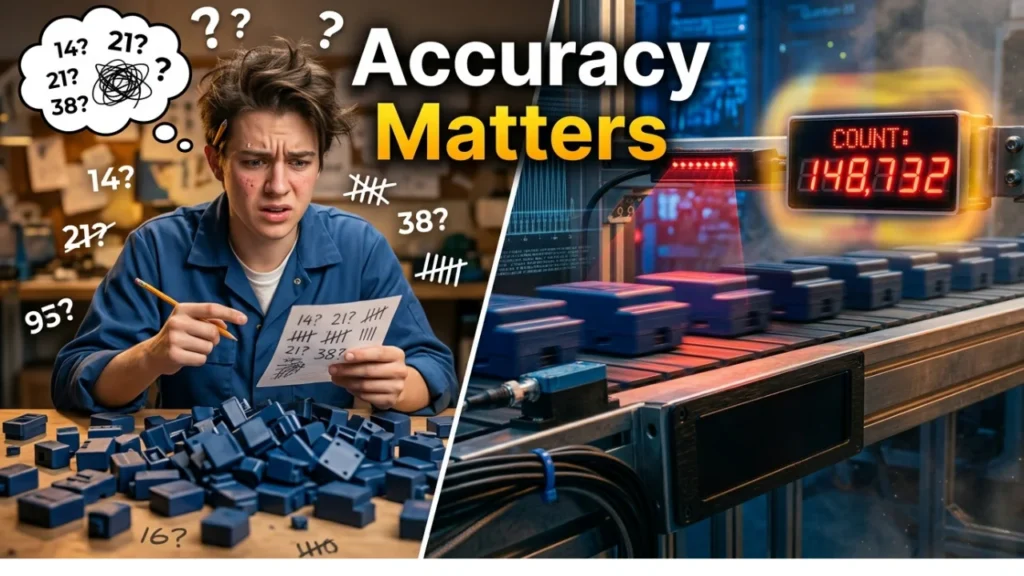
Not all counters are built the same. The type of counter measurement instrument you choose depends on your application, environment, and required accuracy.
Mechanical Counter Measurement Devices
Mechanical counters are the oldest and most rugged form of counter measurement. They use physical components — gears, toothed wheels, ratchet levers, and numbered rollers — to track movement.
A typical roller-type mechanical meter counter has:
- Counting range: 0 to 99,999 (some go to 99,999.9)
- Max counting speed: 200–360 RPM
- Transmission ratio: 1:3 (every 3 shaft rotations = 1 counter increment)
- Roller diameter: 106–107 mm
- Power requirement: None — fully mechanical
Where they shine: Textile looms, fabric rolling machines, cable spooling, field distance measurement.
The real advantage? No electricity needed. They work in high-heat, high-vibration, and chemical-exposure environments where electronics fail. That’s a gap most competitors don’t even mention.
Digital & Electronic Counter Measurement Devices
Electronic counter measurement uses sensors to detect events and microprocessors to process the data.
Here’s how it works in plain terms:
- An optical sensor or magnetic sensor detects the passing material or rotating shaft
- The signal goes through an analog-to-digital converter (ADC)
- A microprocessor calculates the count and logs the data
- An LCD or LED display shows the real-time measurement
- Advanced units transmit data remotely for real-time monitoring
Key specs on modern electronic counters:
- Counting range: Up to 999,999
- Counting speed: Up to 350 counts per minute
- Power: AC 220V (standard industrial supply)
- Features: Bidirectional counting, automated reset, data logging
Bidirectional counting is critical in cable winding and fabric rolling — where material moves both forward and reverse. A standard one-way counter would under-measure in these scenarios.
Specialized Counter Measurement Instruments
This is where most competitor articles stop short. There are highly specialized counter measurement tools built for specific scientific and industrial domains.
Geiger-Müller Counter (Radiation Measurement)
The Geiger counter — officially the Geiger-Müller counter — is one of the most recognized precision measurement instruments in the world. Invented by Hans Geiger and Walther Müller in 1928 under the supervision of Ernest Rutherford at the University of Manchester, it detects ionizing radiation including alpha particles, beta particles, gamma rays, and X-rays.
How it works:
- The Geiger-Müller tube is filled with inert gas — typically helium, neon, or argon — at low pressure
- Ionizing radiation passes through and ionizes the gas
- This triggers the Townsend discharge effect — a rapid ionization cascade
- The resulting electrical pulse is counted and displayed as CPM (counts per minute) or CPS (counts per second)
- For radiation dose, readings are displayed in sieverts (Sv) — the SI unit for biological radiation effect
Important limitation: At very high radiation rates, the Geiger tube enters a “dead time” — a brief insensitive window where additional radiation isn’t detected. In high-dose environments, ion chamber instruments are preferred.
Blood Cell Differential Counters
Used in clinical laboratories, these counters track multiple cell types simultaneously. Models include 2-cell, 5-cell, and 8-cell differential counters — all with built-in totalizers and audible alerts. The 8-cell model, for example, handles the most complex blood panels in hematology labs.
Frequency Counters
Used in electronics and signal testing, frequency counters measure the number of oscillations per second in an electrical signal — directly relevant to telecommunications, RF engineering, and quality assurance in electronics manufacturing.
COUNTER Metrics (Digital Usage Measurement)
In the publishing and library sector, COUNTER Metrics is the global standard for measuring digital content usage. Their Code of Practice ensures that usage data from publishers, aggregators, and technology providers is credible, consistent, and comparable — serving libraries and consortia worldwide since 2002.
Quick Comparison Table — Counter Measurement Devices
| Type | Power Needed | Best Application | Accuracy | Counting Range |
|---|---|---|---|---|
| Mechanical | ❌ No | Fabric, cable, field | Moderate | Up to 99,999 |
| Electronic | ✅ Yes | High-speed industrial | High | Up to 999,999 |
| Geiger-Müller | ✅ Yes | Radiation detection | Very High | CPM / CPS |
| Tally / Hand | ❌ No | Events, people, labs | Basic | Up to 9,999 |
| Blood Cell | ✅ Yes | Clinical labs | Precision | Per cell type |
| Frequency | ✅ Yes | Signal / RF testing | Highest | Hz to GHz |
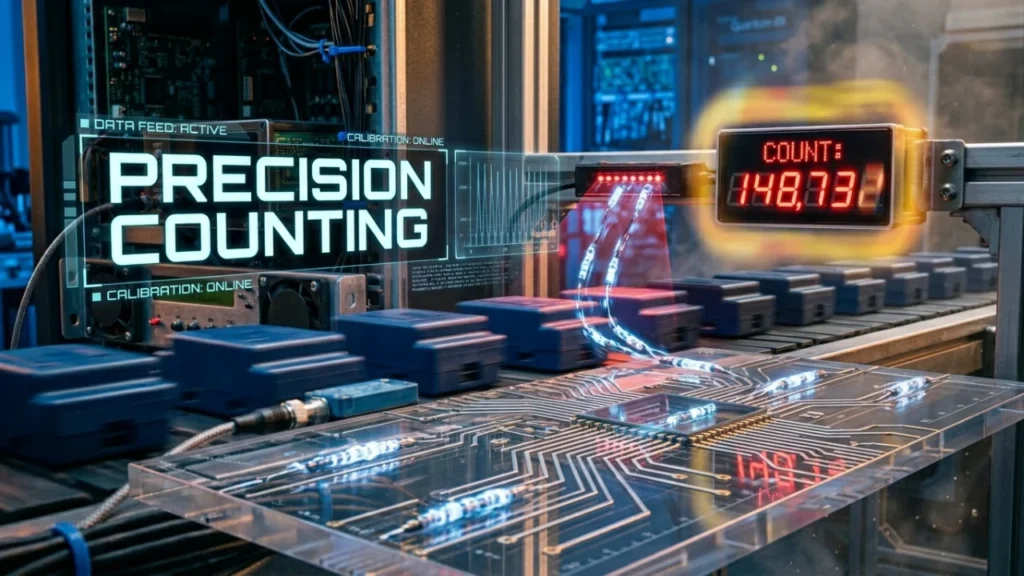
How Precision Counter Measurement Works — Step-by-Step
Understanding the working principle helps you use these tools more accurately and troubleshoot faster.
How a Mechanical Counter Measures
- Stimulus input — material movement (fabric passing a roller) or shaft rotation activates the counter
- Motion transmission — gears and toothed wheels carry the movement through the mechanism
- Increment recording — each complete cycle advances the numbered rollers by one unit
- Display readout — the analog register shows the accumulated total
- Reset — a manual reset knob zeros the counter for the next production cycle
The 1:3 transmission ratio is critical here. If your counter has this ratio, every 3 full rotations of the drive shaft = 1 unit of count. Misunderstanding this is one of the most common causes of measurement error on factory floors.
How an Electronic Counter Measures
- Sensor triggers — an optical or magnetic sensor fires each time the target passes
- ADC conversion — the analog signal is digitized instantly
- Microprocessor calculates — data is processed, averaged, and logged
- Display updates — real-time count shown on LCD or LED screen
- Data output — some units send data to PLCs or centralized monitoring systems via serial communication
Optical sensors require clear line-of-sight and a dust-free environment. Magnetic sensors need correct gap distance — typically specified by the manufacturer — to avoid false counts or missed events.
How the Geiger Counter Detects Radiation
This is something almost no competitor explains in accessible terms.
When a gamma ray or charged particle enters the Geiger-Müller tube, it collides with the inert gas atoms and knocks electrons free. This creates an ion pair. The high voltage applied to the tube (typically 400–900 volts) accelerates these ions, causing a chain reaction — the Townsend discharge — that produces a measurable electrical pulse.
That pulse is counted. The pattern of pulses, over time, gives you counts per minute (CPM) — the standard readout of most handheld Geiger counters.
For dose measurement in sieverts, the instrument uses an energy-compensated tube that accounts for the differing ionizing effects of different radiation energies. Modern units also offer serial communication to a host computer for continuous environmental monitoring.
Industrial Applications of Counter Measurement Across 7 Sectors
Precision counter measurement is deployed across more industries than most people realize.
Textile & Fabric Industry
Meter counters are built into looms, knitting machines, and fabric rolling systems to track the exact length of material produced. This directly controls packaging quantities, prevents overproduction, and maintains quality control standards. A miscount of even 0.5 meters per roll, across thousands of rolls, becomes a significant loss.
Cable & Wire Manufacturing
In cable production, electronic meter counters integrate with spooling and winding machines to ensure each roll meets exact length specs. Bidirectional counting is essential here — wire often reverses direction during winding operations.
Paper, Plastic Film & Foil
Continuous roll production requires a counter to signal when a roll has reached its target length — triggering a cut or a process change. Without accurate length measurement, roll weights and packaging specs drift out of tolerance.
Conveyor Belt & Warehouse Systems
Counters track how far items travel on a belt, triggering automated sorting, packaging, or processing actions at precise points. In large distribution centers, this eliminates the need for manual inspection at every checkpoint.
Transportation & Vehicle Odometry
Odometer-style meter counters measure vehicle distance for maintenance scheduling, fuel management, and toll calculation. Modern toll systems use distance-based counters to compute fees automatically — a direct commercial application of precision distance counter measurement.
Scientific, Nuclear & Laboratory Use
- Geiger counters in nuclear plants for radiation dosimetry and radiological protection
- Blood cell counters in hematology labs for differential cell analysis
- Rolling distance counters in field surveying and environmental monitoring
Automated Assembly & Robotics (Competitor Gap)
This is where most competitors go silent. In automated production — especially electronics manufacturing and automotive assembly — event counters are embedded in robotic arms to count component placements, verify cycle completions, and flag anomalies in real time. This kind of integrated counter measurement is a cornerstone of modern Industry 4.0 systems.
Pro Tips for Accurate Counter Measurement (What Competitors Completely Missed)
This section is built from real application knowledge — not theory.
Match your counter’s max speed to your machine speed. A mechanical counter rated at 200 CPM placed on a 350 CPM machine will skip counts. Always check the manufacturer’s rated counting speed before installation.
Always reset before a new production cycle. The reset function exists for a reason. Cumulative error from a previous run will invalidate your new measurement. Make resetting a standard step in your operating procedure.
Understand your transmission ratio. A 1:3 ratio means your counter increments once for every 3 shaft rotations. If you’re calculating actual material length from counter readings, factor in this ratio — or your numbers will be off by a factor of 3.
Keep optical sensors clean. Dust, lint, and debris on an optical sensor cause missed counts. In textile environments especially, schedule regular sensor cleaning as part of preventive maintenance.
Know the dead time of your Geiger counter. At radiation rates above approximately 10⁴ to 10⁵ counts per second, Geiger-Müller tubes begin missing events. If you’re in a high-dose environment, switch to an ion chamber instrument for reliable measurement.
Use bidirectional counters for winding operations. In cable and fabric winding, material travels both forward and reverse. A standard one-direction counter undercounts. Bidirectional models — available in both mechanical and electronic formats — solve this automatically.
Match display type to environment. LCD displays are energy-efficient and ideal for portable handheld counters. LED displays offer higher visibility in bright factory floors. Choose based on your working conditions, not just price.
Choose mechanical over electronic in harsh environments. High heat, heavy vibration, chemical exposure — these conditions degrade electronic components quickly. In these settings, a robust mechanical counter with ABS housing outperforms and outlasts electronic alternatives.
Frequently Asked Questions About Counter Measurement
What is counter measurement?
Counter measurement is the process of using a mechanical, digital, or electronic device to detect and record specific quantities — such as length, distance, events, revolutions, or radiation — accurately and repeatedly. It applies across industrial, scientific, laboratory, and commercial environments.
Which is measured by a counter?
A counter measures many different parameters depending on its type — including material length (fabric, wire, paper), distance traveled, rotational speed (RPM), radiation levels in CPM or CPS, electrical pulse frequency, biological cell counts, and fluid volume in utility metering.
What is the size of a counter?
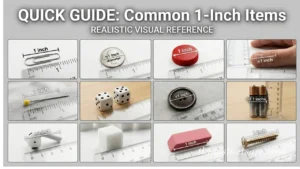
Counter size varies by type. Handheld tally counters are typically 2–3 inches long. Industrial mechanical panel counters fit in compact 5–7 cm housings. Geiger counters range from pocket-sized survey meters to bench-top laboratory units. Rolling meter counters with measuring wheels are roughly the size of a handheld power tool.
What are the 7 measurements?
The 7 SI base measurements are: length (meter), mass (kilogram), time (second), electric current (ampere), thermodynamic temperature (kelvin), amount of substance (mole), and luminous intensity (candela). Counter measurement instruments primarily operate across length, time, and current domains.
What are the 7 basic measurements?
The 7 basic measurements align with the International System of Units (SI) — length, mass, time, electric current, temperature, amount of substance, and luminous intensity. In counter measurement, length and time are the two most commonly measured base quantities in industrial and field applications.
What is the measure of 7 sides?
A polygon with 7 sides is called a heptagon. Its interior angles sum to 900°, and each interior angle of a regular heptagon measures approximately 128.57°. In field measurement and surveying, instruments like laser distance meters and rolling counters are used to measure the perimeter and side lengths of polygonal structures accurately.
Conclusion
Precision counter measurement isn’t complicated — but it does require the right tool, the right setup, and the right understanding of how your counter actually works.
From mechanical gear-driven meter counters on textile machines to Geiger-Müller tubes detecting gamma radiation in nuclear facilities, every counter operates on the same core principle: detect an event, record it, display it accurately.
Use the right type, calibrate correctly, understand your specs — and your counter will never let you down.