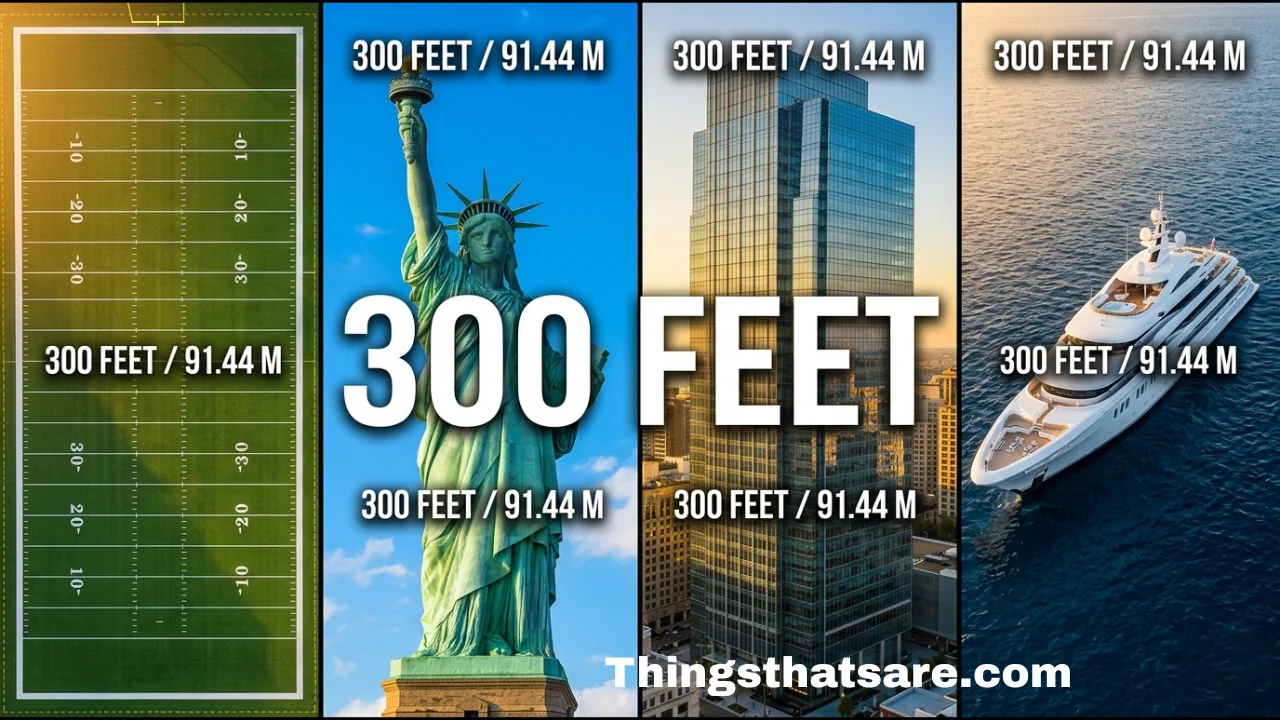
300 feet is a massive measurement — but most people struggle to picture it. Without a visual reference, it’s just a number.
Once you see it through real objects — a football field, a 30-story building, or a cruise ship — it instantly clicks. This guide breaks down 10 things that measure 300 feet long or are big, using examples you can actually picture.
How Long Is 300 Feet? (Quick Answer + Conversions)
300 feet equals 91.44 meters, 100 yards, or 3,600 inches. It is roughly the length of an American football field from goal line to goal line — one of the most universally recognized length references in the United States.
Walking 300 feet at a comfortable pace takes about 60 seconds for most adults. That is roughly 100 standard walking steps. In terms of city blocks, it is about three-quarters of a typical block in most US cities.
300 Feet in Different Units
Here is a quick reference conversion table for 300 feet:
| Unit | Value |
| Meters | 91.44 m |
| Yards | 100 yd |
| Inches | 3,600 in |
| Miles | 0.0568 mi |
| Kilometers | 0.09144 km |
| Centimeters | 9,144 cm |
| Nautical Miles | 0.049374 nmi |
These conversions are based on the US customary system and the International System of Units (SI). One foot equals exactly 0.3048 meters, making the formula: 300 × 0.3048 = 91.44 meters. And if you want to select a thing by comparison then must visit this page.
10 Things That Measure 300 Feet Long or Are Big
These real-world examples make it easy to visualize 300 feet without any measuring tape. From sports fields to skyscrapers, every example below is grounded in verified data.
American Football Field (Goal Line to Goal Line)
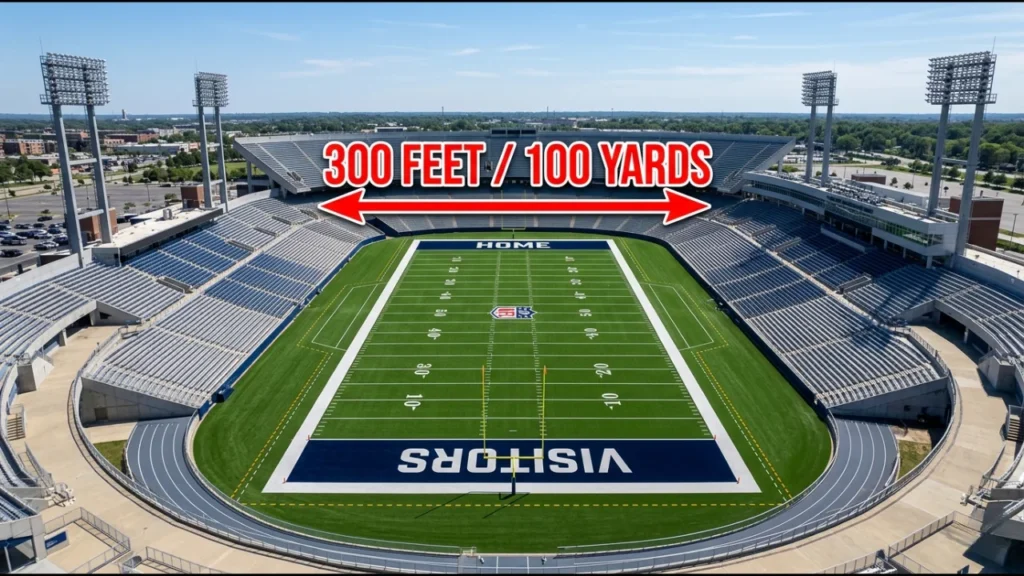
An American football field measures exactly 300 feet from goal line to goal line — that is 100 yards. This does not include the end zones, which add another 60 feet on both sides.
The NFL and NCAA both enforce this standard field dimension. It is the single most recognized 300-foot reference in American culture. Almost every American has stood near or on a football field at some point, making it the perfect mental benchmark.
Statue of Liberty (Ground to Torch)
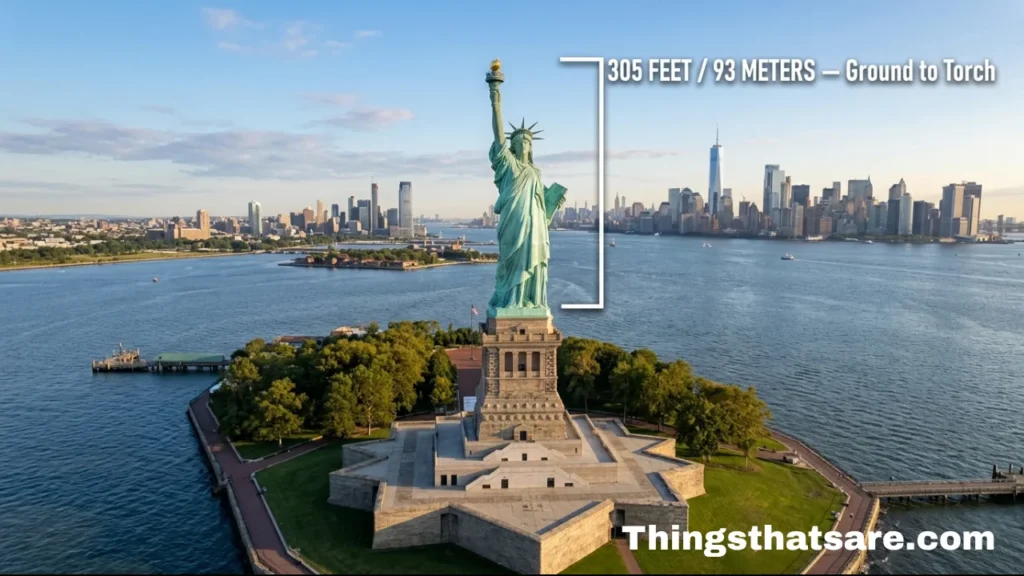
The Statue of Liberty stands 305 feet from ground level to the tip of her torch. This includes the pedestal and the foundation. The statue alone stands 151 feet tall.
Lady Liberty is located on Liberty Island, New York Harbor. Millions of tourists visit each year, making this one of the most famous vertical 300-foot references in the world. The National Park Service maintains detailed records confirming these dimensions.
30-Story Building Height
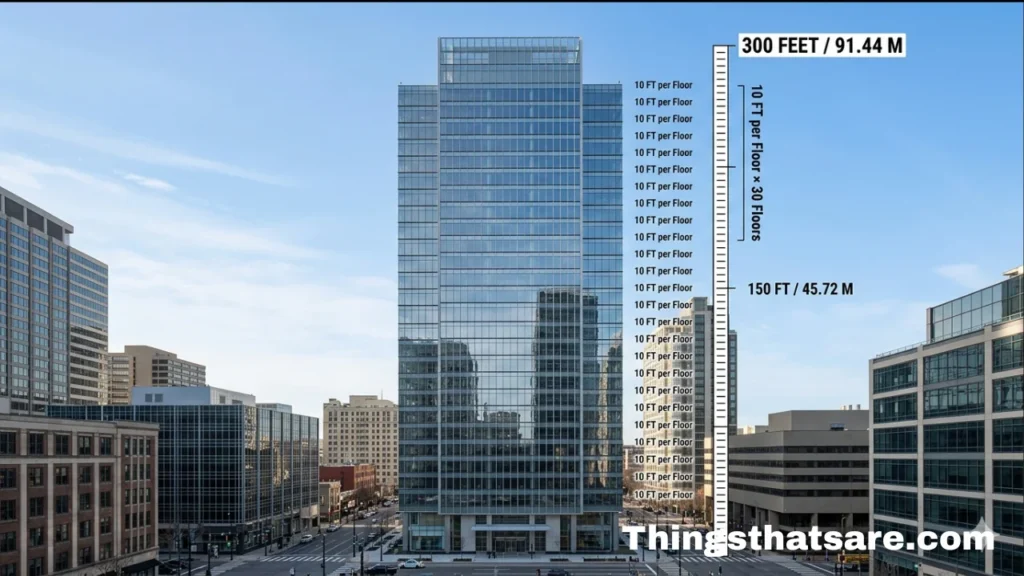
Most commercial buildings average 10 feet per floor. A standard 30-story skyscraper therefore reaches approximately 300 feet tall. This metric is widely used by architects, structural engineers, and urban developers
You can spot 30-story buildings in virtually every major US city — Chicago, Houston, Atlanta, and New York. Looking up at one gives you an immediate, visceral sense of what 300 feet tall actually looks like.
Must Visit: 25 Everyday Things That Are 7 Inches Long
Large Cruise Ship Width
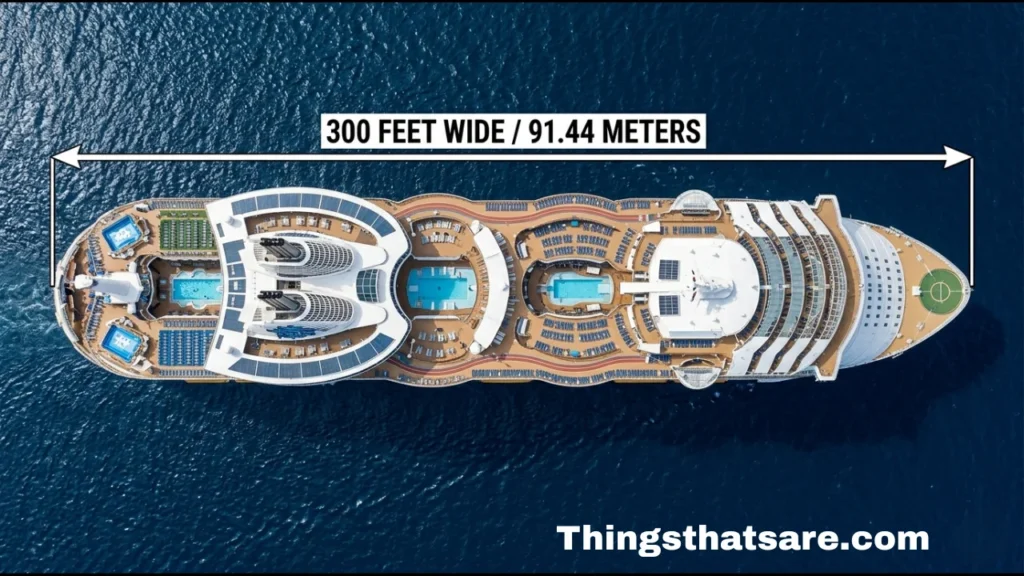
The largest modern cruise ships measure close to 300 feet wide at their beam — the widest point of the hull. Ships like Royal Caribbean’s Wonder of the Seas have a beam of about 210 feet, but the largest vessels push close to 300.
Maritime engineers often design ships with maximum widths constrained by Panama Canal lock dimensions and port berth sizes. The beam of a cruise ship is one of the clearest horizontal examples of 300-foot scale.
Three Basketball Courts End to End
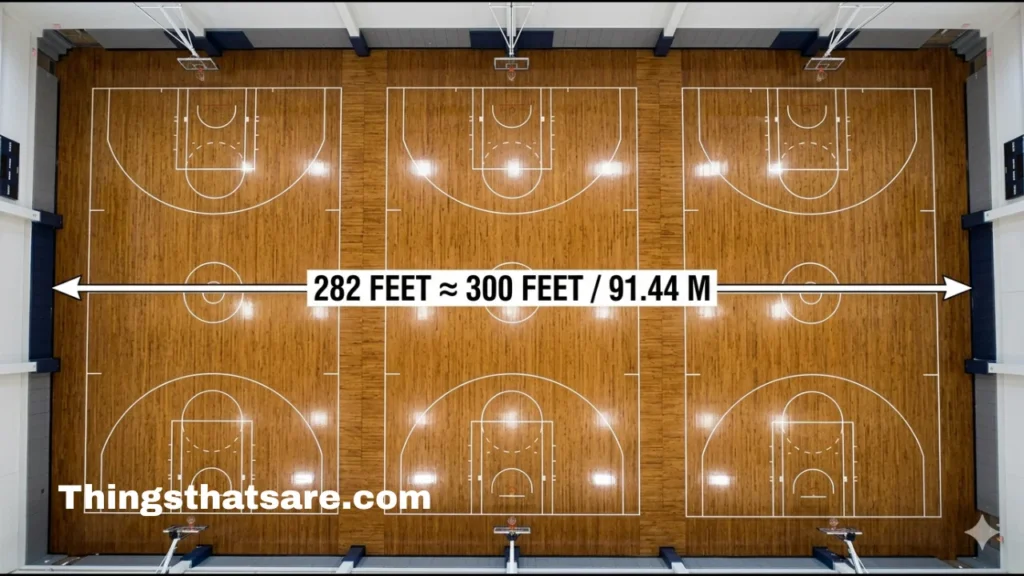
A regulation NBA basketball court measures 94 feet long. Line up three of them end to end and you get 282 feet — just 18 feet short of 300. Add a small buffer zone and you hit exactly 300 feet.
Gymnasium designers and sports facility planners use court dimensions as a baseline for space allocation. This reference works particularly well for athletes, coaches, and anyone who has played recreational basketball.
Standard City Block (Three-Quarters)
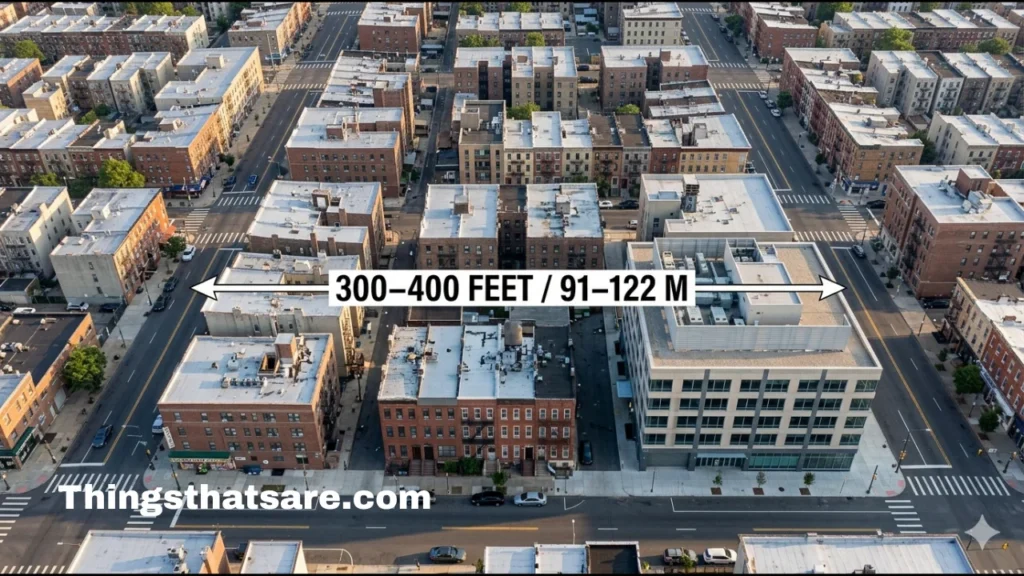
In most US cities, a standard city block runs between 300 and 400 feet long. In Manhattan, for example, blocks along avenues average about 900 feet, while cross-street blocks average around 264 feet.
Urban planners and civil engineers use block dimensions to design pedestrian flow, traffic signals, and zoning maps. Walking the length of a standard block gives most city residents an instant gut-level sense of 300 feet.
Mega Yacht or Large Sailboat

High-end mega yachts and large sailing vessels regularly reach lengths of 200 to 300 feet. Some of the world’s largest private yachts — like Azzam at 590 feet — far exceed this, but charter yachts in the 250-300 foot range are common in Mediterranean and Caribbean marinas.
Marinas that accommodate 300-foot vessels require specialized docking infrastructure, deep draft berths, and substantial mooring systems. A 300-foot yacht moored at a marina stretches an entire city block.
Train Engine Plus 10 to 12 Cars
A standard freight train car measures between 50 and 60 feet long. Add a locomotive of about 70 feet and five to six cars, and you reach approximately 300 feet of rolling stock.
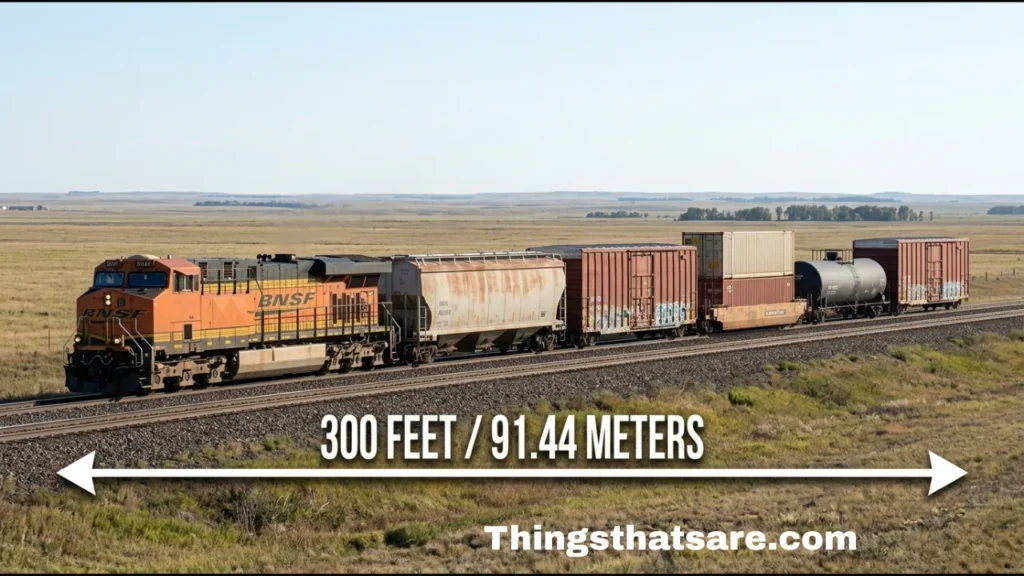
Railroad engineers and switching yard operators calculate train length constantly for track clearance, signal spacing, and grade crossing safety. Watching a freight train roll past a crossing is one of the most dynamic ways to measure 300 feet in motion.
One Soccer Field Width
FIFA regulations allow soccer field widths to range from 50 to 100 yards — or 150 to 300 feet. The maximum legal width of a FIFA-sanctioned pitch hits exactly 300 feet wide.
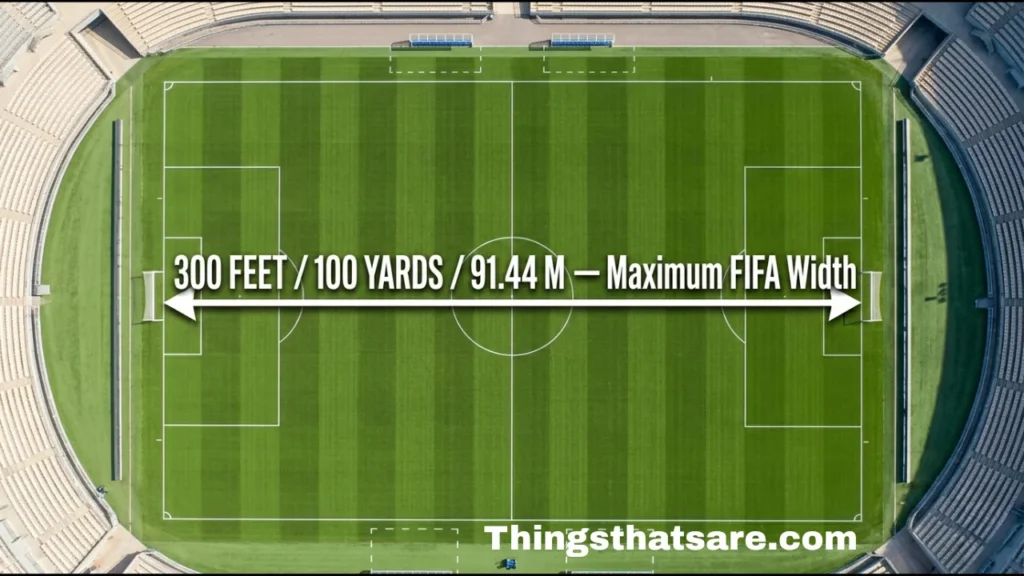
International soccer stadiums like those used in the FIFA World Cup often use maximum-width pitches. When you watch a match and see the full horizontal sweep of the field, you are looking at up to 300 feet of grass.
Boeing 747 Wingspan Comparison
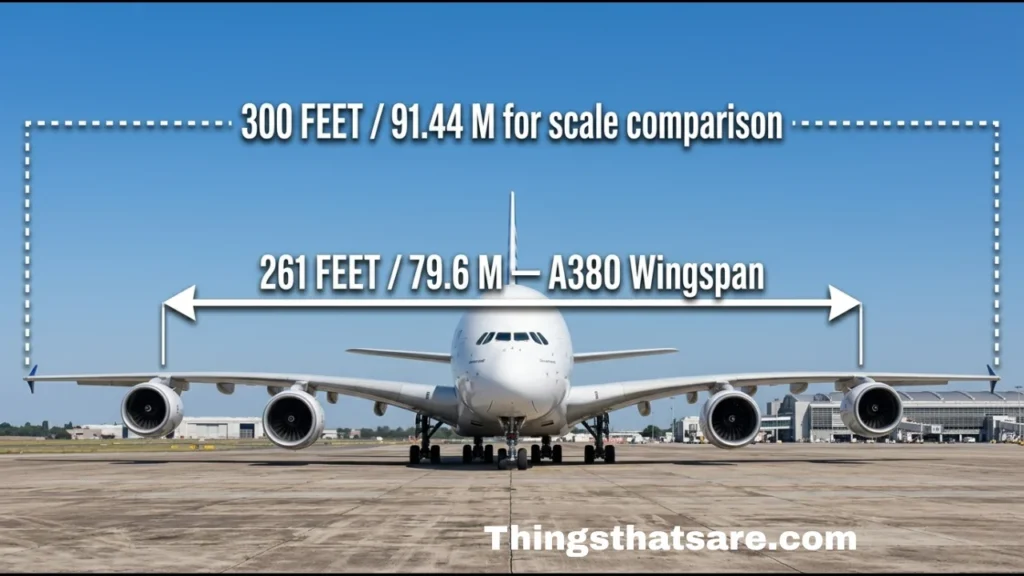
The Boeing 747-8 has a wingspan of 224 feet. The Airbus A380, the world’s largest passenger aircraft, spans 261 feet wingtip to wingtip. While neither hits exactly 300 feet, visualizing one and a quarter A380 wingspans gets you there precisely.
Aviation engineers design aircraft with wingspan constraints based on FAA airport gate categories and taxiway clearances. Seeing a jumbo jet at close range at airports like LAX, O’Hare, or JFK gives an unforgettable sense of large-scale measurement.
Must Visit: 15 Things That Measure 30 Feet Long or Are Big 2026
How to Visualize 300 Feet Without a Measuring Tape
Most people don’t carry a tape measure. But you can accurately estimate 300 feet using nothing but your body and surroundings.
Walking Distance Reference
300 feet takes approximately 60 seconds to walk at a normal pace of roughly 3 miles per hour. That equals about 100 steps for the average adult with a standard stride of 2.5 feet per step.
Next time you are outdoors, count your steps from one end of a football field to the other. That count becomes your personal internal calibration for 300 feet — no tools needed.
Stacking and Spanning Real Objects
Three 100-foot segments stacked or laid end to end equal 300 feet. You can also picture 30 telephone poles (each averaging 10 feet above ground) laid flat, or 600 standard floor tiles (each 6 inches wide) placed side by side.
Another useful trick: 18 standard passenger cars parked bumper to bumper. The average car length is about 15 feet, so 18 cars equals 270 feet — close enough to give you a solid real-world estimation of 300 feet in any parking lot.
Why Does 300 Feet Matter in Real Life?
The 300-foot measurement is not just a number used in textbooks. It appears constantly in professional, legal, and everyday contexts across the United States.
Construction and Architecture
Building codes in the US frequently reference 300-foot setbacks, crane operating radii, and fire safety clearances. The International Building Code (IBC) uses distance thresholds that often fall near this benchmark.
Architects working on high-rise buildings, bridges, and large commercial facilities constantly use 300 feet as a planning reference for structural load distribution and material delivery logistics.
Sports and Athletics
Beyond football, 300 feet appears across multiple sports. In baseball, the outfield fence at many ballparks sits between 300 and 400 feet from home plate. A home run hit exactly 300 feet is often the minimum to clear the fence in smaller parks.
In track and field, 300 feet falls slightly short of 100 meters — the standard sprint distance. Understanding this gap helps coaches and athletes calibrate training distances on non-standard tracks.
Emergency Planning and Safety Zones
FEMA and local emergency management agencies frequently define evacuation perimeters and hazard zones using distances like 300 feet. For example, gas leak safety clearances and wildfire defensible space regulations in California reference distances in this range.
First responders use 300-foot perimeters as a standard initial isolation distance for many hazardous material incidents, according to the Emergency Response Guidebook (ERG) published by the US Department of Transportation.
Property and Real Estate Assessment
Real estate listings often describe lot depths, frontage widths, and building setbacks in feet. A 300-foot lot depth is considered substantial in most US suburban and rural markets.
Property appraisers and land surveyors use precise linear foot measurements to assess zoning compliance, easements, and boundary disputes. Knowing that 300 feet equals 100 yards helps buyers and sellers quickly interpret land descriptions in listing documents.
FAQs
Is 300 Feet the Length of a Football Field?
Yes. An American football field measures exactly 300 feet from goal line to goal line — that is 100 yards. This does not include the two 10-yard end zones on each side. With end zones, the total field length is 360 feet (120 yards).
What Is Something 300 Feet Tall?
Several well-known structures reach close to or exactly 300 feet tall. The Statue of Liberty (ground to torch) stands 305 feet. A 30-story commercial building reaches approximately 300 feet. The Gateway Arch in St. Louis stands exactly 630 feet — just over twice this height.
How Many Car Lengths Is 300 Feet?
The average passenger car in the US measures about 15 feet long. That means 300 feet equals approximately 20 car lengths. This is a useful real-world reference at traffic stops, parking lots, and safe following distance calculations on highways.
What’s Equivalent to 300 Feet?
300 feet is equivalent to: 91.44 meters, 100 yards, 3,600 inches, 0.0568 miles, or 0.09144 kilometers. In sports terms, it is one football field. In urban terms, it is about three-quarters of a typical US city block. In building terms, it is a 30-story skyscraper.
How Tall Is 300 Feet Compared to a Building?
At 10 feet per floor — the standard commercial floor height in the US — 300 feet equals 30 stories. Residential buildings average slightly less at 9 feet per floor, which would make 300 feet roughly 33 residential stories. Either way, it is a significant mid-rise to high-rise building height.
How Many Paces Is 300 Feet?
A pace in military and navigation terms equals 2.5 feet. That means 300 feet equals 120 paces. In everyday walking steps (single foot), most adults cover about 100 steps to walk 300 feet. Taller people with a longer stride may need fewer — around 85 to 90 steps.
Conclusion — Making Sense of 300 Feet in Everyday Life
300 feet shows up in sports, construction, safety planning, real estate, and aviation constantly. It is not an abstract number — it is a football field, a 30-story building, a cruise ship’s beam, and 20 car lengths parked end to end.
Use these real-world references to quickly estimate and understand large distances without any tools. Whether you’re a property buyer, a coach, or just a curious person — knowing what 300 feet looks like in real life is a genuinely useful skill.