Most people hear 25 feet and draw a blank. It sounds like a solid number, but picturing it in real life? That’s the hard part.
Here’s the fix. 25 feet equals 300 inches, 7.62 meters, or roughly two compact cars parked bumper to bumper. Once you connect it to everyday objects, the number clicks instantly.
This guide gives you 16 real-world things that are exactly 25 feet long, plus conversion facts, visual tricks, Size comparison and practical uses — everything you need to truly understand this measurement.
What Is 25 Feet? Quick Conversion Facts Most People Don’t Know
How long is 25 feet, exactly? Twenty-five feet is a medium-large distance. It sits comfortably between the length of a large SUV and a full school bus.
Here’s what 25 feet converts to across every unit you’ll ever need:
| Unit | Exact Value | Visual Comparison |
| Inches | 300 inches | Four 6-ft adults lying head to toe |
| Yards | 8.33 yards | About 8+ large walking steps |
| Meters | 7.62 meters | Roughly 7½ normal strides |
| Centimeters | 762 cm | Same as 7.62 meters |
| Compact cars | ~2 cars end-to-end | Two Honda Civics parked nose to tail |
| People lying flat | ~4 adults | Four grown-ups head to toe ≈ 25 feet |
| School bus | Half a school bus | Full school bus = ~50 feet |
| Basketball hoops | 2.5 hoops stacked | Regulation rim = 10 ft each |
One more easy trick: count 10 to 12 average adult walking steps and you’ve covered roughly 25 feet. No measuring tape required.
According to the U.S. customary system of measurement, feet and inches are the standard units for everyday distance in America. Most Americans judge space in feet without ever thinking about it — until they need to measure something specific.
Must Visit: 13 Things That Are 15 Feet Long or Big (Real-Life Size Comparisons)
16 Things That Are 25 Feet Long — Real-World Size Comparisons
These are the most accurate and practical 25-foot comparisons you’ll find. Each one is grounded in real specs, not guesswork.
Class B RV — The Classic 25-Foot Camper Van
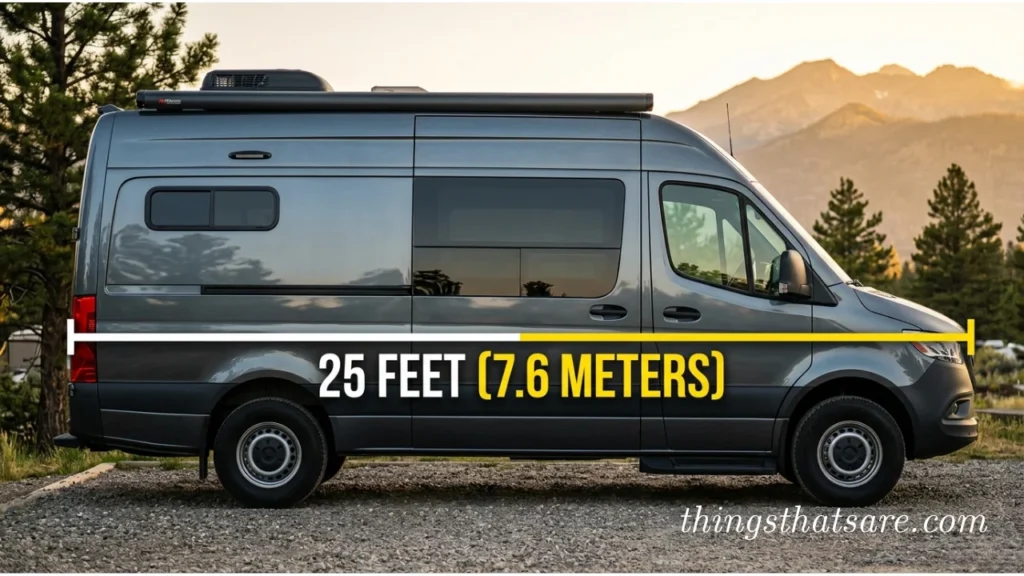
The most popular Class B RV length in America falls between 24 and 25.5 feet. Models like the Winnebago Revel, Roadtrek Zion, and Airstream Interstate 24GL sit right at this mark.
This isn’t a coincidence. Many national parks and campgrounds enforce a strict 25-foot vehicle limit. Bring anything longer and you’re turned away at the gate. The 25-foot Class B RV is the sweet spot for weekend campers and full-time van-lifers across the U.S.
Two-Story Residential Building — Roofline at 25 Feet
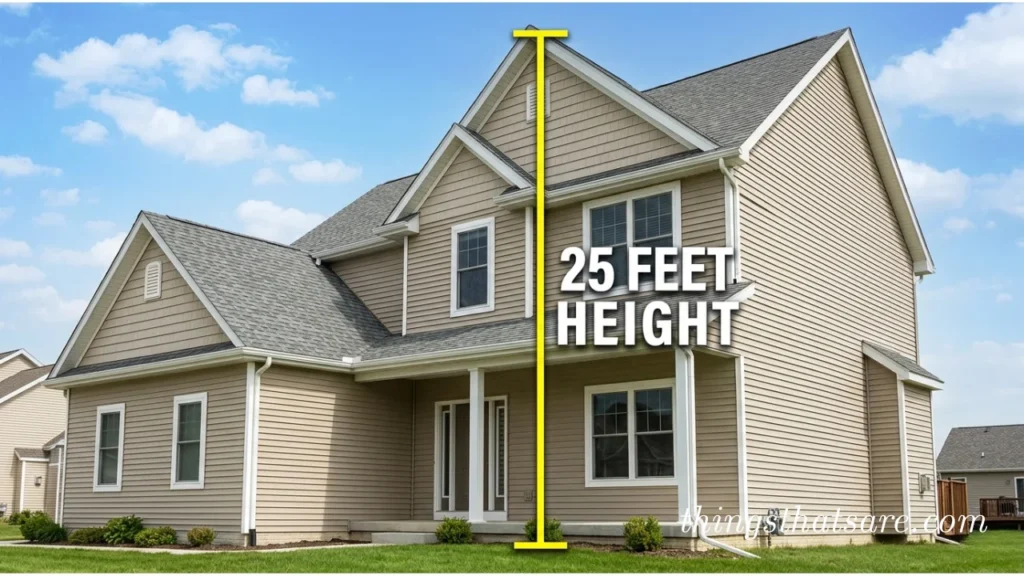
Walk through any American suburb and look up. A standard two-story home measures between 20 and 25 feet from the ground to the eave — the point where the walls meet the roof.
Builders design homes this way because the two-story building height feels grand and spacious without requiring expensive commercial-grade construction methods. It’s the most common residential roofline height across the U.S.
Stretch Limousine — Party on Wheels

The classic 6-to-10 passenger stretch Lincoln Town Car or Cadillac limousine measures 24 to 25 feet in total length. Manufacturers take a standard sedan, cut it, and insert a custom extension that pushes the total stretch limousine size into the 25-foot range.
Anything longer jumps into the super-stretch or Hummer category, which can reach 35 to 40 feet. The classic prom and wedding limo stays firmly at this measurement.
25-Foot Flagpole — America’s Best-Selling Height
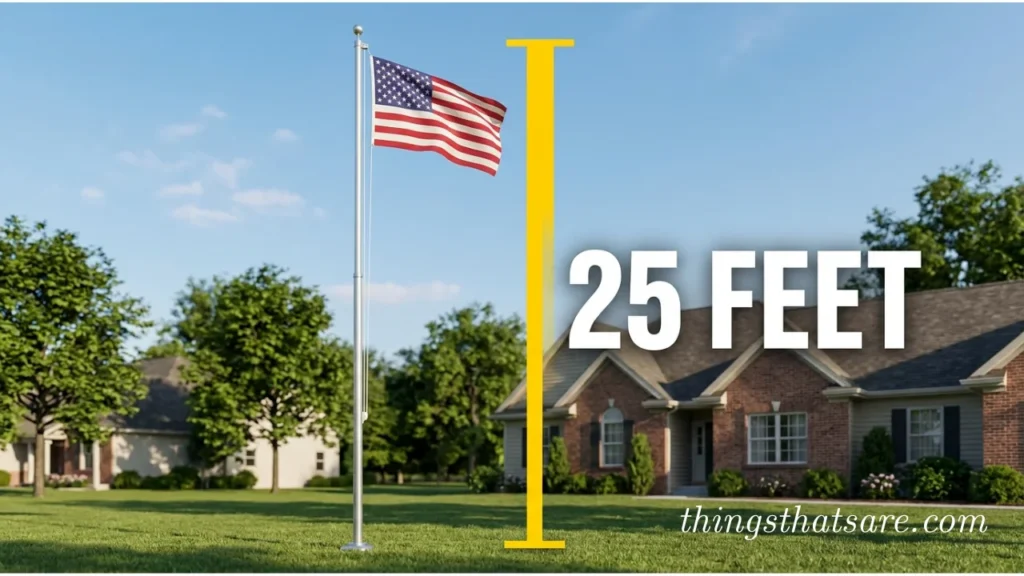
Search Amazon or walk into Home Depot or Lowe’s and the 25-foot aluminum flagpole dominates the shelves. It’s the top-selling flagpole size in the country — tall enough to fly a full-size flag proudly, but short enough that most cities don’t require a permit for installation.
Thousands of residential homes and small businesses across America plant a 25-foot flagpole in their yards every single year.
Box Truck / U-Haul 26-Foot Moving Truck
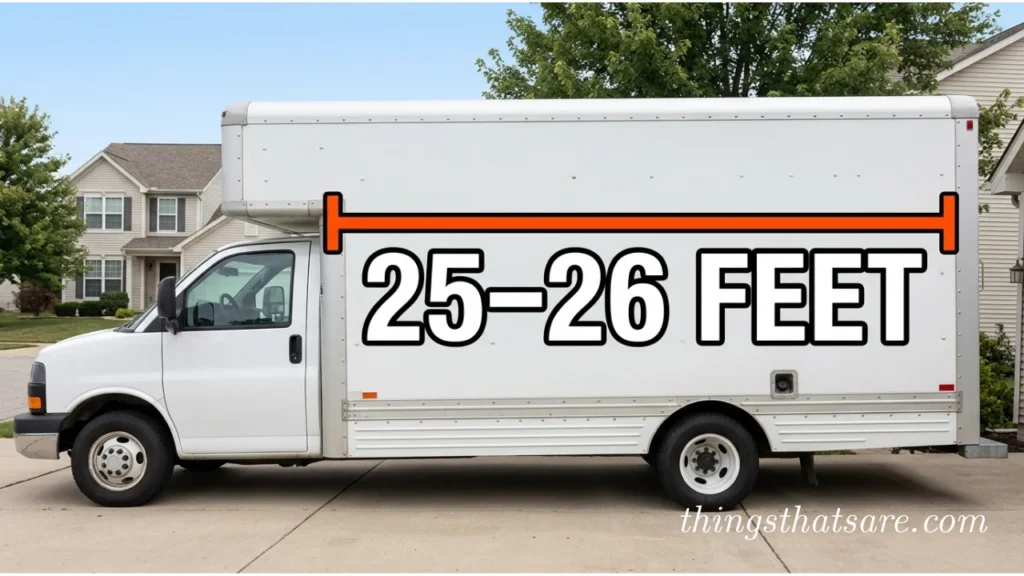
When Americans move, they rent one truck above all others — the 26-foot U-Haul or Penske box truck. From the front bumper to the rear cargo door, the total box truck length is usually 25.5 to 26 feet.
The cargo box itself is often exactly 24 to 25 feet of usable interior space. In everyday conversation, movers and contractors just call it “the 25-foot truck” — and they’re not far off.
Small Day-Sailer Class Sailboat

A day-sailer class sailboat — the kind you see gliding across coastal bays and freshwater lakes on weekends — typically measures 25 feet from bow to stern. These boats are the most popular entry point for recreational sailing in America.
Their 25-foot hull length is specifically designed for easy single-handed handling, making them the go-to choice for solo and couple sailors from the Great Lakes to the Florida Keys.
Residential Telephone Pole — The Shorter Neighborhood Type
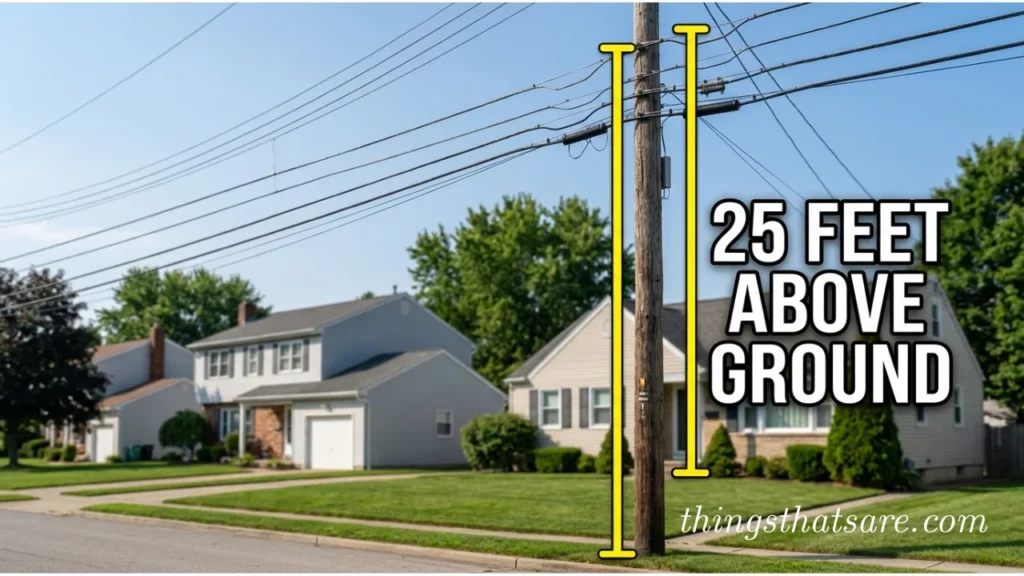
The shorter residential utility pole found in American neighborhoods and suburban streets stands at roughly 25 feet above ground level. Utility companies bury an additional 6 feet underground, making the full pole about 30 to 35 feet in total length.
Next time you walk past a telephone pole, look straight up. You’re seeing 25 feet of vertical distance from the sidewalk to the top of the pole — a powerful mental anchor for this measurement.
Boat Trailer with a 21–23 Foot Fishing Boat
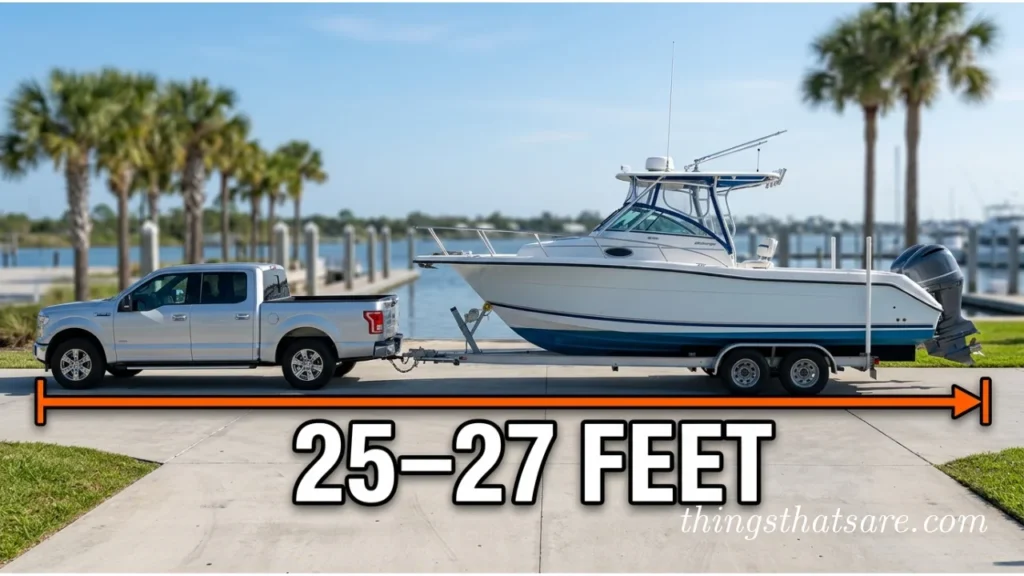
Take a common 21-to-23-foot center-console fishing boat — the workhorse of coastal anglers in Florida, Texas, and the Carolinas. Mount it on a tandem-axle trailer with the outboard motor tilted up, and the total boat trailer length from hitch ball to propeller tip is consistently 25 to 27 feet.
This is a real-world measurement any boat owner deals with in driveways, storage lots, and launch ramps every single weekend.
Articulated Ladder — Fully Extended
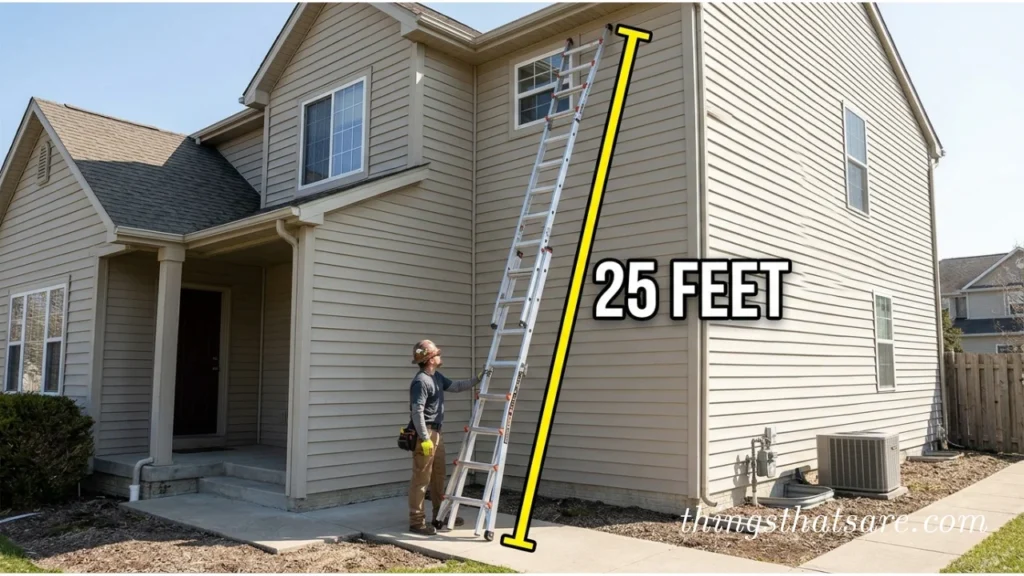
A heavy-duty articulated or multi-position ladder — the kind sold at Home Depot and Lowe’s under brands like Little Giant or Louisville Ladder — reaches approximately 25 feet when fully extended. This height is enough to access a residential rooftop, clear two-story gutters, or reach the underside of a high ceiling safely.
Contractors and serious DIYers buy these specifically because 25 feet is the most useful ladder height for American two-story home maintenance.
20-Foot CONEX Cargo Container on a Delivery Chassis

A standard 20-foot ISO shipping container — also called a CONEX box — is exactly 20 feet long on its own. Load it onto a delivery chassis or flatbed trailer, and the tongue, frame, and hitch mechanism add roughly 5 feet, bringing the total displayed length to about 25 feet.
You see these combinations on construction sites, storage lots, and commercial delivery docks across the country every day.
Airport Shuttle Van + Luggage Trailer

Hotel and airport shuttle vans are typically 20 to 22 feet on their own. But once the driver hooks up the small luggage or cargo trailer at the rear, the total combined airport shuttle van length lands squarely at 25 feet.
Next time you’re outside a terminal waiting for your ride, pace the length of the van-plus-trailer combo. You’ll be surprised at how accurate this reference point is.
City Bus Stop Shelter Canopy — Larger Urban Models

In major American cities like New York, Chicago, and Los Angeles, the wider bus stop shelter canopies stretch close to 25 feet in total width to accommodate multiple benches and heavy pedestrian flow. These canopies are engineered to match the length of one full bus door section.
It’s a surprisingly clear urban example of exactly how long 25 feet looks in a real sidewalk setting.
Horizontal Road Banner Stretched Across Two Lanes

Ever driven under a “Welcome Home” or “Grand Opening” banner stretched across a street? Most U.S. cities cap the maximum permitted width for a horizontal road banner at exactly 25 feet — the span of two standard traffic lanes plus shoulder gutters.
Event organizers and city planners regularly work within this 25-foot banner width limit for parades, festivals, and public announcements across America.
Large Commercial Moving Truck Ramp — Fully Extended
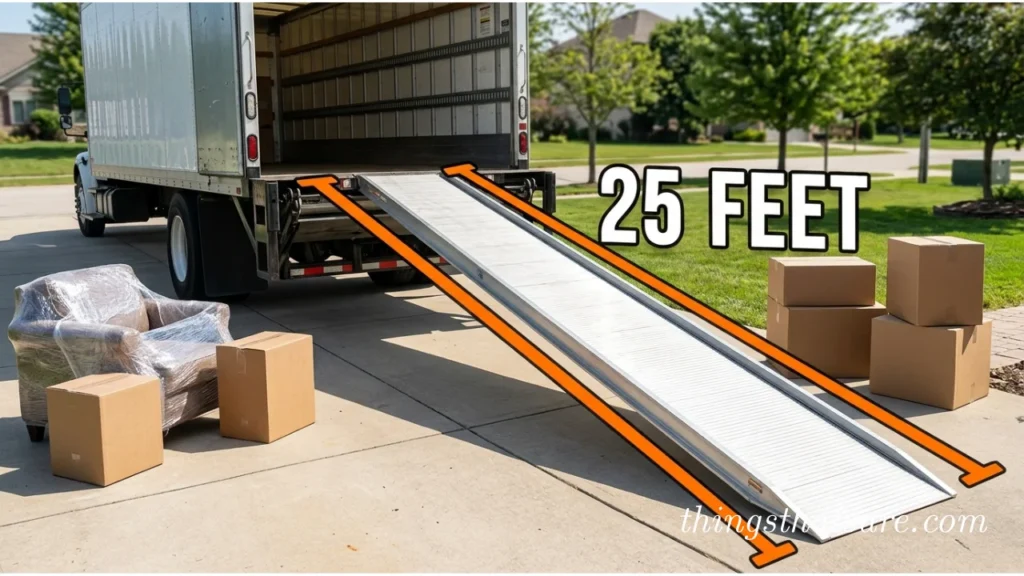
Commercial-grade moving trucks — the ones rented through U-Haul, Budget, and Penske — deploy loading ramps that extend to nearly 25 feet in length when fully deployed for loading heavy furniture or equipment.
This extended ramp length allows movers to roll heavy appliances up a gradual slope rather than a steep incline — and it gives you a vivid ground-level picture of exactly how long 25 feet stretches in a horizontal plane.
25-Foot Measuring Tape — The Gold Standard on U.S. Job Sites
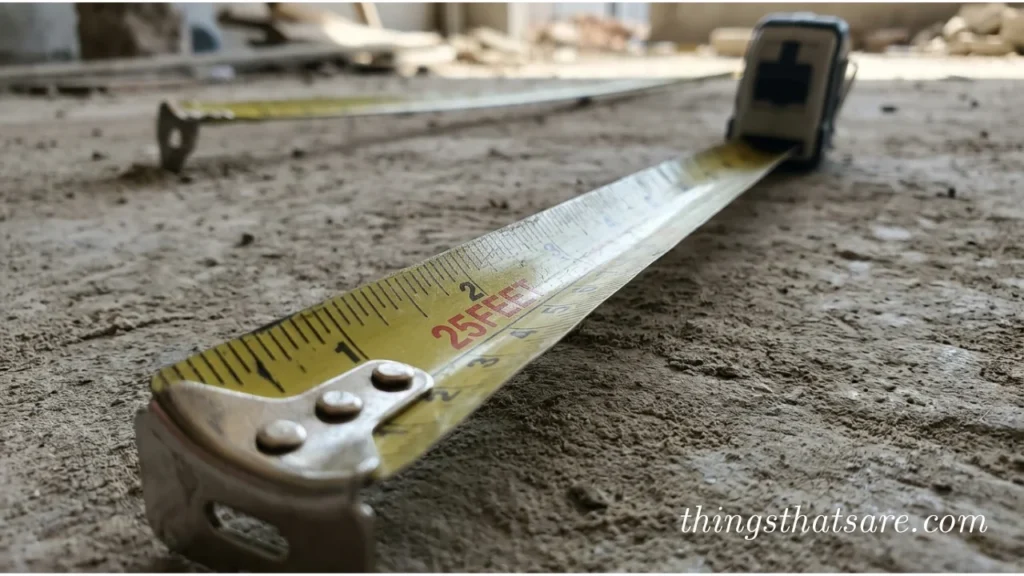
Ask any American contractor or carpenter what tape measure they carry, and the answer is almost always a 25-foot tape. Brands like Stanley FatMax, DeWalt, and Milwaukee sell millions of 25-foot measuring tapes every year.
The 25-foot blade is 1¼ inches wide, which lets it stand out 10 to 12 feet without drooping — a critical feature on job sites. The length itself is the industry standard because most American rooms, driveways, and building dimensions fall within 25 feet.
Great White Shark — Hollywood’s Favorite 25-Footer

Movie sharks are always enormous, and for good reason — great white sharks in blockbuster films like Jaws are typically depicted at 25 feet in length. Real great whites average 15 to 20 feet, but the cinematic version clocks in at 25 feet for maximum impact.
Even if you’ll never meet one in the ocean, this is one of the most memorable visual anchors for 25 feet in popular culture — and it sticks.
How to Visualize 25 Feet Without a Tape Measure
What does 25 feet look like without any tools? Easier than you think, once you know these methods.
The step method: Most American adults have a walking stride of about 2.5 feet. Take 10 steps at a natural pace and you’ve covered 25 feet. This is the fastest and most reliable body-based estimate.
The two-car method: Park two Honda Civics or Toyota Corollas bumper to bumper. Each compact car is about 14.9 feet long, so two measure close to 30 feet — slightly over, but a strong visual anchor.
The arm-span method: The average adult arm span is about 5.5 feet. Five arm spans laid end to end equals roughly 27.5 feet — very close to 25. Use this when you’re estimating vertical height, like checking if a ladder will reach.
The furniture method: A standard sofa is about 7 to 8 feet long. Three sofas lined up end to end give you roughly 24 feet — almost exactly 25. Great for estimating room size or backyard clearance.
These body-based and object-based estimation methods are exactly what experienced contractors and builders use every day when they don’t have a tape in hand.
Why 25 Feet Matters in Real Life — Home, Construction, and Outdoors
Where does 25 feet actually show up in everyday American life? More places than most people expect.
Driveway planning: A standard American driveway is 18 to 25 feet long. If you’re planning to park an RV, boat trailer, or moving truck on your property, knowing this measurement determines whether it fits before you buy.
Deck and fence building: Most residential deck and fencing projects run in sections of 25 feet or less. Home Depot and Lowe’s sell pre-cut lumber and fence panels calibrated to this dimension.
Campground and park access: The National Park Service and most private campgrounds enforce a maximum vehicle length of 25 feet for many sites. Knowing your RV or trailer length against this limit prevents a wasted trip.
City permit rules: Many municipalities require a permit for flagpoles taller than 25 feet or banners wider than 25 feet. Staying at or under this threshold is the standard way homeowners and businesses avoid costly permit applications.
Job site measurement: The 25-foot measuring tape is the gold standard for American carpenters, framers, and remodelers because most residential construction dimensions — room lengths, wall heights, rooflines — fall within this range.
Must Visit: 15 Common Things That Are Exactly 3 Feet Long (Surprising Examples!)
FAQs
How many inches is 25 feet visually?
25 feet equals exactly 300 inches. To picture it, imagine two Honda Civics or Toyota Corollas parked nose to tail. That combined length is very close to 300 inches, which is exactly 25 feet.
How much is 25 length in feet?
25 feet is a medium-large distance that equals 7.62 meters, 300 inches, or 8.33 yards. In everyday terms, it’s roughly the length of a Class B camper van, a stretch limousine, or a small day-sailer sailboat.
Is 24 inches 1 foot?
No. 12 inches equals 1 foot, not 24. So 24 inches equals 2 feet. This is one of the most common measurement mix-ups in the U.S. customary system. One foot has always been, and will always be, exactly 12 inches.
Is 12 feet 1 meter?
No. 1 meter equals approximately 3.28 feet. That means 12 feet is about 3.66 meters — significantly more than 1 meter. Confusing feet with meters is a common error when switching between the metric and U.S. customary systems.
Is 2 feet one meter?
No. One meter is approximately 3.28 feet. Two feet equals only about 0.61 meters — roughly 61 centimeters. Two feet is barely more than half a meter, not a full one.
Is 6 feet 1 meter?
No. Six feet equals approximately 1.83 meters — nearly double the length of a single meter. A meter is about 39.37 inches, while six feet is 72 inches. The difference is significant and easy to underestimate.
Conclusion
25 feet equals 300 inches, 7.62 meters, and 762 centimeters. It’s the length of a Class B RV, a stretch limousine, a residential flagpole, a day-sailer sailboat, and a U-Haul moving truck — just to name a few.
From construction sites to campgrounds, driveways to boat ramps, this measurement shows up constantly in everyday American life. Now you have 16 rock-solid reference points to picture it instantly, from any angle.