You already know what 3 feet is in numbers. But do you know what it actually looks like?
Three feet equals 36 inches, 1 yard, 91.44 centimeters, or 0.9144 meters. But those numbers only make sense when you connect them to real objects.
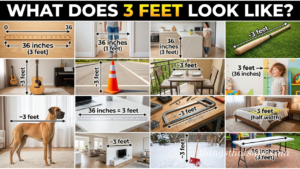
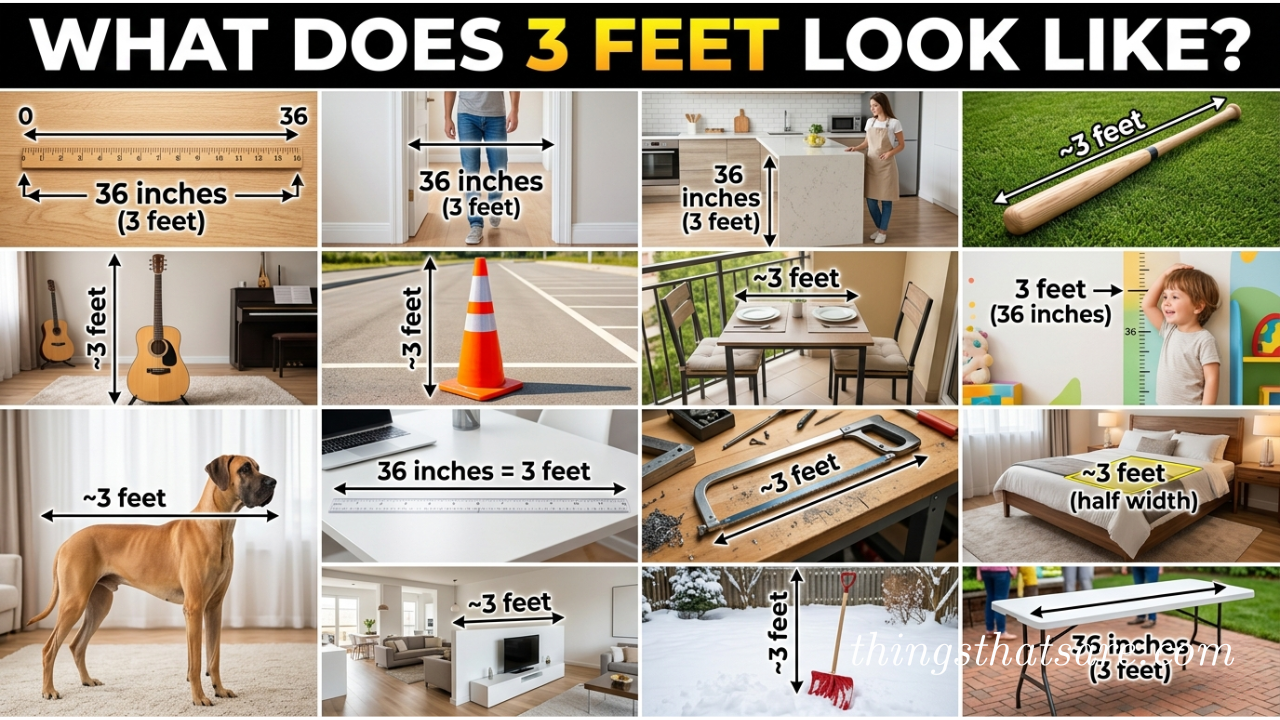
This guide gives you 15 everyday things that are exactly 3 feet long. Each one helps you see, feel, and remember this measurement for good — no ruler needed.
How Long Is 3 Feet, Really? (Quick Conversion Breakdown)
3 feet is one of the most-used measurements comparison in American homes, schools, and workplaces. It shows up in furniture, building codes, sports equipment, and even pediatric growth charts.
Here is a quick breakdown of 3 feet in different units so you always have it handy:
| Unit | Value | Formula | Use Case |
| Inches | 36 inches | 3 × 12 = 36 | US Customary |
| Centimeters | 91.44 cm | 3 × 30.48 = 91.44 | Metric System |
| Meters | 0.9144 m | 3 ÷ 3.281 = 0.9144 | International |
| Yards | 1 yard | 3 ft = 1 yd | Fabric / Sports |
1 foot = 12 inches. So three feet stacks those 12-inch units exactly three times. Simple, clean, and very useful.
How Does 3 Feet Compare to Human Height?
For most adults in the US, 3 feet reaches roughly hip or waist level. That makes it a natural visual reference for length and height.
In pediatric care, 3–4 year old children typically measure between 34.5 and 43 inches tall — putting them right around that 3-foot mark. So if you have a toddler, you already have a living, walking yardstick at home.
According to the CDC Growth Charts used across the US, the average height of a 3-year-old boy is about 37 inches and a 3-year-old girl is about 36.5 inches. That is basically 3 feet exactly.
15 Common Things That Are 3 Feet Long
Below are 15 real-world objects that measure approximately 3 feet in length or height. Some will surprise you.
| Item | Measurement | Notes |
| Yardstick | 36 inches | Exact |
| Standard Doorway Width | 36 inches | ADA Standard |
| Kitchen Counter Height | 36 inches | Ergonomic Design |
| Baseball Bat | 31–34 inches | Professional Spec |
| Acoustic Guitar | ~36 inches | Standard Build |
| Traffic Cone (Large) | ~36 inches | Road Safety |
| Small Dining Table Width | ~36 inches | Compact Furniture |
| 3–4 Year Old Child | ~35–43 inches | Pediatric Growth Chart |
| Irish Wolfhound / Great Dane | ~30–32 inches | Shoulder Height |
| Three Standard 12″ Rulers | 36 inches | Classroom Tool |
| Hacksaw Frame (Extended) | ~36 inches | DIY / Construction |
| Half-Width of Queen Bed | 30 inches | Approx. Reference |
| Half-Height Room Divider | ~36 inches | Interior Design |
| Snow Shovel Handle | ~34–38 inches | Ergonomic Tool |
| Standard Folding Table Width | ~36 inches | Event / Home Use |
Yardstick — The Most Obvious 3-Foot Object
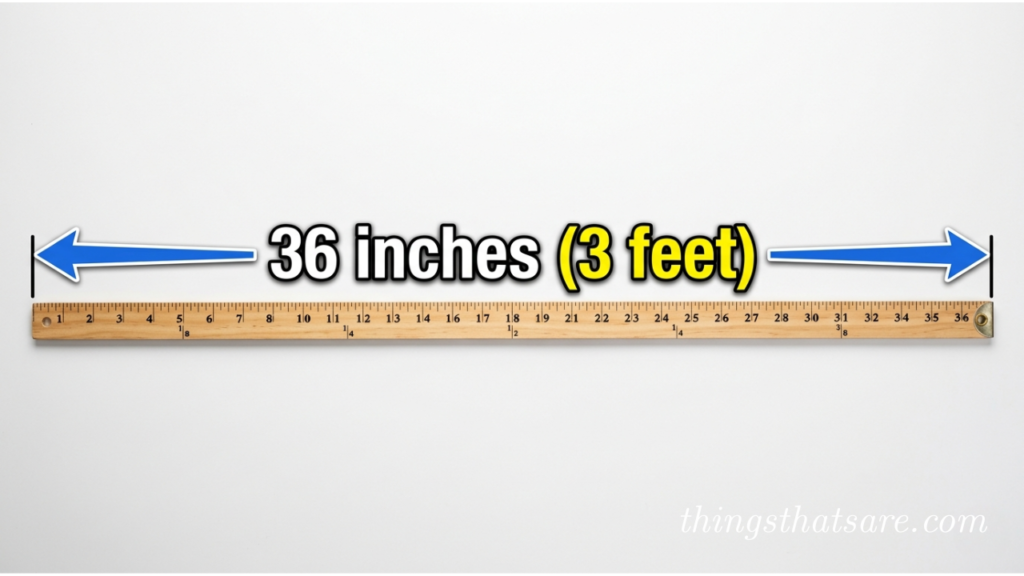
A yardstick is exactly 36 inches long — making it the purest, most direct representation of 3 feet. It is used in classrooms, workshops, and fabric stores across the US.
Unlike a standard 12-inch ruler, a yardstick gives you the full 3-foot length dimension in one single tool. No stacking, no math.
Standard Doorway Width (ADA Standard)
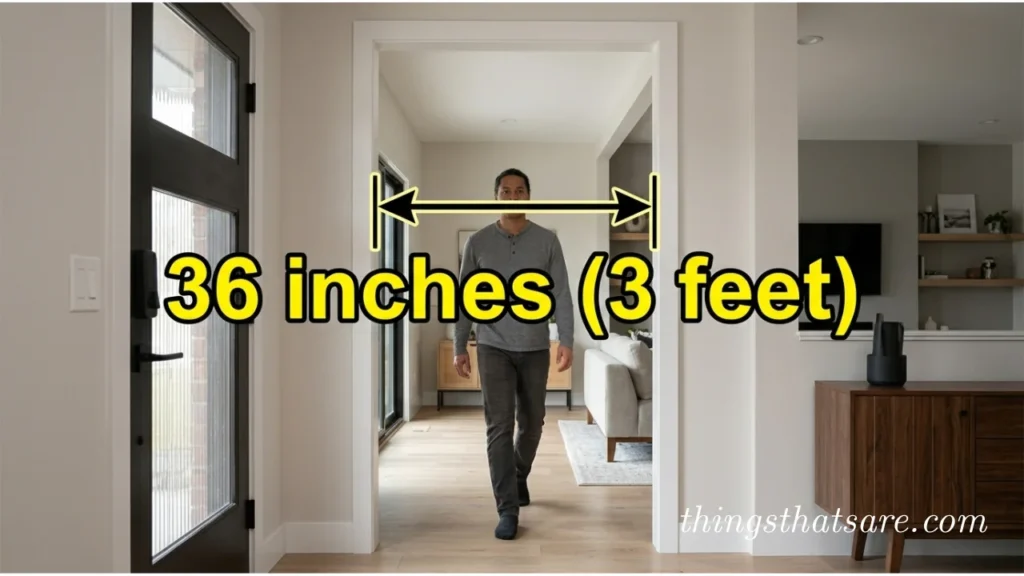
Most interior doors in American homes measure exactly 36 inches wide. This is not a coincidence.
The Americans with Disabilities Act (ADA) recommends a minimum clear width of 32 inches, with 36 inches being the preferred standard to allow comfortable wheelchair accessibility and easy movement of furniture.
So every time you walk through a standard doorway, you are walking through exactly 3 feet of space.
Standard Kitchen Counter Height
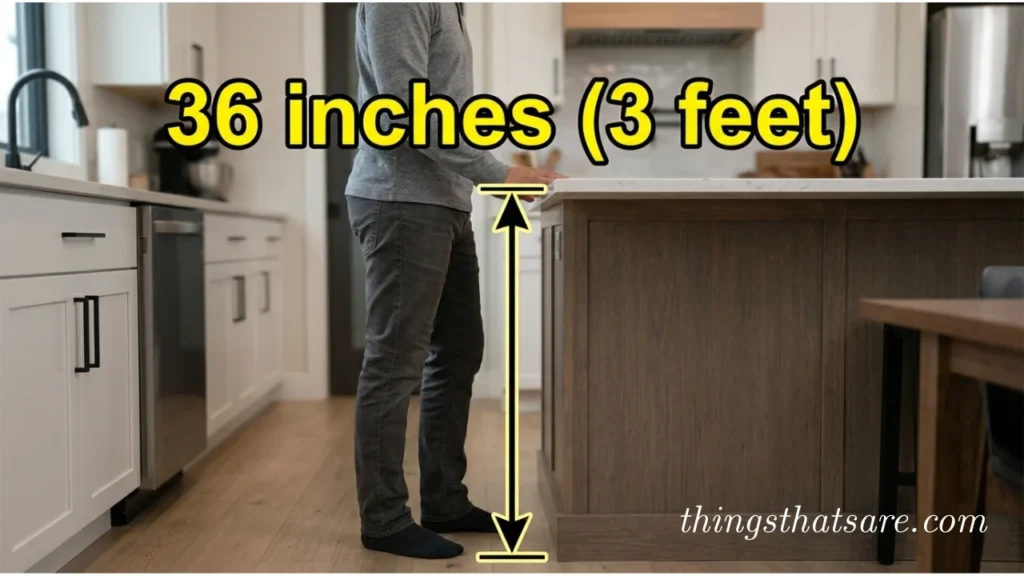
The standard kitchen counter height in the US is 36 inches — or exactly 3 feet from floor to surface.
This measurement is rooted in ergonomic design. It allows most adults to prep food, chop vegetables, and work comfortably without hunching or overstretching. The National Kitchen and Bath Association (NKBA) recognizes this as the benchmark ergonomic surface height for residential kitchens.
Baseball Bat
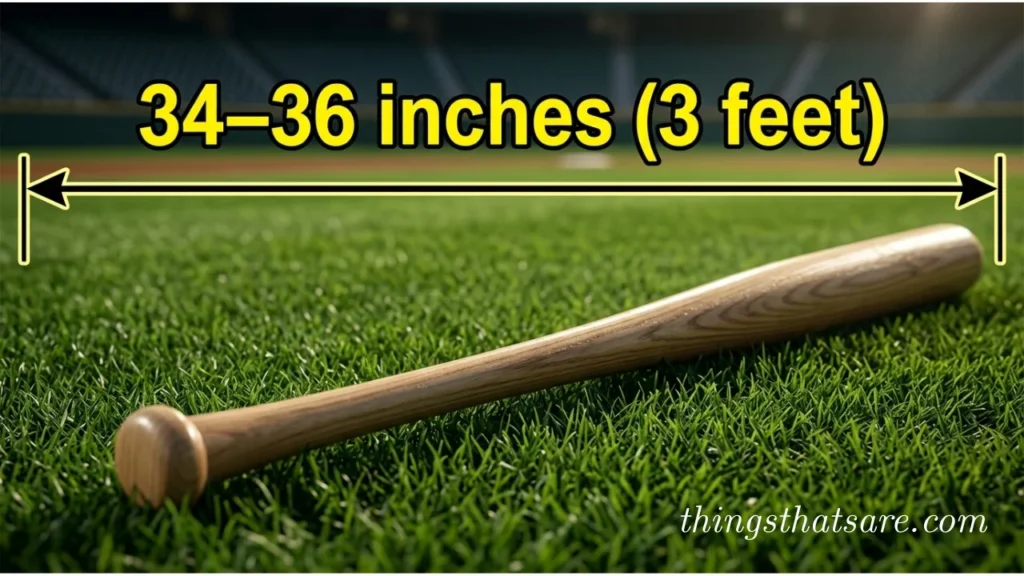
An adult baseball bat used in professional leagues typically ranges from 31 to 34 inches — putting it just shy of or right at the 3-foot mark.
According to MLB regulations, a bat must not exceed 42 inches in length, but the most commonly used length is 33–34 inches for power hitters. That length is carefully engineered for swing speed, impact force, and bat control.
Full-Size Acoustic Guitar
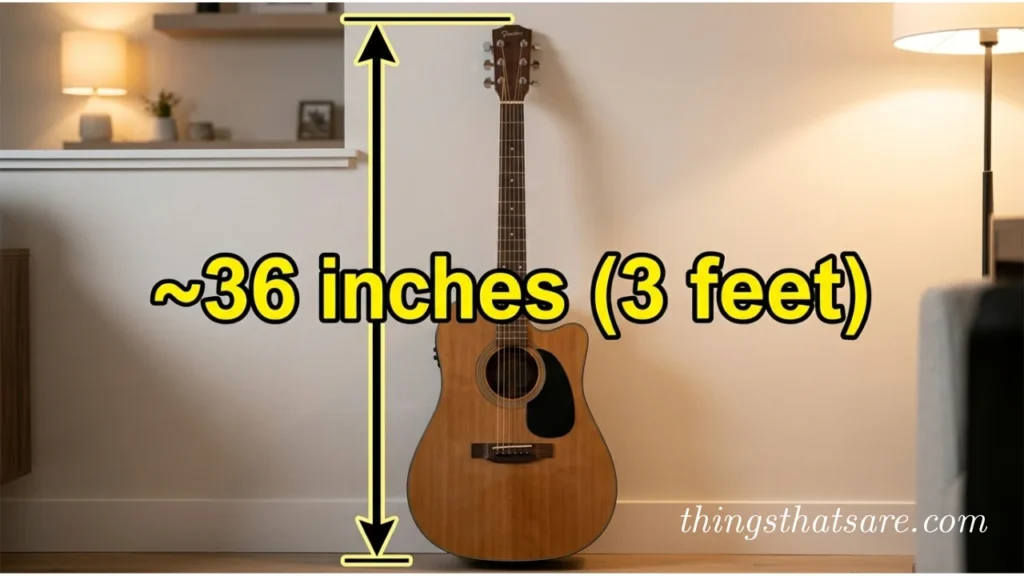
A standard full-size acoustic guitar measures approximately 36 to 40 inches from the bottom of the body to the top of the headstock.
Guitar makers design this length around tonal balance, playability, and sound projection. The scale length — the vibrating string area — is typically 25.4 inches on a full-size guitar, which directly affects pitch and tone. The total instrument length stays near 3 feet across most major brands.
Traffic Cone (Large Construction Size)
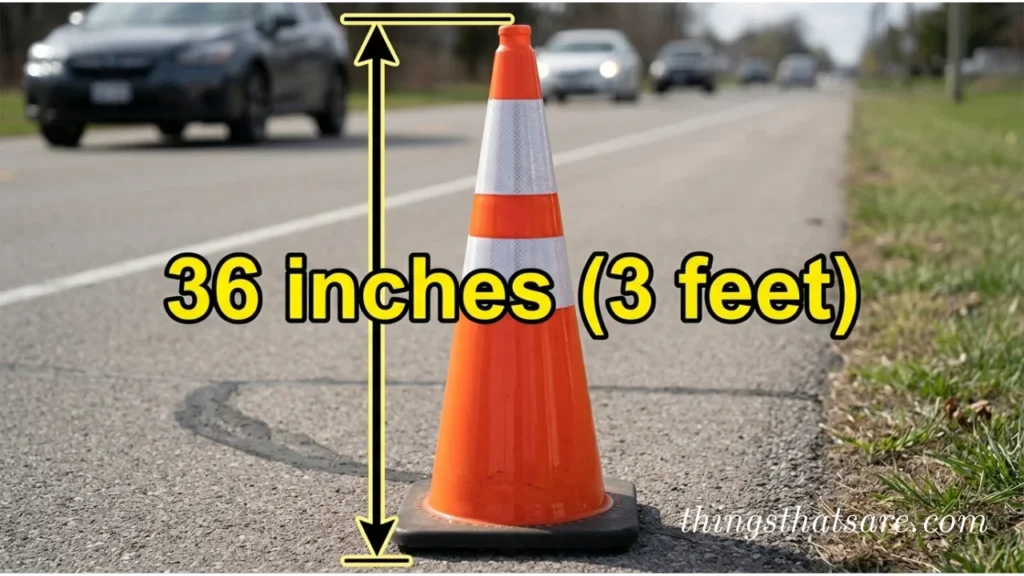
The large orange traffic cones you see in highway construction zones across the US stand at exactly 36 inches tall.
According to MUTCD (Manual on Uniform Traffic Control Devices) standards, the 36-inch cone is required for use on roads with speed limits above 45 mph. Their reflective strips and bright orange color are engineered for maximum visibility and hazard reduction at night and in dim conditions.
Small Dining Table Width
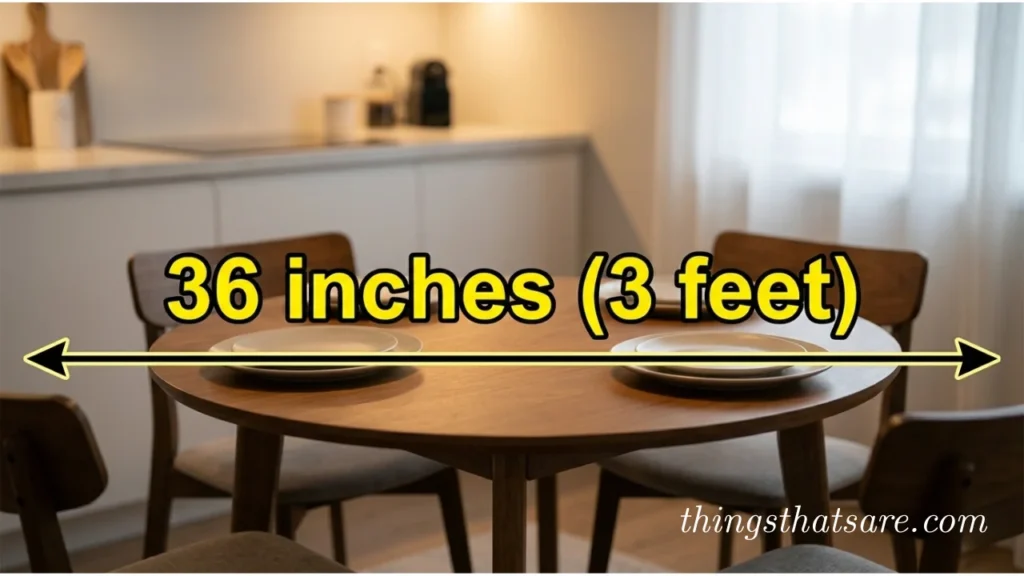
A small or compact dining table designed for apartment living or tight spaces typically measures around 36 inches in width.
This size comfortably seats 2 to 4 people and fits well in standard US kitchen and dining room layouts. Interior designers call this the minimum functional dining dimension — enough space for place settings without feeling cramped.
Height of a 3–4 Year Old Child
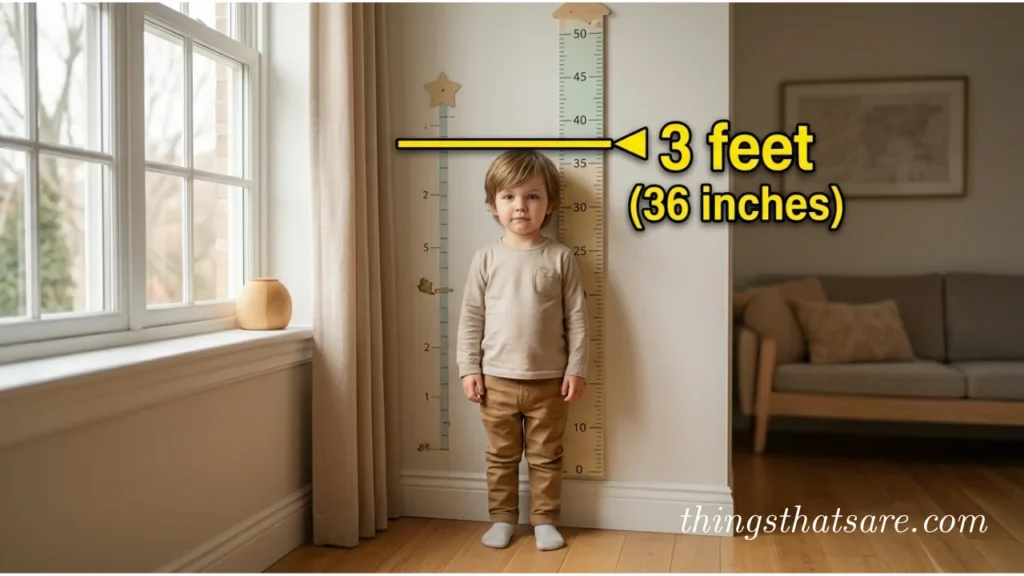
As noted earlier, toddlers aged 3–4 years stand right around the 3-foot mark. According to CDC pediatric growth data,
Boys (age 3): average height ~37.1 inches
Girls (age 3): average height ~36.5 inches
This makes a preschool-aged child one of the most memorable and emotional reference points for the 3-foot measurement. It is a meaningful developmental milestone in early childhood growth tracking.
Irish Wolfhound / Great Dane Shoulder Height
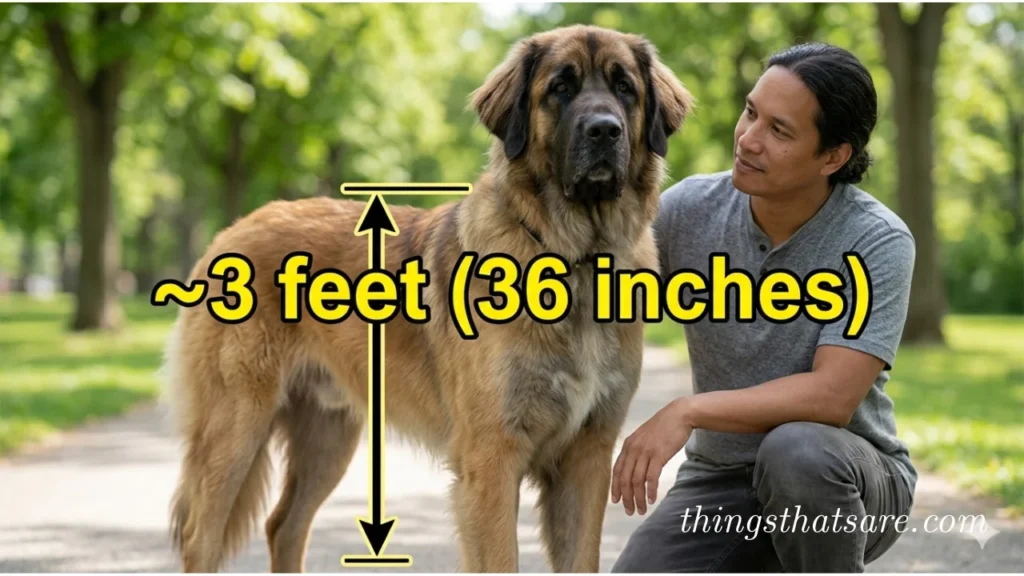
Some of the world’s tallest dog breeds stand right at — or very close to — 3 feet at the shoulder.
Irish Wolfhound: 30–32 inches at shoulder
Great Dane (male): 30–32 inches at shoulder
Scottish Deerhound: 28–32 inches
The AKC (American Kennel Club) lists these as the tallest recognized breeds in the US. Standing next to one of these dogs is essentially standing next to a 3-foot living ruler.
Three Standard 12-Inch Rulers (End to End)
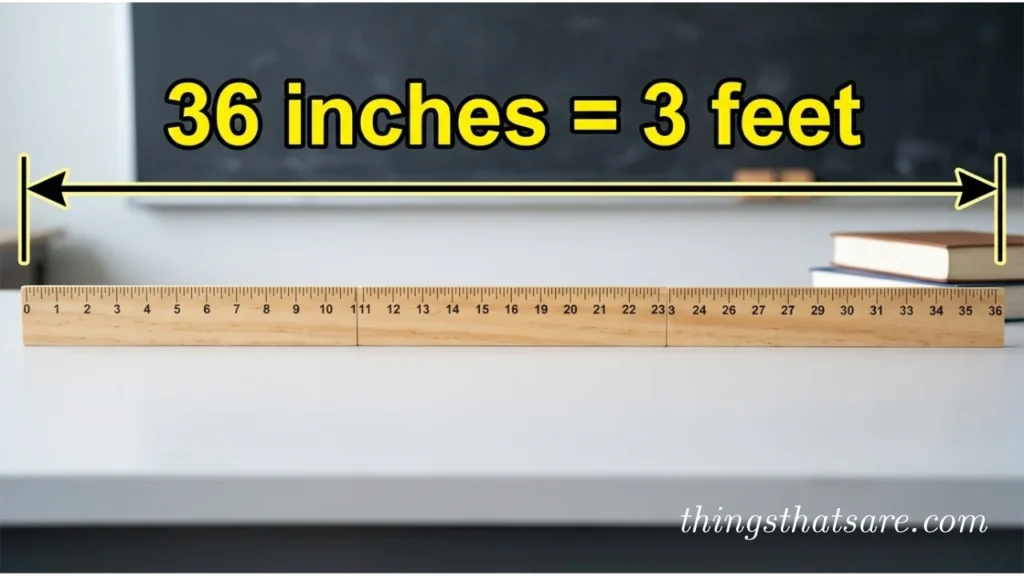
Place three standard 12-inch classroom rulers end to end and you get exactly 36 inches — 3 feet. This is a popular hands-on measurement activity used in US elementary schools.
It turns abstract numbers into a physical, tactile learning experience. Teachers use this method to build real-world measurement comprehension in early math education.
Hacksaw Frame (Extended)
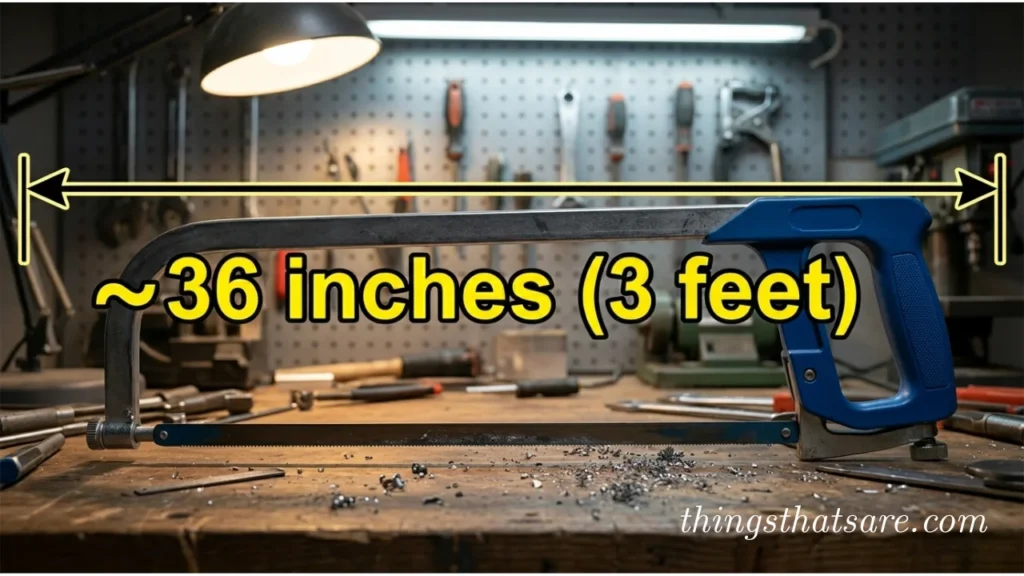
A standard hacksaw with a 12-inch blade measures around 24 inches total, but larger extended hacksaw frames — particularly in professional construction and metalworking — can reach close to 36 inches when fully extended.
Some tradespeople even line up three standard hacksaw blades end to end as a quick field measurement reference on job sites. It is a surprisingly reliable DIY measurement hack.
Half-Width of a Queen-Sized Bed
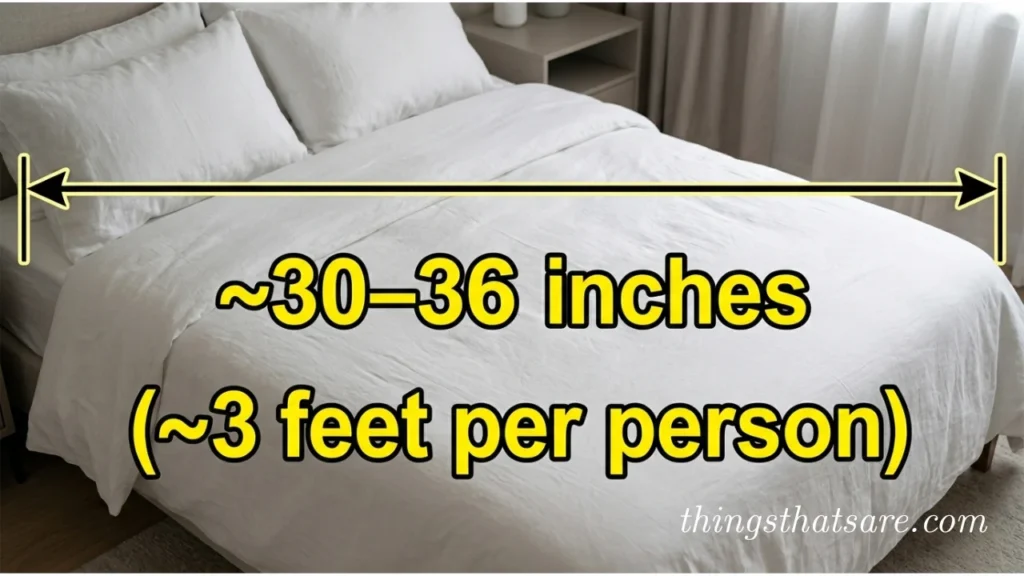
A queen-sized mattress in the US measures 60 inches wide by 80 inches long. Split that width in half and you get 30 inches per person — very close to 3 feet.
That half-width is roughly your personal sleeping territory in a shared bed. Interior designers and bedroom layout planners regularly use this 3-foot benchmark when calculating space clearance around beds.
Half-Height Room Divider / Partition Wall
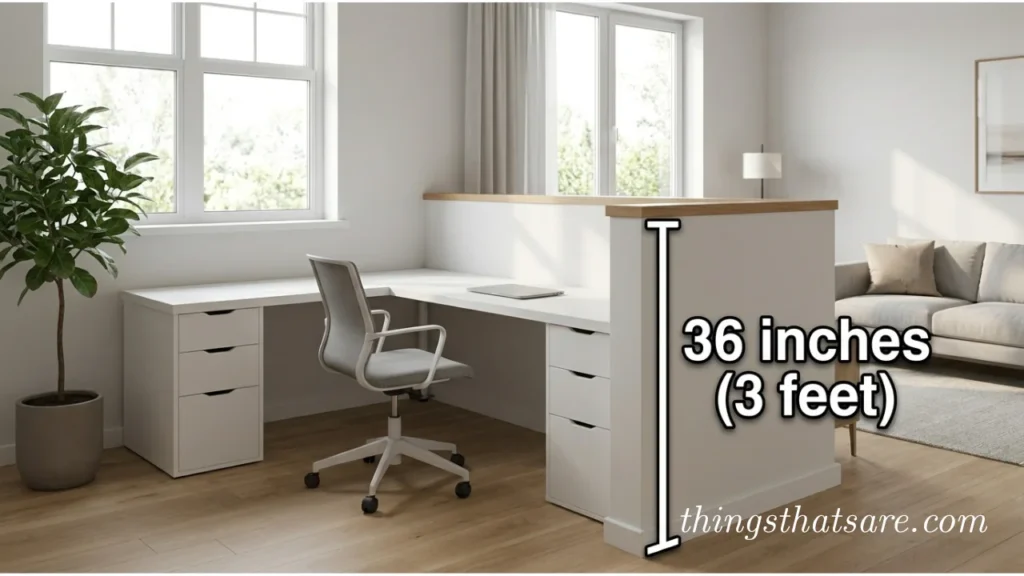
Open-plan homes and offices often use half-height room dividers that stand at approximately 36 inches tall. These create visual zones without blocking light or airflow.
In interior design, this height is specifically chosen because it is above waist level for most adults — providing a sense of privacy without full spatial enclosure. It is one of the most practical applications of the 3-foot measurement in home renovation.
Snow Shovel Handle — A Competitor Gap Item
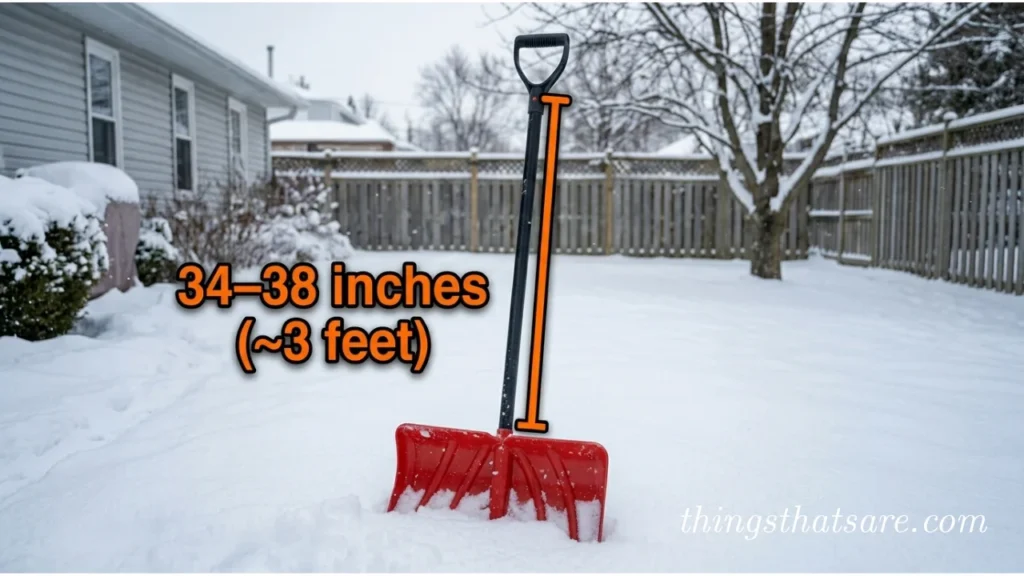
Here is one most measurement blogs miss: a standard snow shovel handle in the US measures between 34 and 38 inches long — putting it squarely in the 3-foot range.
This length is deliberately chosen for ergonomic snow removal. According to ergonomic safety guidelines, a shovel handle should reach approximately waist height when the blade is on the ground — and for the average American adult, that is right around 36 inches. Many winter-climate homeowners across the Midwest and Northeast US own one of these without realizing they have a 3-foot measurement tool sitting in their garage.
Standard Folding Table (Width) — A Competitor Gap Item
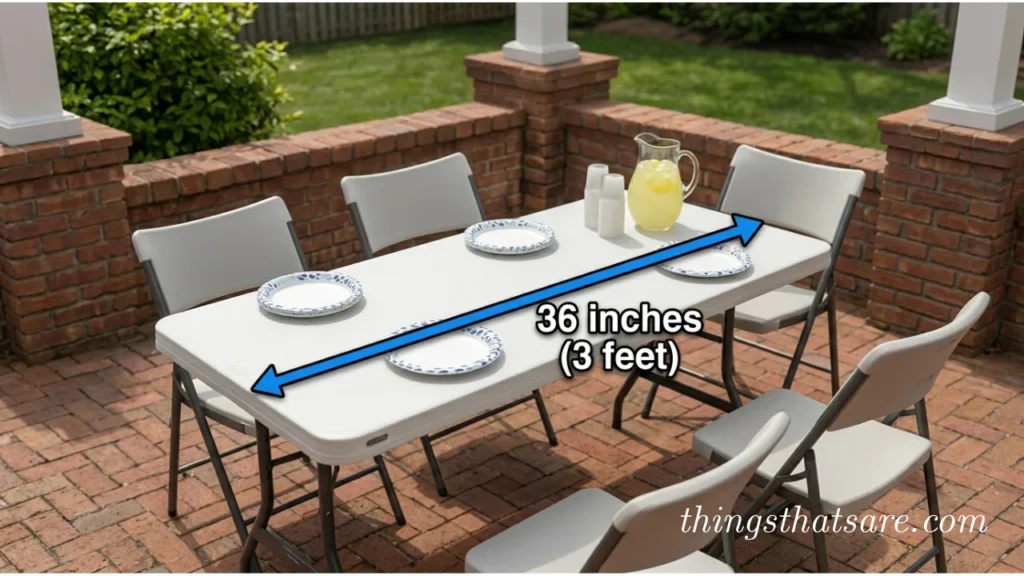
A standard folding table — the kind used at backyard BBQs, church halls, and office events — typically measures 36 inches in width. This is one of the most common furniture pieces in American households.
According to standard banquet and event furniture specs, the 36-inch width allows comfortable seating on both sides without crowding. This measurement directly follows the same 3-foot ergonomic principle behind kitchen counters and dining tables.
How to Estimate 3 Feet Without a Ruler
You don’t always have a measuring tape. Here are reliable, body-based ways to estimate 3 feet in the real world:
Use Your Body as a Measuring Guide
Hip-to-floor distance: For most adults in the US, the distance from hip bone to the floor is close to 36 inches. Stand straight and drop your hand — that hip height is roughly your 3-foot marker.
One large stride: An average adult stride (one full step from heel to heel) measures approximately 2.5 to 3 feet. One confident step gets you close.
Arm span reference: For many people, the distance from fingertip to opposite shoulder — with arm extended — is close to 3 feet.
Common Everyday Estimation Hacks
Kitchen counter trick: If you’re in any American home, the counter is 36 inches. Put your hand on it and you instantly have a 3-foot height reference.
Doorway check: A standard interior door is 36 inches wide. Picture that width in your mind — that is exactly 3 feet.
Toddler reference: If there is a 3-year-old nearby, they are approximately 3 feet tall. Use them as your human yardstick (gently).
Must Visit: 16 Things That Are Exactly 25 Feet Long — Easy Size Comparison Guide
Why 3 Feet Is One of the Most Important Measurements in Daily Life
Most people think of 3 feet as just a number. But this length dimension is actually embedded in some of the most important systems that shape everyday American life.
Role in ADA Accessibility Standards
The ADA (Americans with Disabilities Act) uses the 36-inch measurement as a key standard. Doorways, pathways, and accessible routes in public buildings are required to maintain this width for wheelchair users and mobility device access.
This means 3 feet is literally built into US law as a measurement of accessibility and inclusion.
Interior Design and Space Planning
In residential interior design, the 3-foot measurement governs everything from kitchen counter heights to hallway clearance widths to furniture spacing guidelines. The NKBA and ASID (American Society of Interior Designers) both reference this as a standard working measurement.
Pediatric Growth Milestones
Reaching 3 feet tall is a genuine developmental milestone in early childhood. Pediatricians track height using CDC growth percentile charts, and the 3-foot mark often falls right at ages 3–4 — a time of rapid cognitive and physical development.
Sports Equipment Regulations
From baseball bats to hockey sticks, the 3-foot range governs equipment regulations in major US sports. MLB, NCAA, and youth leagues all set bat length limits around this measurement to ensure fair play and player safety.
Construction and DIY Precision
In construction and DIY projects, the 36-inch yardstick and straightedge are go-to reference tools. Accurate cuts, aligned walls, and properly spaced studs in residential framing often reference 3-foot increments. It is one of the most functional measurements in American home improvement.
Frequently Asked Questions About 3 Feet
How much is a 3 foot example?
A great 3 foot example is a standard kitchen counter height (36 inches from floor to surface) or a standard doorway width (36 inches). Both are found in virtually every American home. A yardstick is the most literal example — it is exactly 3 feet long by definition.
What is 3 ft comparable to?
3 feet is comparable to: the height of a 3–4 year old child, the width of a standard US doorway, the height of a kitchen counter, a full-size acoustic guitar, a large traffic cone, or the shoulder height of a Great Dane. It is roughly half the height of an average adult and equal to exactly one yard.
What size is 3 ft in cm?
3 feet equals exactly 91.44 centimeters (cm). This is calculated by multiplying 3 by 30.48 (since 1 foot = 30.48 cm). In meters, 3 feet is 0.9144 meters — just under 1 meter. This conversion is standardized by the International Bureau of Weights and Measures.
What is 3 m long in feet?
3 meters equals approximately 9.84 feet (or about 9 feet 10 inches). To convert, multiply 3 by 3.28084. So 3 meters is roughly 3.28 times longer than 3 feet. A 3-meter length is more comparable to the width of a standard US parking space.
Conclusion
Three feet. 36 inches. 1 yard. 91.44 cm. The math is simple — but the real-world picture is what makes it stick.
From the doorway you walk through every morning to the kitchen counter where you make your coffee, from a toddler’s height to a Great Dane’s shoulder — 3 feet is everywhere. It is in US law, in sports science, in home design, and in your garage.
Next time someone asks how long is 3 feet, skip the ruler. Just point at the nearest doorway.