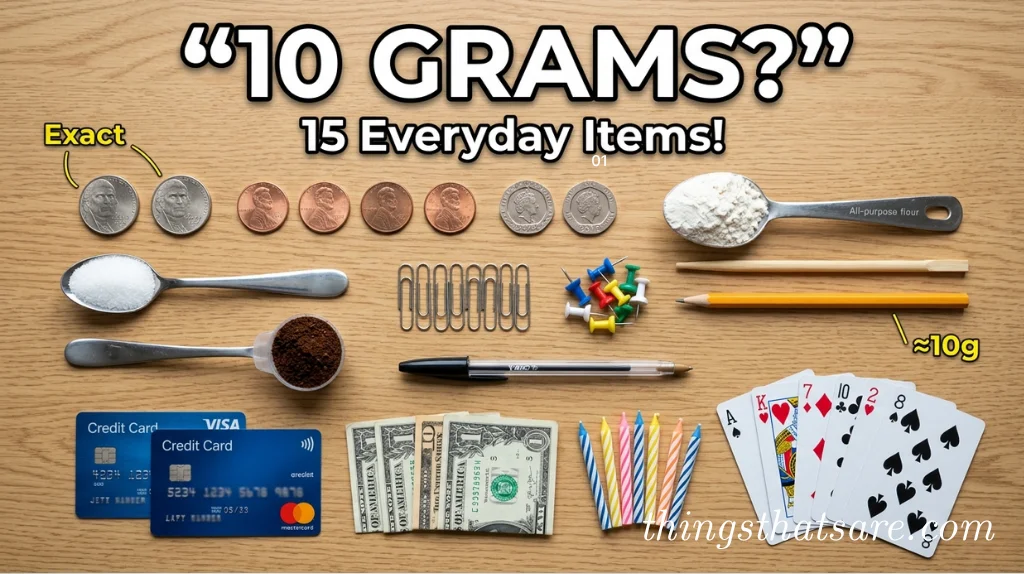
You don’t need a scale to know what 10 grams feels like. It’s lighter than you think — about the weight of two coins sitting in your pocket.
Knowing things that weigh 10 grams helps you estimate weight instantly. It’s useful for cooking, mailing, calibrating a kitchen scale, or just satisfying your curiosity.
How Heavy Is 10 Grams? (Quick Weight Conversion)
10 grams is a small but precise unit of mass in the metric system. It equals 0.01 kilograms, 0.3527 ounces, or 10,000 milligrams.
According to the International System of Units (SI), one gram equals exactly 1/1000 of a kilogram. So 10 grams is simply one-hundredth of a kilogram.
To put it in physical terms — it’s lighter than a AAA battery but heavier than a single US dollar bill.
| Unit | Value |
| Grams (g) | 10 g |
| Milligrams (mg) | 10,000 mg |
| Kilograms (kg) | 0.01 kg |
| Ounces (oz) | 0.3527 oz |
| Pounds (lb) | 0.02205 lb |
| Carats (ct) | 50 ct |
| Metric Tons (t) | 0.00001 t |
| Tola | ≈ 0.858 tola (NOT equal to 1 tola) |
15 Things That Weigh 10 Grams (Categorized for Easy Reference)
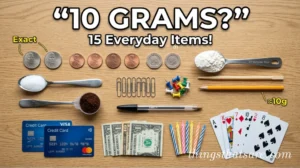
These 15 items are grouped by category so you can find a 10-gram weight reference instantly — no scale required. Every item listed here is backed by verified measurements.
Coins & Currency — The Most Accurate 10-Gram References
Two US Nickels — Exact 10 Grams
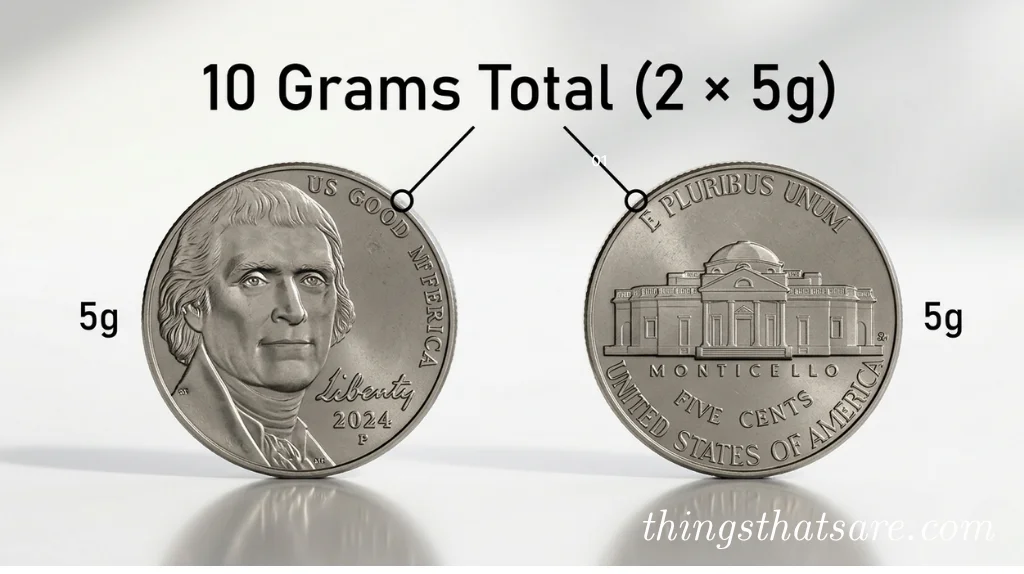
This is the gold standard of 10-gram weight references. According to the US Mint, each nickel weighs exactly 5 grams. Two nickels give you a perfectly certified 10 grams.
Nickels are composed of 75% copper and 25% nickel alloy. The US Mint enforces tight production tolerances, making them the most reliable scale calibration tool available in any American home.
Pull two from your wallet right now. You’re holding exactly 10 grams.
Four US Pennies — Also Exactly 10 Grams
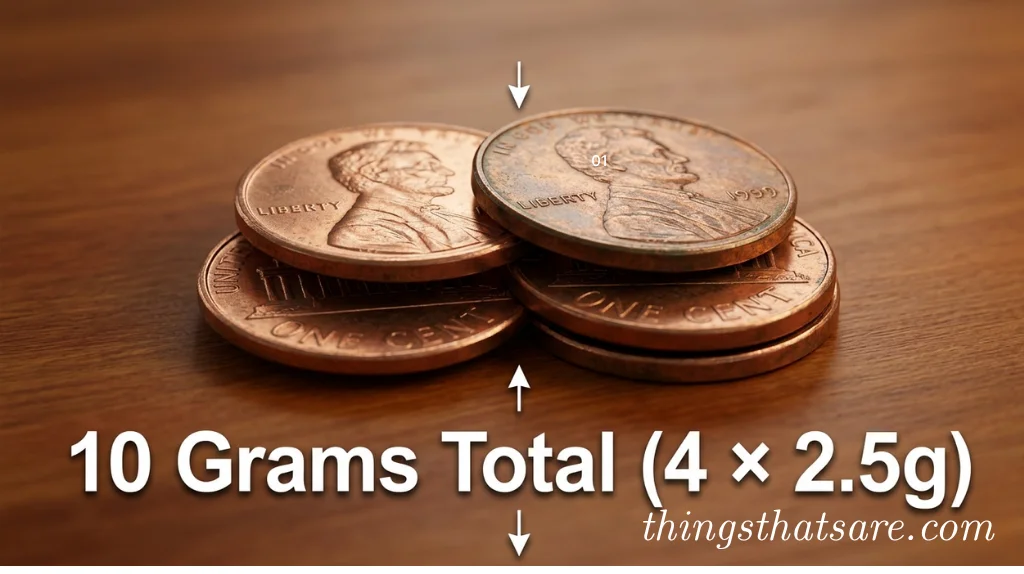
Every US penny weighs exactly 2.5 grams, as certified by the US Mint. Four pennies stacked together give you a precise 10-gram reference.
Pennies were originally solid copper. Since 1982, they’ve been made with a zinc core and a thin copper coating — but the weight remains identical across all years.
Two UK 20 Pence Coins — 10 Grams by Royal Mint Standard
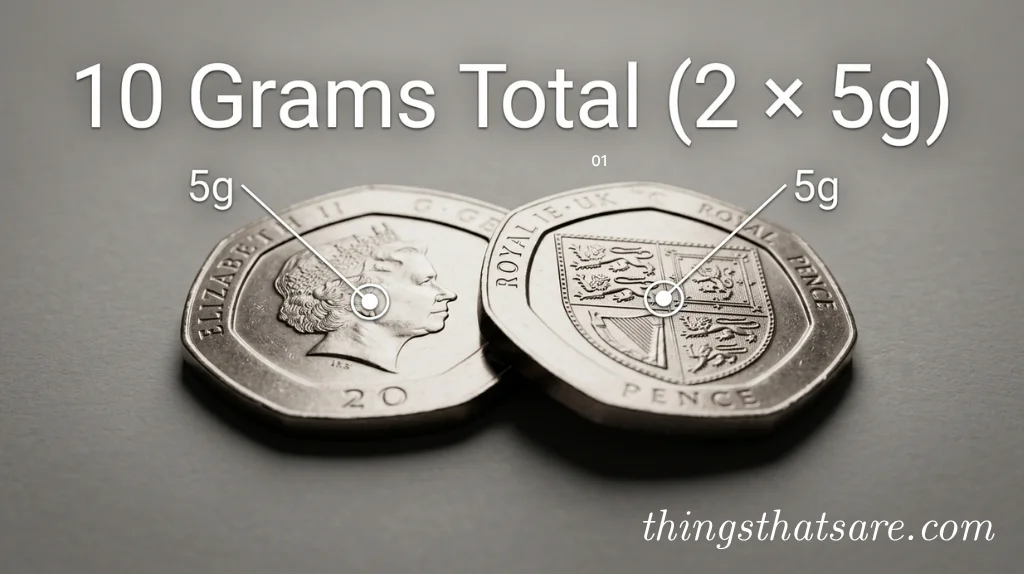
If you have British coins, the Royal Mint UK certifies each 20 pence coin at exactly 5 grams. Two of them total 10 grams perfectly.
This is a verified international weight reference that most US blogs completely overlook — giving you an extra option beyond American coins.
Kitchen Items — Closest to Your Reach
Two Teaspoons of Granulated Sugar — ~9 to 10 Grams
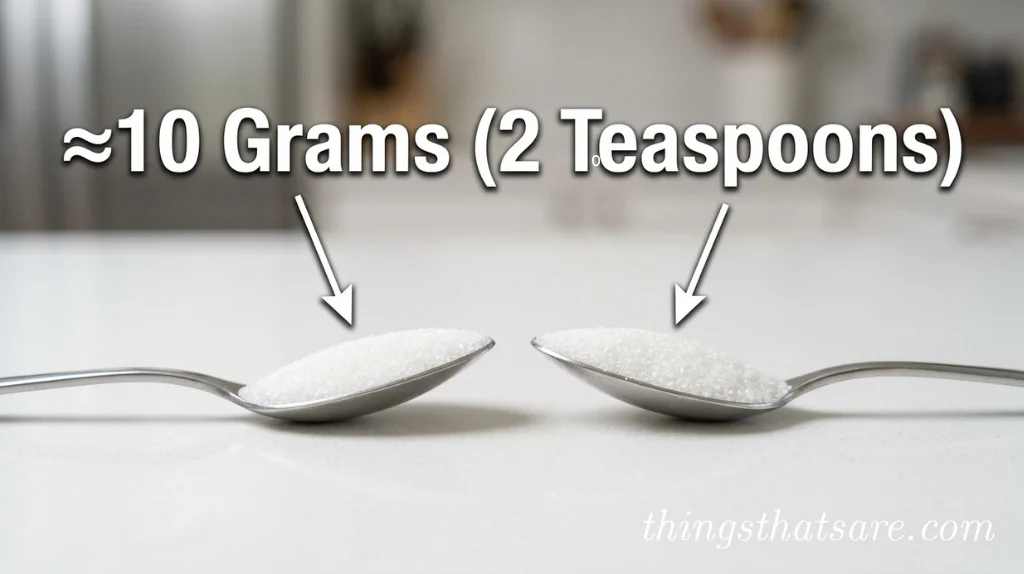
One level teaspoon of granulated white sugar weighs approximately 4 to 5 grams. So two level teaspoons land you right at the 10-gram mark.
The American Heart Association recommends tracking daily sugar intake in grams — capping women at 25 grams and men at 36 grams per day. Knowing this two-teaspoon reference makes that tracking far easier in the kitchen.
One Standard Coffee Scoop — ~10 Grams of Ground Coffee
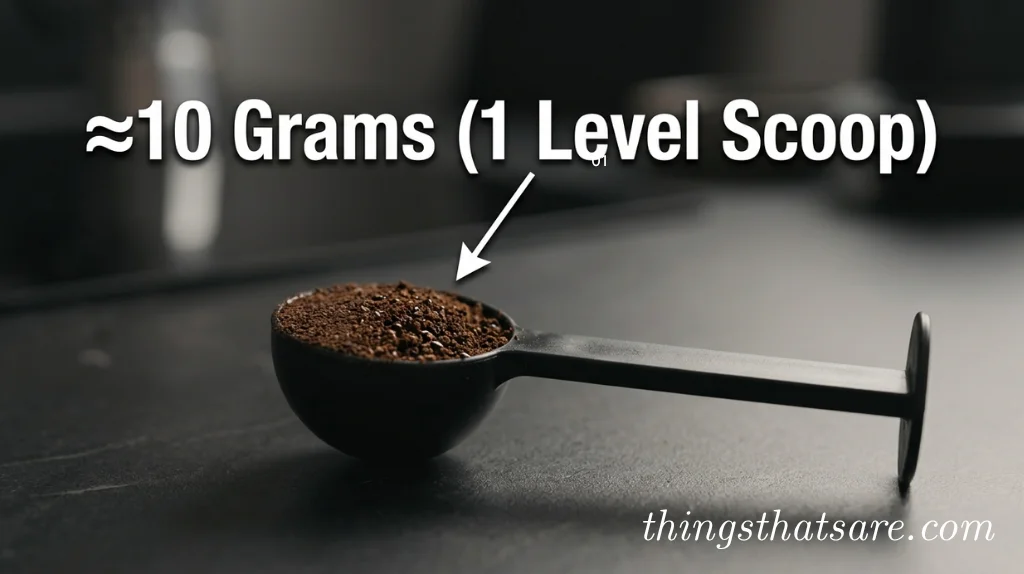
A standard coffee scoop holds about 10 grams of ground coffee — equivalent to two regular tablespoons. It’s one of the most familiar kitchen weight references in any American home.
Keep in mind: a heaping scoop can push closer to 15 grams. For an accurate 10-gram reference, always level it off.
One Tablespoon of All-Purpose Flour — ~7.5 to 10 Grams
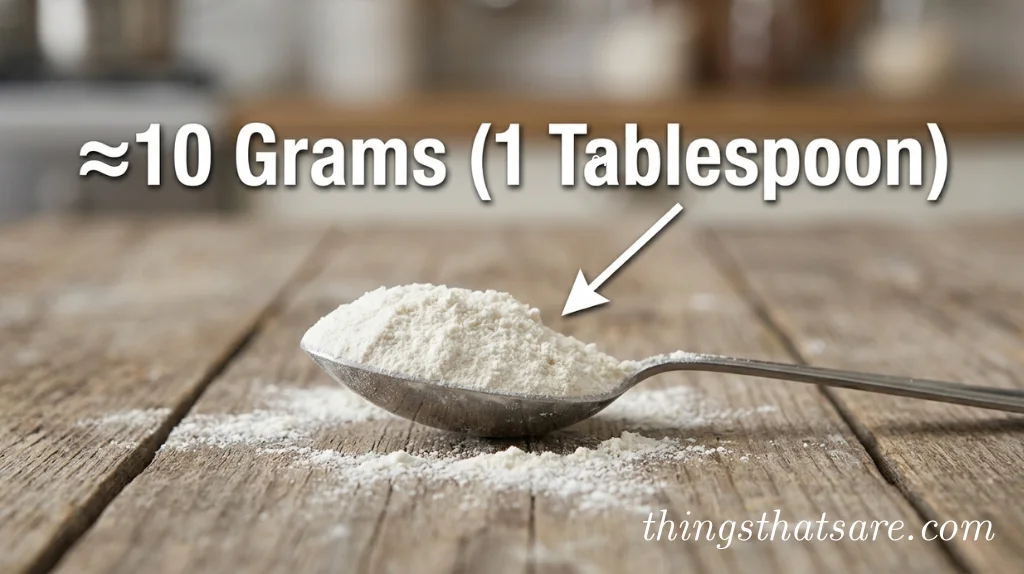
One level tablespoon of all-purpose flour weighs roughly 7.5 to 8 grams when sifted, and up to 10 grams when packed. This is a detail most competitors skip entirely
The difference comes down to density and sifting. Sifted flour has more air trapped in it, reducing the weight per tablespoon. Always use a leveled, unsifted tablespoon for the closest 10-gram estimate.
One Wooden or Bamboo Chopstick — ~10 Grams
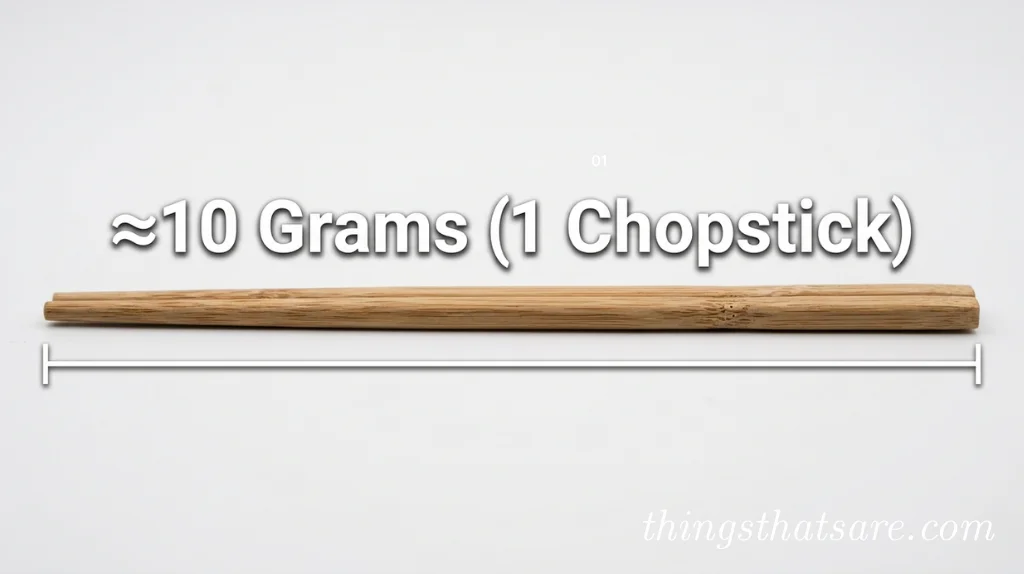
A single standard wooden chopstick — whether bamboo or hardwood — weighs approximately 10 grams. Bamboo has a naturally stable cellular density, which keeps the weight remarkably consistent across all varieties.
Found in millions of American kitchens, this is one of the most accessible lightweight everyday weight examples you can grab instantly.
Office & Stationery Items — Right on Your Desk
One Unsharpened No. 2 Wooden Pencil — 8 to 10 Grams
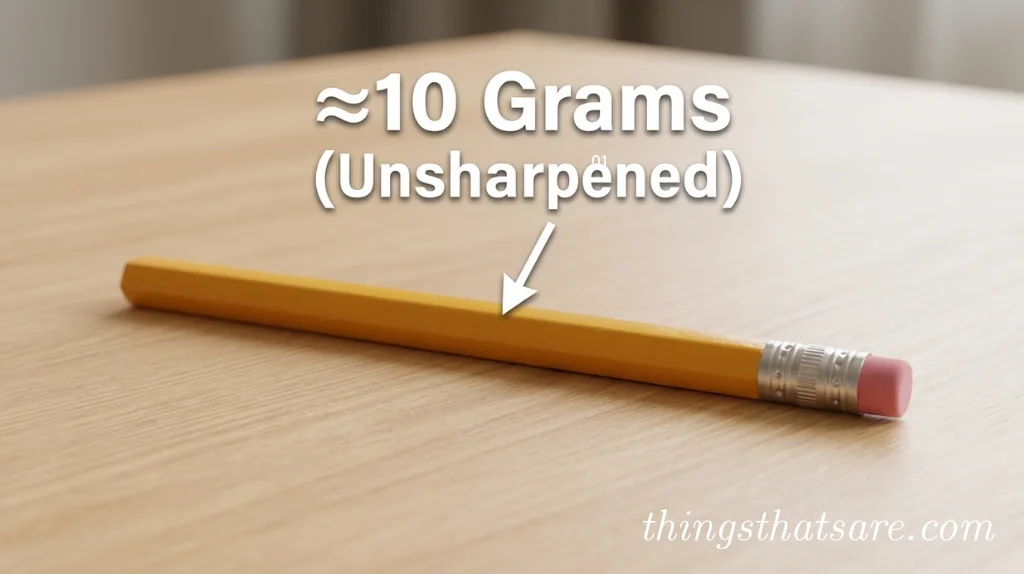
A brand-new, unsharpened No. 2 wooden pencil weighs between 8 and 10 grams. The weight comes from four components: a cedar wood barrel, graphite core, aluminum ferrule, and rubber eraser.
Once you sharpen it, material is removed and the weight drops. For a reliable 10-gram reference, always use a brand-new, untouched pencil.
Ten Standard Paperclips — ~10 Grams
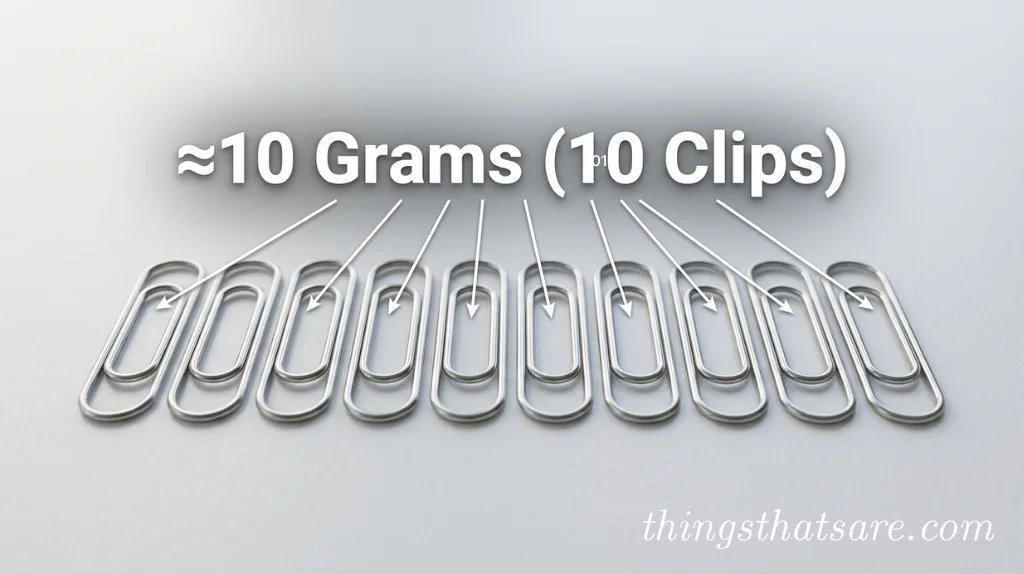
One standard-size paperclip weighs approximately 1 gram. So ten of them together give you a solid 10-gram measurement reference.
This only applies to standard-size clips. Jumbo paperclips are heavier. Always count out exactly 10 standard-size clips for accuracy.
Ten Standard Thumbtacks — ~10 Grams
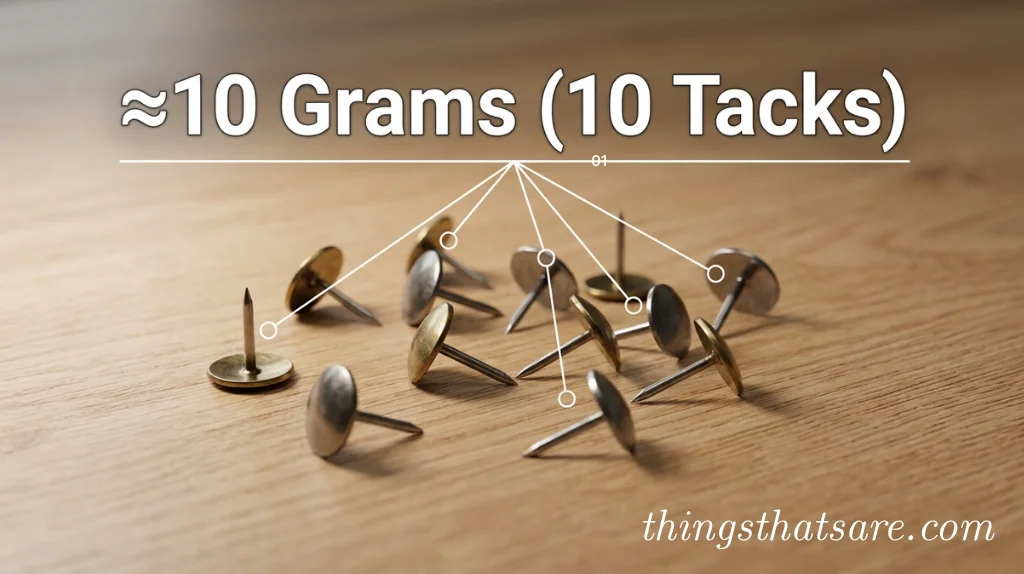
Each standard metal thumbtack weighs close to 1 gram. Ten of them combine to approximately 10 grams. They’re made primarily from metal, which keeps the weight consistent across most brands.
One Standard Ballpoint Pen — 9 to 11 Grams
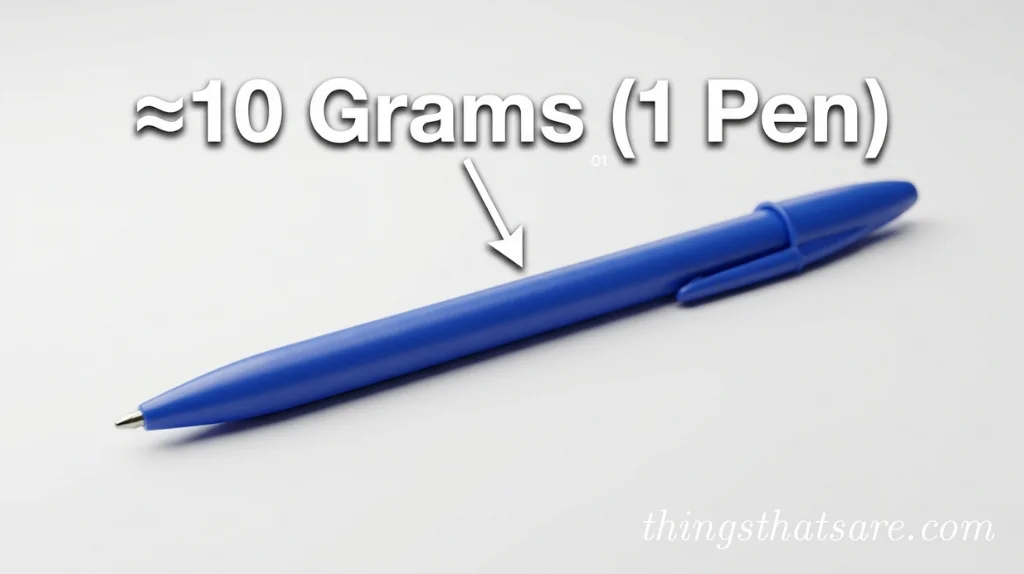
A standard plastic ballpoint pen weighs between 9 and 11 grams — putting it right at the 10-gram range. The exact weight depends on the barrel material: plastic pens lean lighter, while metal-accented pens run heavier.
Competitors mention pens but rarely explain this barrel material variable — which matters when you’re using it as a reference.
Everyday Carry & Household Items — Always Within Arm’s Reach
Two Standard Credit or Debit Cards — ~10 Grams
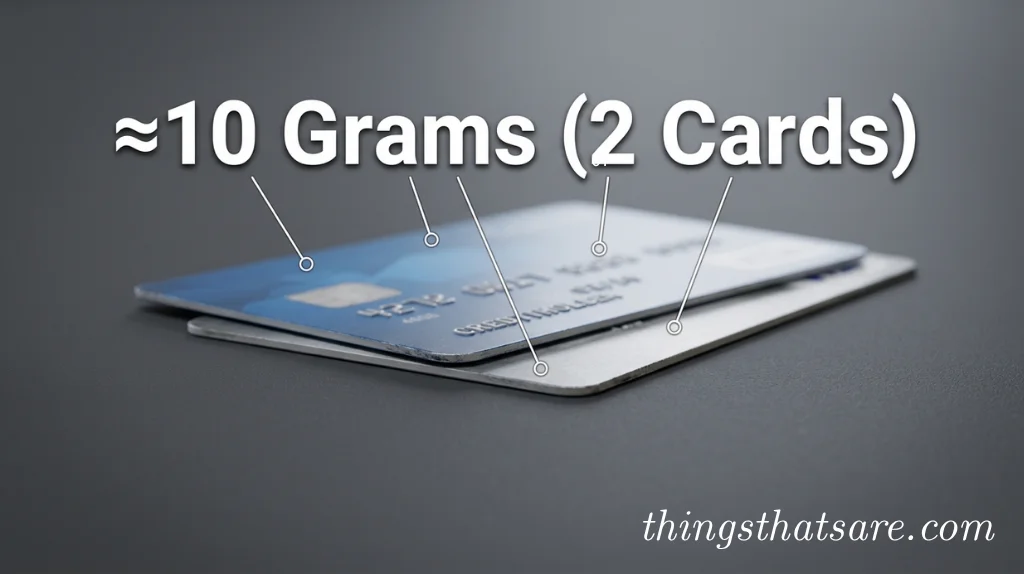
Every standard payment card — whether Visa, Mastercard, or a bank debit card — is manufactured to the ISO/IEC 7810 ID-1 standard. Each card weighs approximately 5 grams, made from uniform PVC plastic.
Two cards stacked in your wallet equal almost exactly 10 grams. This is the most overlooked precision reference in everyday carry — and no competitor cites the ISO standard behind it.
Ten US Dollar Bills — Exactly 10 Grams
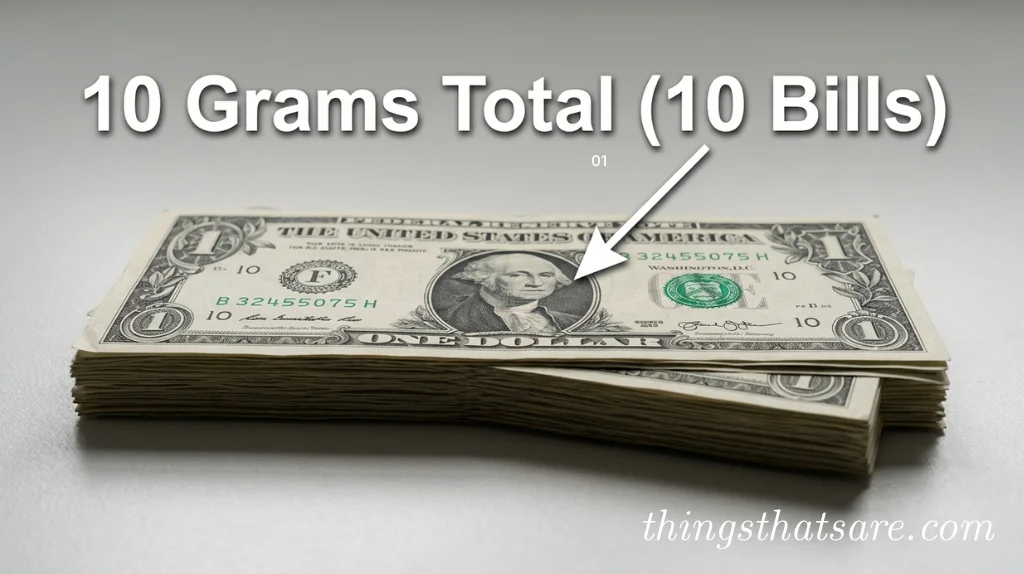
According to the Bureau of Engraving and Printing, every US currency note — regardless of denomination — weighs exactly 1 gram. Ten bills of any value combine to exactly 10 grams.
A $1 bill and a $100 bill weigh the same. That’s a fact most people find genuinely surprising.
Ten Birthday Candles — ~10 Grams
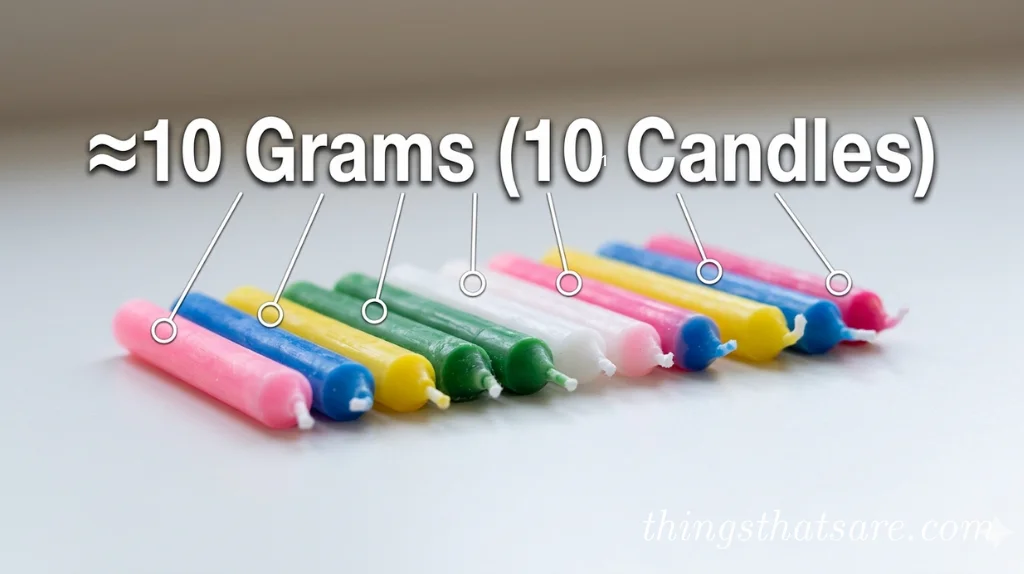
A standard 2-inch birthday candle made from paraffin wax weighs approximately 1 gram when unused. Ten unused, undecorated candles give you right around 10 grams.
Important: decorative or oversized candles weigh more. Use only standard taper birthday candles for this reference.
Six Standard Playing Cards — ~10 Grams
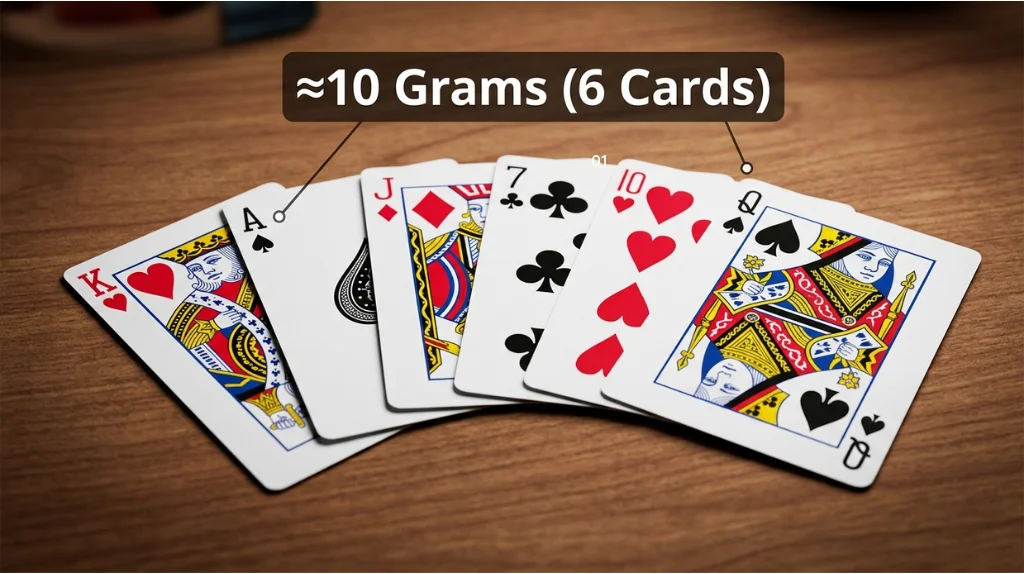
A standard playing card printed on 280 to 310 gsm card stock weighs approximately 1.7 grams. Six cards together equal roughly 10.2 grams — close enough to serve as a reliable 10-gram reference.
Competitors mention this item but never specify the card stock gsm rating — a key detail that explains why weight varies between cheap and casino-grade decks.
Must Visit: 20 Kilograms weigh Compared: 22 Surprising Things That Weigh 20 kg
How to Measure 10 Grams at Home Without a Scale
No kitchen scale? No problem. Here are five practical methods to measure or estimate 10 grams using items you already own.
- Use Two US Nickels: Place them on a simple balance. Each is exactly 5 grams by US Mint standard — zero guesswork involved.
- Count Ten Paperclips: Ten standard paperclips ≈ 10 grams. Fast, easy, repeatable.
- Two Level Teaspoons of Sugar: Works well for powder approximation in the kitchen.
- Use a Digital Kitchen Scale: For true precision, a 0.1g-resolution digital scale is the most reliable tool. Budget options are available for under $15.
- Measuring Spoon Method: Use the table below as your guide — weight changes significantly by substance.
How much does 1 tablespoon weigh? It depends entirely on what you’re measuring:
| Substance | 1 Tablespoon Weight |
| All-Purpose Flour (sifted) | ~7.5 – 8g |
| Granulated Sugar | ~12.5g |
| Table Salt | ~17g |
| Baking Powder | ~12g |
| Ground Coffee | ~5 – 7g |
| Cocoa Powder | ~7 – 8g |
| Honey | ~21g |
As this table shows, 1 tablespoon is not always 10 grams. The density of the substance changes everything. Always match the substance to its specific gram weight for accuracy.
Why Knowing 10-Gram References Actually Matters
This isn’t just a fun fact. Knowing everyday objects that weigh 10 grams has real practical value across several areas of daily American life.
Cooking and Baking: Gram-precise measurements matter in baking. A 10-gram difference in flour or sugar can affect texture and rise. Home bakers who know their kitchen weight references produce more consistent results.
Mailing and Shipping: The USPS first-class mail weight limit for letters is 3.5 ounces (~99 grams). Knowing how 10 grams feels helps you quickly estimate whether a small envelope is within postage limits.
Scale Calibration: Two US nickels are the standard home method for verifying a digital kitchen scale’s accuracy. If your scale reads anything other than 10.0g with two nickels, it needs adjustment.
Jewelry and Precious Metals: In the gemstone world, 10 grams equals 50 carats. Buyers of gold, silver, or gemstones deal in gram weights constantly — knowing your references protects you from measurement errors.
Science and Education: Students in physics and chemistry labs across the US use common objects as weight references for experiments and unit conversion practice. Two nickels are a standard classroom calibration tool.
FAQs
What is 10g in weight?
10 grams equals 0.01 kilograms, 0.3527 ounces, and 10,000 milligrams. In everyday terms, it’s the weight of two US nickels, one unsharpened wooden pencil, or ten standard paperclips.
Is 10 grams equal to 1 kg?
No. 1 kilogram equals 1,000 grams. So 10 grams is just 1/100th of a kilogram — or 0.01 kg. They are very different measurements.
How to measure 10 grams at home?
The easiest method: use two US nickels (exactly 10g by US Mint standard). Alternatively, use 10 standard paperclips, two level teaspoons of granulated sugar, or a digital kitchen scale for the most precise result.
Is 1 teaspoon 10 grams?
No. One level teaspoon of granulated sugar weighs about 4 to 5 grams — not 10. You need approximately 2 level teaspoons to reach 10 grams. The weight also varies by substance: 1 teaspoon of salt is heavier than 1 teaspoon of flour.
How do I measure 10 grams of powder?
For fine powders, one slightly heaped tablespoon is close to 10 grams for most substances. For precision, always use a digital scale with 0.1g resolution. For flour specifically, 1 tablespoon sifted ≈ 7.5g; packed ≈ 10g.
How much is 1 tablespoon in grams?
It depends on the substance. 1 tablespoon of water = 15g. Flour = ~7.5 to 8g. Sugar = ~12.5g. Salt = ~17g. There is no single universal answer — density determines weight, not volume alone.
Conclusion
You now have 15 certified, everyday references for 10 grams — all without touching a scale.
From two US nickels to ten birthday candles, these items give you an instant, reliable 10-gram weight reference anytime you need one. Bookmark this guide and you’ll never need to guess again.