You’ve probably said it. Maybe someone else said it around you.
“I have a buttload of work to do.”
It sounds like slang. It sounds made up. But here’s what almost nobody knows — a buttload is a completely real, historically documented unit of liquid measurement. It’s not a joke. It’s not internet humor. It’s medieval commerce.
And once you learn exactly how much a buttload really is, you’ll never use the phrase the same way again.
What Is a Buttload Measurement? The Real Measurement Behind the Slang
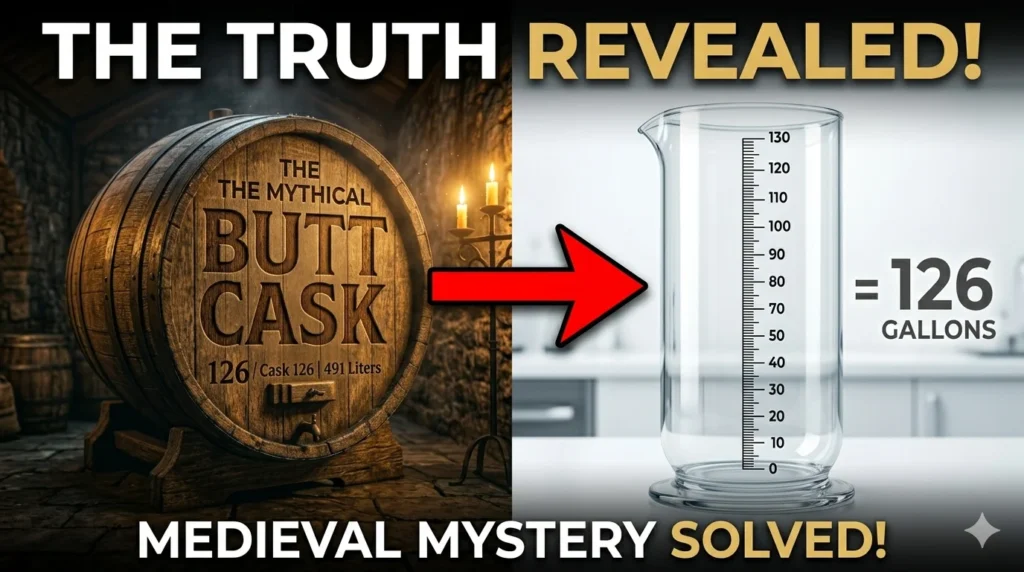
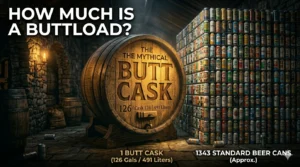
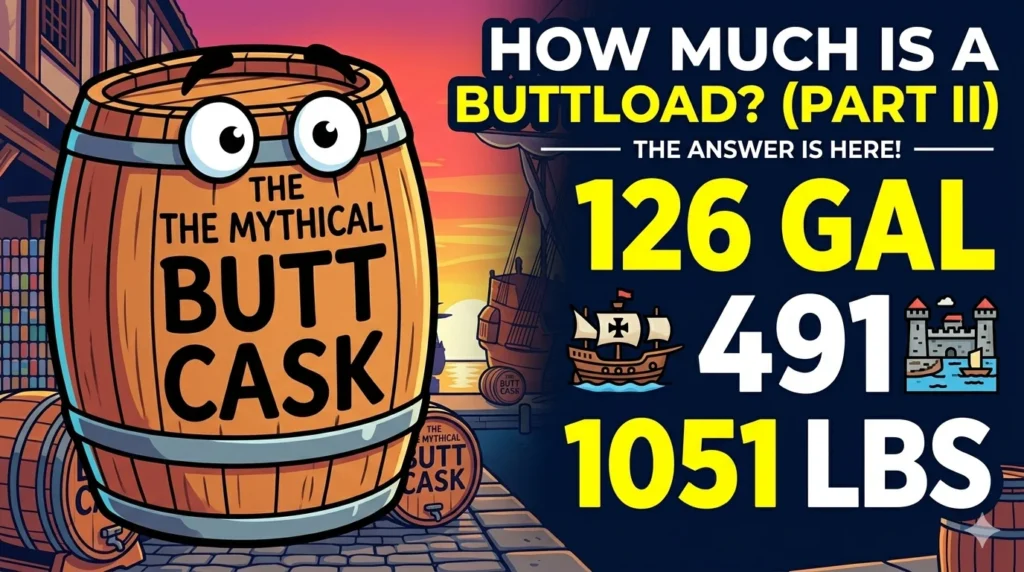
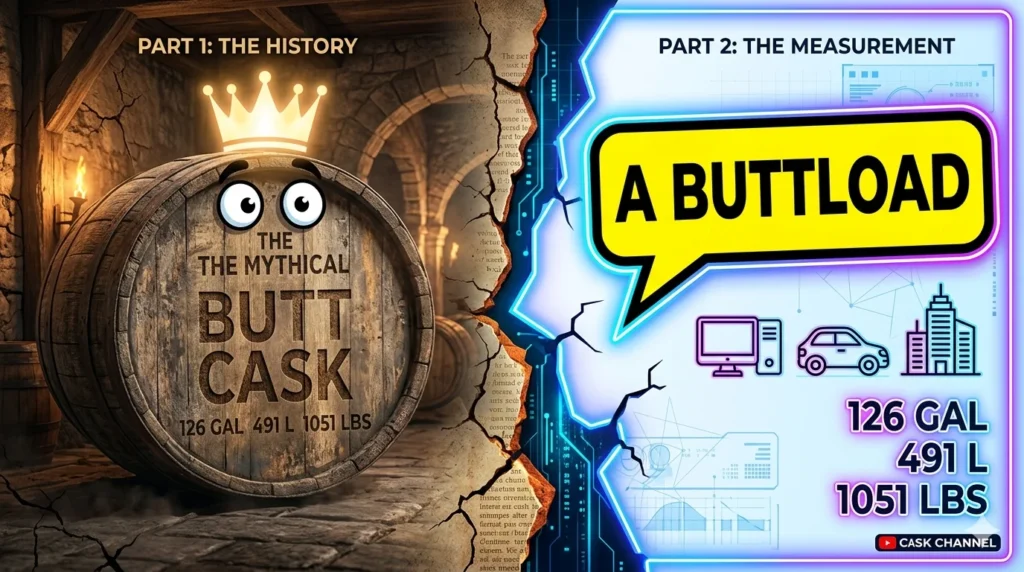
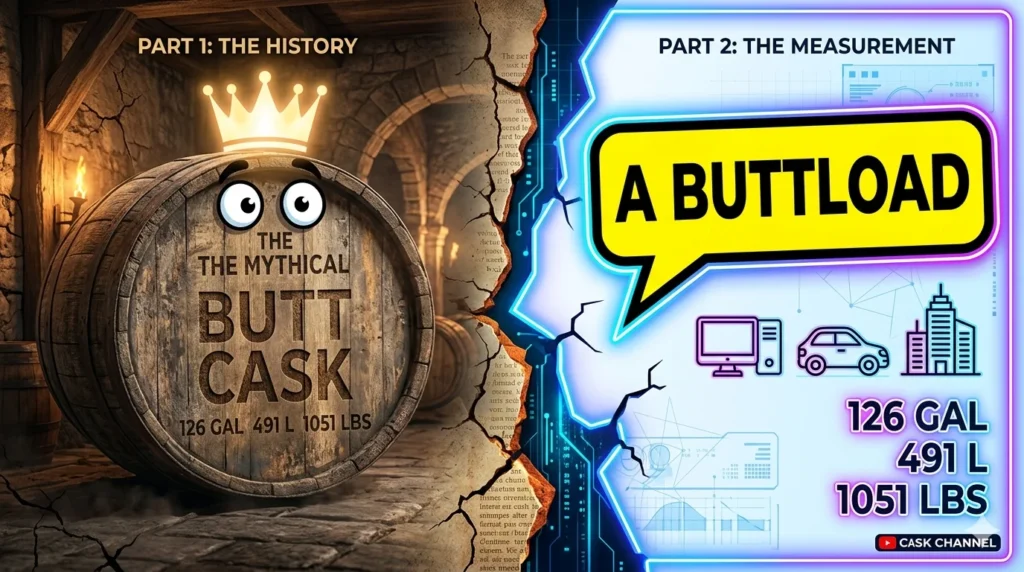
A buttload is a traditional English unit of liquid volume equal to 126 US gallons — or approximately 491 liters.
That’s not a rough estimate. That’s the exact figure. The Merriam-Webster Dictionary defines a butt as a large cask used for liquids, specifically wine, ale, or water, with a capacity of 108 imperial gallons.
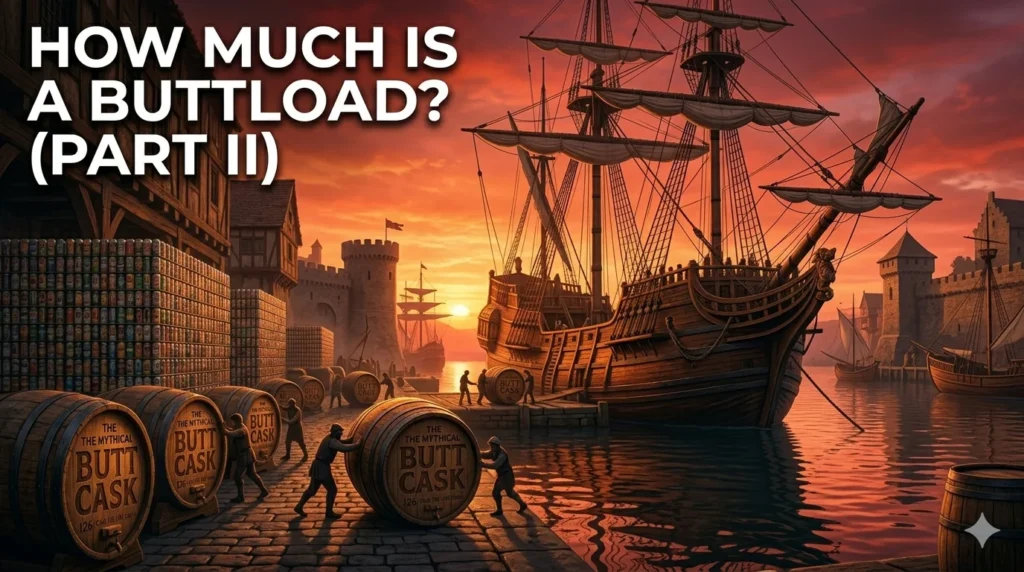
The unit originated from the butt cask — a massive wooden barrel used across medieval England and Europe for storing and transporting bulk liquids. These weren’t small containers. Moving one required multiple workers and a system of ramps and rolling tracks.
Here’s something most people miss: A butt didn’t hold the same amount for every liquid.
- Wine butt: approximately 477 liters
- Ale butt: approximately 491 liters
The difference existed because wine and ale fell under different taxation and trade standards in medieval England. Tax collectors measured duties by the butt, so precision mattered — not just for buyers and sellers, but for the Crown.
A “pipe” is the same thing as a butt. When merchants dealt in fortified wines like port or sherry, they called the same 126-gallon cask a pipe instead of a butt. Same container, different name depending on the liquid inside.
According to the National Institute of Standards and Technology (NIST), the butt was one of the most widely recognized archaic liquid measurement units in the English-speaking world — and its legacy lives on in everyday American speech.
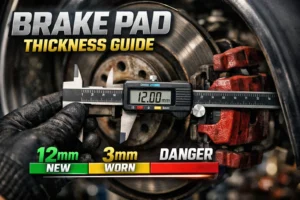
Must Visit: Brake Pad Measurement: A Step-by-Step Guide to Staying Safe
How Much Is a Buttload? Full Measurement Breakdown
Let’s make this real and concrete for you.
A single buttload equals:
| Measurement | Amount |
|---|---|
| US Gallons | 126 gallons |
| Imperial Gallons | 108 gallons |
| Liters | ~491 liters |
| Fluid Ounces | ~16,128 fl oz |
| Weight (water) | ~1,051 pounds |
| Weight (wine) | ~1,087 pounds |
| Weight (beer) | ~1,060–1,080 pounds |
How much is a buttload in pounds?
It depends on the liquid. Water weighs about 8.34 pounds per gallon. At 126 gallons, a buttload of water weighs roughly 1,051 pounds. Wine is slightly denser — expect around 1,087 pounds per buttload. Beer lands somewhere in between, typically 1,060 to 1,080 pounds.
So when someone says they have a buttload of something? They mean over half a ton.
How much is a buttload of beer?
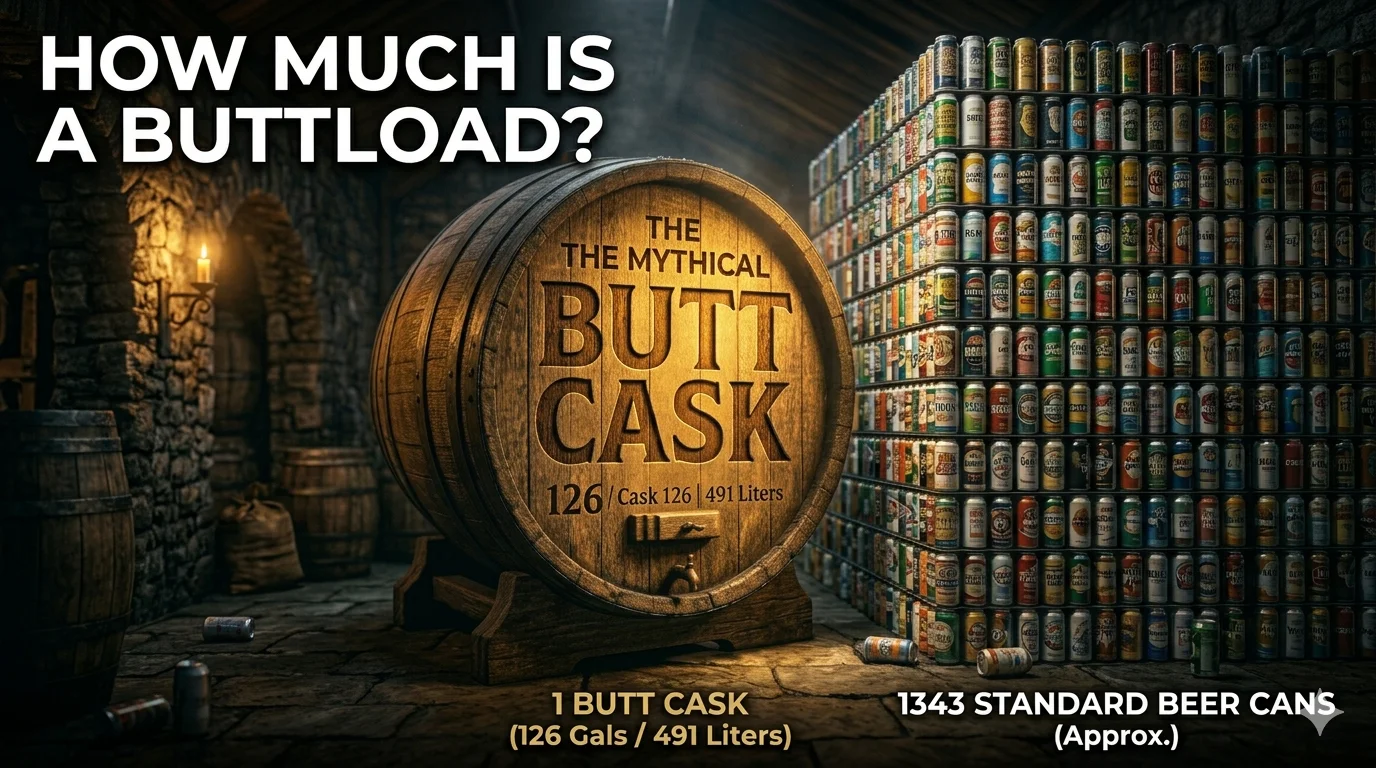
A standard 12 oz beer can holds 0.0938 gallons. At 126 gallons per buttload, one buttload equals approximately 1,343 cans of beer. That’s roughly 56 cases of 24-packs.
In draft terms, a standard US half-barrel keg holds 15.5 gallons. A buttload equals just over 8 full kegs of beer.
Plan your party accordingly.
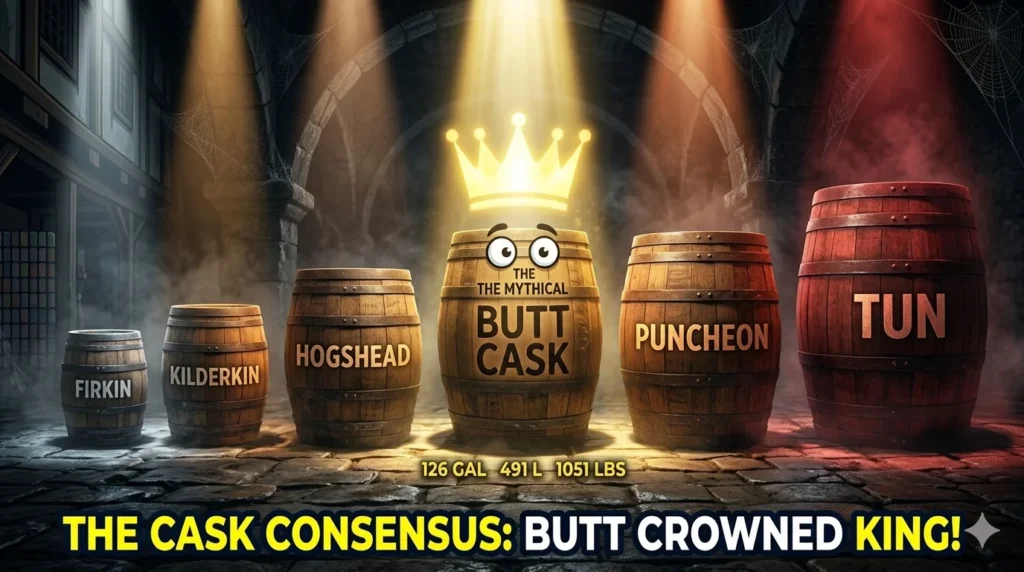
Buttload vs. Hogshead vs. Tun — The Full Barrel Measurement Hierarchy
Medieval merchants didn’t just use butts. They had an entire barrel measurement system — a hierarchy of wooden casks, each with a specific volume for specific trade purposes.
Here’s the full liquid measurement hierarchy used across medieval England and Europe:
| Cask Name | Volume (US Gallons) | Relation to Buttload |
|---|---|---|
| Firkin | ~9 gallons | 1/14 of a buttload |
| Barrel | 36 gallons | ~¼ of a buttload |
| Hogshead | 63 gallons | ½ of a buttload |
| Puncheon | 84 gallons | ⅔ of a buttload |
| Butt / Buttload | 126 gallons | — |
| Tun | 252 gallons | 2 × a buttload |
The butt was the workhorse of the system. It was large enough to carry significant volume, but practical enough to move, stack in ship cargo holds, and store in warehouse cellars. The tun at 252 gallons — exactly two butts — was used mainly by large wine estates and shipping operations.
The hogshead at 63 gallons was half a butt, and it was the cask of choice for most taverns and smaller merchants. The Oxford Dictionary of Weights, Measures, and Units confirms this entire hierarchy as part of a standardized trade system that kept European commerce honest.
What is 126 gallons of wine called?
It’s called a butt — or a pipe when specifically referring to port or sherry. Both terms describe the same volume: 126 US gallons, the standard wine barrel measurement used in historic trade and still referenced in the wine industry today.
When everyone agreed on what a butt meant, buyers couldn’t cheat sellers, and tax collectors couldn’t over-collect. Standardization was survival.
From Wooden Cask to Everyday Slang — How “Buttload” Survived Centuries
Here’s where it gets fascinating — and where most blogs stop too soon.
Assload came before buttload. And they have completely different origins.
The word assload traces back thousands of years. It literally meant the load a donkey (ass) could carry. The term appears in annotated Bibles from 1832 where an ass’s load was roughly equivalent to 8 bushels. It also showed up in Aesop’s Fables and in arithmetic textbooks through the 1800s.
As Shiwani at This Wonderful Word explains, people naturally assumed that buttload evolved from assload — but surprisingly, that’s not what happened. Buttload evolved independently — directly from the butt cask measurement. Two different words, two different historical roots, landing in the same linguistic neighborhood.
The American slang “-load” family grew from both of these roots. Words like shitload, crapload, and crapton followed the same structural pattern — taking a unit or crude reference and turning it into a quantity expression. The Oxford Dictionaries acknowledge assload as an established American slang term meaning simply “a lot.”
Why did buttload survive? Language experts point to two reasons:
First, it sounds funny. Second, it has genuine historical credibility. That rare combination — humor plus factual grounding — is what keeps a word alive long after its literal use disappears. Nobody ships wine in wooden butts anymore, but everyone still has a buttload of emails on Monday morning.
Other Quirky Historical Measurement Units You Never Knew Were Real
Buttload isn’t alone. History is full of obsolete measurement units that sound bizarre but were completely serious tools of commerce, agriculture, and science.
According to NIST’s “Taking Measure” blog, authored by Ben P. Stein, humans have invented some remarkably colorful archaic units of measure throughout history.
The Noggin (or Gill) was first used to describe a quarter pint and later a half pint of ale. It’s one of the earliest ale measurement units in English history.
The Ale Gallon was officially established by Queen Elizabeth I of England. It equaled approximately 1.22 standard gallons — likely designed to account for foam loss from a tap. It’s no longer used today, but it once governed every pint poured in England.
The Batman — long before comic books — was an ancient unit of mass originating in Babylon (near modern-day Baghdad). One batman equaled 7.7 kilograms or 16.7 pounds. It was used in trade throughout the Middle Ages.
The Score equals 20, famously used by Abraham Lincoln in the Gettysburg Address: “Four score and seven years ago.” It comes from the Old Norse word “skor,” meaning notch — farmers would cut a mark on a stick after counting every 20 cattle or sheep.
The Cubit was one of humanity’s oldest length measurements. The Egyptians defined it as the distance from the elbow to the tip of the middle finger. The problem? Everyone’s arm is different.
The Cow-Calf Unit is still used in agriculture today. It estimates how much land is needed to feed a beef cow with a calf. A goat is about one-eighth of a cow-calf unit. An alpaca is about one-tenth.
The IBU (International Bitterness Unit) measures the bitterness of beer. One IBU equals one part per million of isohumulone — the acid in hops that gives beer its bite. Above 45 IBU? That’s a seriously hoppy beer.
These units all share one thing: they were invented by real people solving real problems, using whatever references made sense at the time. The butt cask, the batman, the noggin — they’re all evidence of how measurement history is really just human ingenuity on display.
FAQ — Your Buttload Questions Answered
What is the measurement for a buttload?
A buttload is a historical liquid volume measurement equal to 126 US gallons (approximately 491 liters or 108 imperial gallons). It originated from the “butt” — a large wooden cask used in medieval England for storing and transporting wine, ale, and other liquids.
What is 126 gallons of wine called?
126 gallons of wine is historically called a butt or a pipe. Both refer to the same volume. “Pipe” was the preferred term for fortified wines like port and sherry, while “butt” was more commonly used for table wine and ale.
How much is a buttload of beer?
One buttload of beer equals approximately 1,343 standard 12 oz cans or roughly 8 full half-barrel kegs. In weight, a buttload of beer comes to approximately 1,060–1,080 pounds, depending on the specific beer’s density.
How much is a buttload in pounds?
It depends on the liquid. A buttload of water weighs about 1,051 pounds. A buttload of wine weighs approximately 1,087 pounds. A buttload of beer typically falls between 1,060 and 1,080 pounds. At any count, it’s well over half a ton.
Why are men so attracted to big booties?
This is a psychology and evolutionary biology question — not a measurement topic. Research published in journals like Evolution and Human Behavior suggests it may be linked to evolutionary signals of health and fertility, though cultural preferences vary significantly across different societies and time periods. For a deeper answer, this falls outside the scope of measurement history.
How many people will 10 pounds of pulled pork feed?
As a general food service guideline, you should estimate about ⅓ pound of cooked pulled pork per person for a sandwich, or ½ pound per person for a plate. That means 10 pounds of pulled pork feeds approximately 20 people for sandwiches or about 15 to 18 people for full plates.
Conclusion
A buttload isn’t just a funny expression. It’s a 126-gallon liquid measurement with roots deep in medieval English commerce, wine trade, and barrel-making craft.
Next time you use the phrase — or hear someone else use it — you’re actually referencing a system of historical measurement units that once governed trade across an entire continent. That’s not nothing. That’s history hiding in plain speech.