Most people hear “100 feet” and draw a blank. That is because numbers without context mean very little. Here we will discuss 25 Things That Are 100 Feet Tall and its pics with length.
One hundred feet equals 30.48 meters — tall enough to change a skyline, long enough to span a city intersection, and big enough to carry serious engineering weight. Once you connect this number to real objects you already know, it clicks instantly.
How Long or Tall Is 100 Feet? (Quick Reference)
Before diving into examples, here is a fast breakdown of what 100 feet equals in common units.
| 100 Feet = | 30.48 Meters |
| 100 Feet = | 33.33 Yards |
| 100 Feet = | 1,200 Inches |
| 100 Feet = | 0.019 Miles |
Walking 100 feet takes roughly 33 to 40 seconds at a normal pace — about 40 average adult steps.
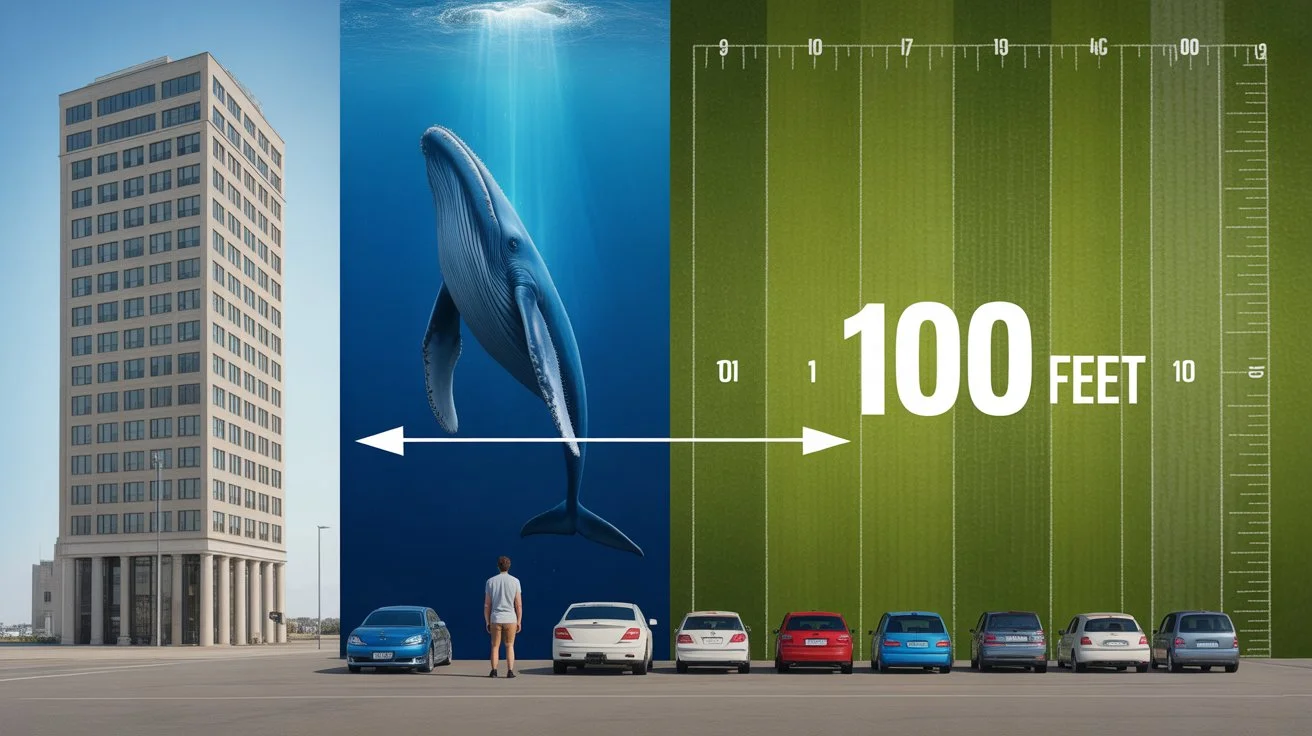
Standing still and looking up at a 10-story building is your fastest visual anchor. That height is almost exactly 100 feet.
You can also picture 18 adults lying head-to-toe in a straight line. That human chain equals 100 feet. If you by chance not satisfied with this then must try size comparison tool.
25+ Things That Are 100 Feet Tall or 100 Feet Long
These real-world examples span architecture, nature, sports, vehicles, and famous landmarks. Each one helps you picture this measurement instantly.
10-Story Building

A standard commercial building floor stands about 10 feet tall, including structural materials and ceiling space. Stack ten floors and you reach almost exactly 100 feet.
You see these buildings in downtown districts, college campuses, and hospital complexes across every major U.S. city. Standing at street level and counting ten floors up gives you an instant, reliable reference for 100 feet.
Must Visit: 15 Everyday Things That Are 2 Inches Long (Easy Real-Life Size Examples)
One-Third of an American Football Field
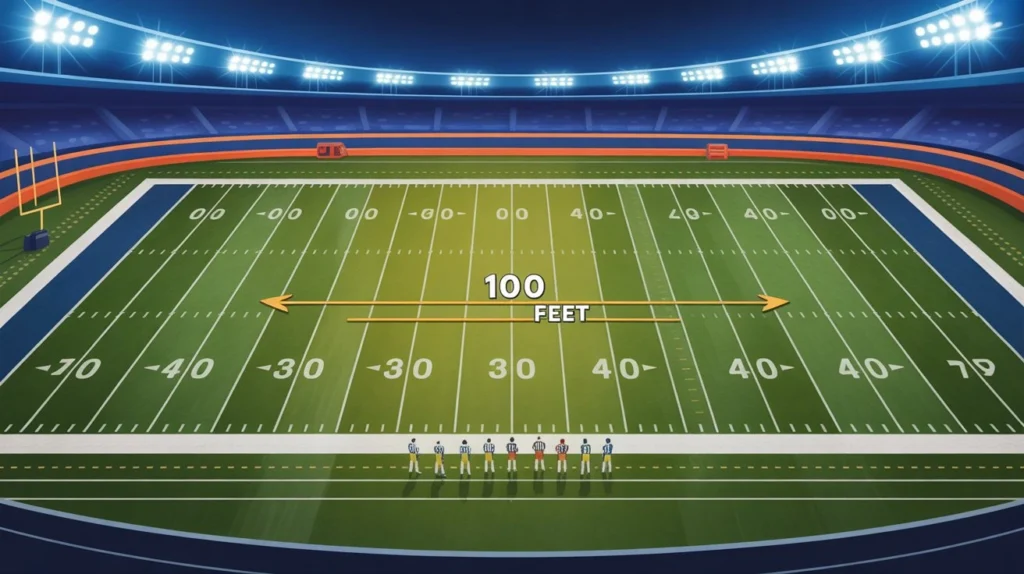
A regulation NFL or NCAA football field measures 300 feet from goal line to goal line. Divide that into three equal sections and each piece equals exactly 100 feet.
Picture the goal line to the 33-yard line. That stretch is your 100-foot reference. It is one of the most reliable visual tools because every American has seen a football field in person or on television.
Boeing 737 Airplane

Many mid-size variants of the Boeing 737 measure close to 100 feet in length. The Boeing 737-800, one of the most flown aircraft in the world, stretches about 129 feet — but shorter 737 variants sit right near the 100-foot mark.
Next time you board a short-haul domestic flight, walk from nose to tail along the jetway. The scale surprises most people because the open tarmac makes aircraft look smaller than they really are.
Blue Whale

The blue whale is the largest animal ever recorded on Earth. Adult individuals commonly measure between 80 and 100 feet from snout to tail flukes, with some documented specimens reaching the full 100-foot mark.
A blue whale can weigh over 150 tons. Life-size models displayed in natural history museums like the American Museum of Natural History in New York make this extraordinary length tangible.
Mature Redwood or Oak Tree
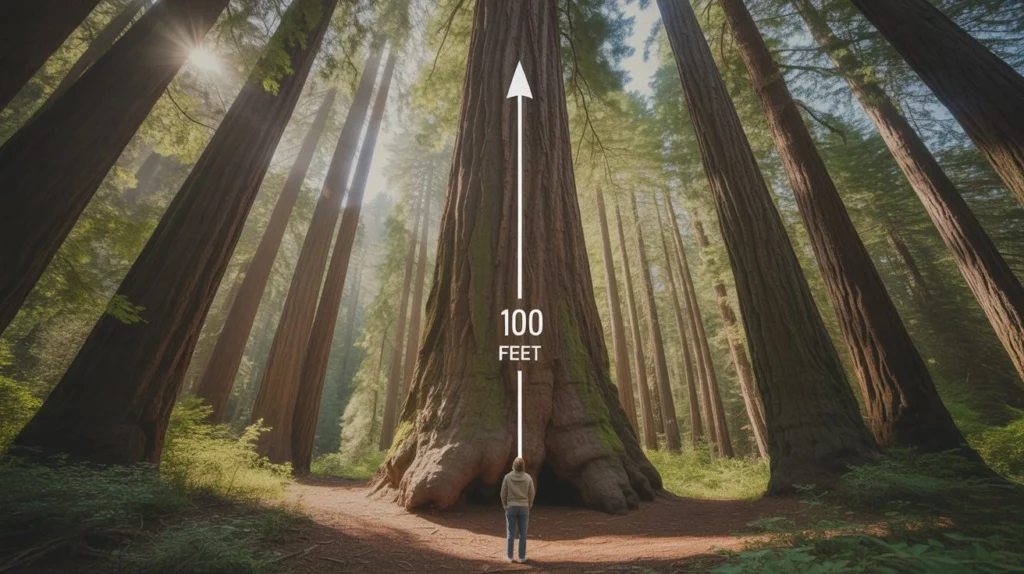
Fully grown coast redwood trees can exceed 300 feet, but younger mature specimens frequently measure near 100 feet. Large oak and pine trees also commonly reach this height across forests in the Pacific Northwest and the American South.
Arborists use 100 feet as a significant growth milestone when assessing timber value, habitat impact, and tree removal risk near structures.
Regulation Basketball Court (Almost)

An NBA regulation basketball court measures 94 feet in length — just 6 feet short of 100. Add a few steps beyond the baseline and you are at exactly 100 feet.
This makes the basketball court one of the most practical and familiar size references for athletes, coaches, and sports fans. You have likely walked this distance hundreds of times without realizing it.
Standard Bowling Lane With Approach
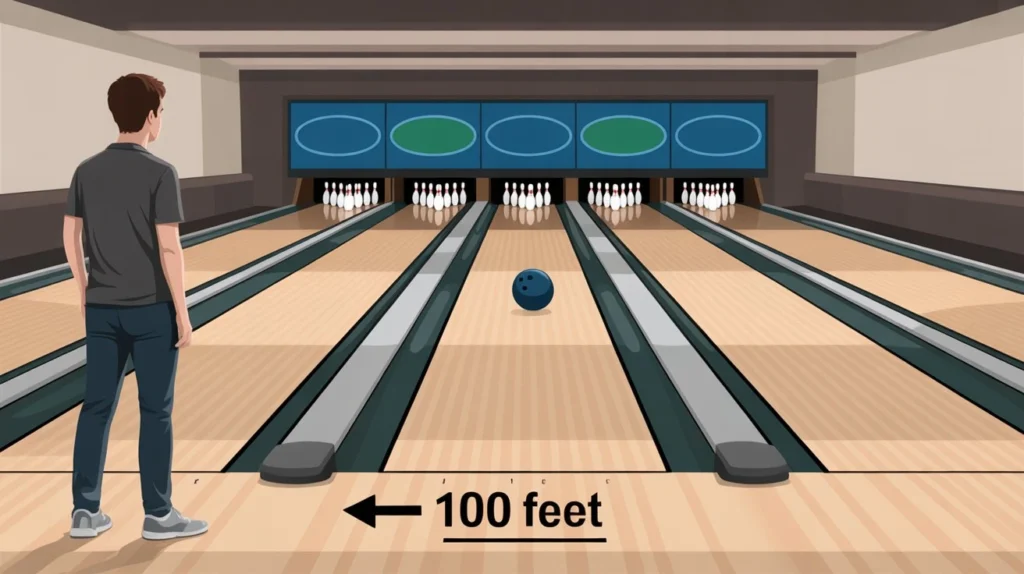
According to the United States Bowling Congress (USBC), a regulation tenpin bowling lane measures 62.85 feet from foul line to the headpin. Add the 15-foot approach area behind the foul line plus the pin deck and equipment space and the total reaches close to 100 feet.
Every bowling alley in America follows these dimensions. The full lane setup from back wall to pin deck gives you a consistent 100-foot reference inside a familiar recreational space.
Seven Standard Cars End-to-End
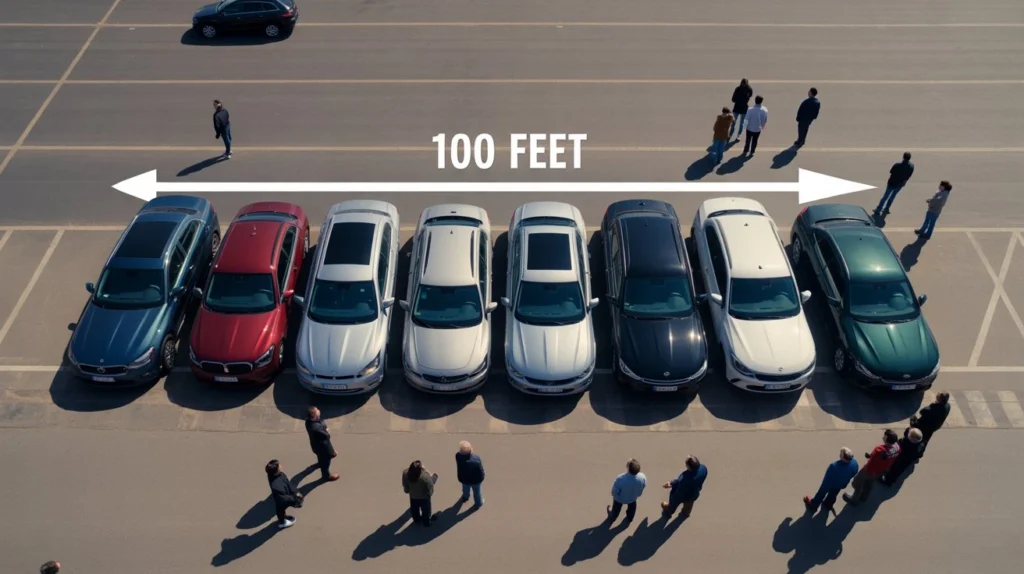
The average American sedan measures 14 to 16 feet in length. Line up six to seven cars bumper-to-bumper in a parking lot and you cover approximately 100 feet.
This is one of the easiest everyday references. Parking lots present this visual constantly. Seven cars in a single row equals 100 feet of horizontal distance.
Large Luxury Yacht
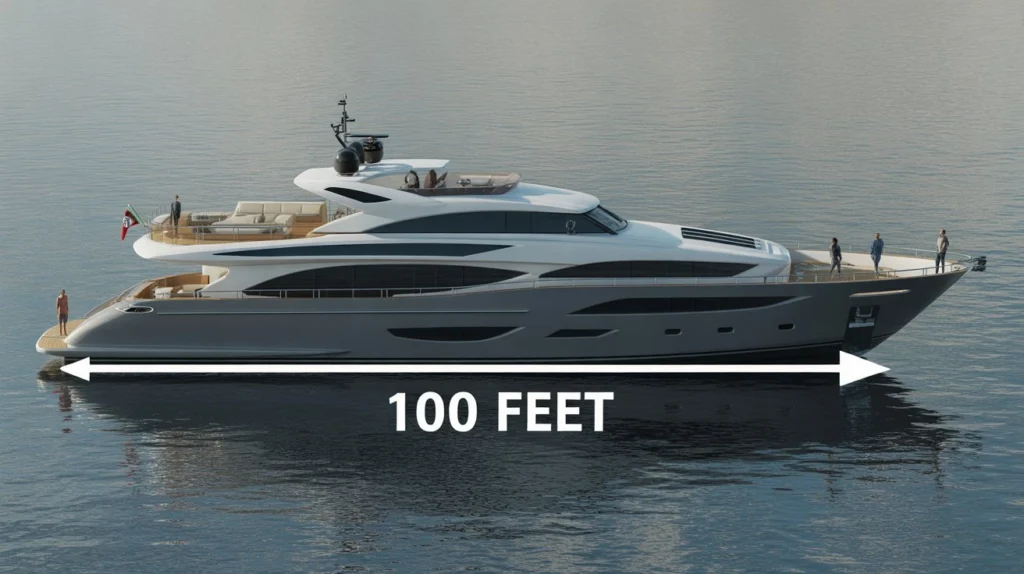
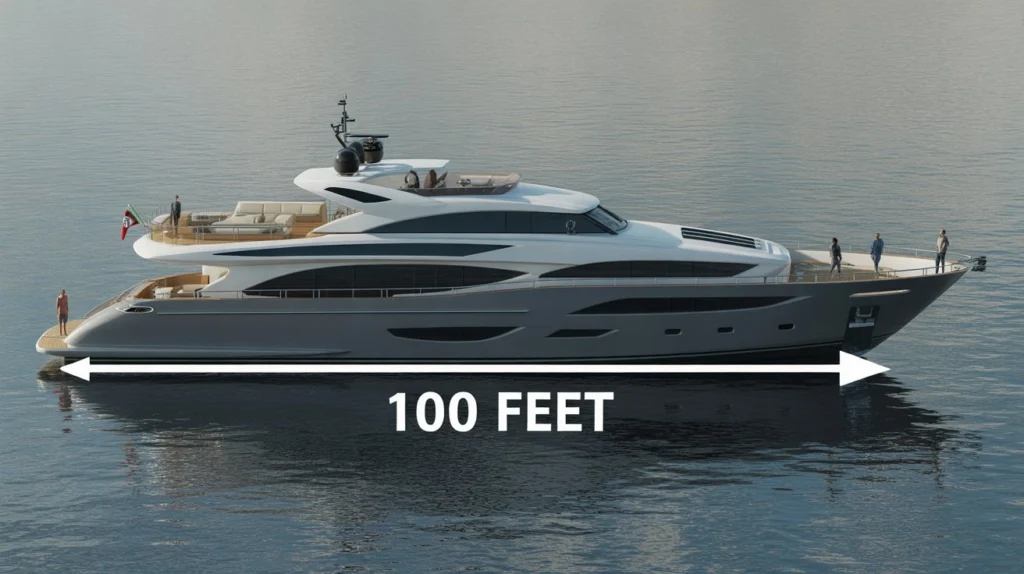
Mid-size ocean-going luxury yachts typically measure between 80 and 120 feet, making 100 feet a benchmark length in the superyacht industry. A 100-foot yacht requires a professional crew, specialized marina slips, and significant maritime certification.
These vessels carry multiple decks, sleeping cabins, full kitchens, and entertainment areas — all packed into that 100-foot hull length.
Fire Truck With Aerial Ladder Extended
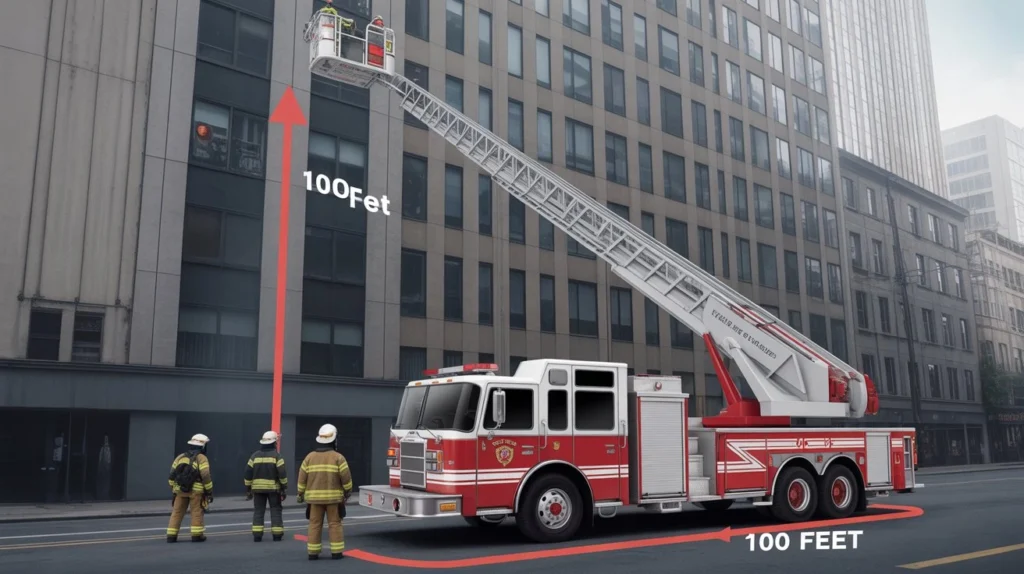
Aerial ladder fire trucks used by urban fire departments carry ladders that extend between 75 and 100 feet when fully deployed. A 100-foot extension reaches the upper floors of a 10-story building — precisely matching the height standard for mid-rise rescue operations.
U.S. fire codes in many cities require aerial access to buildings within a certain height range. The 100-foot ladder truck is one of the most critical pieces of urban emergency equipment.
Semi-Truck With Full Trailer
A standard semi-truck tractor measures 20 to 25 feet. The USDOT-regulated maximum trailer length is 48 feet, though 53-foot trailers are widely permitted. Combined, the rig stretches 70 to 78 feet. Longer combination vehicles and double-trailer configurations approach or exceed 100 feet.
Highway drivers encounter these vehicles daily on U.S. interstates. The full rig is a reliable 100-foot benchmark for horizontal distance estimation.
Municipal Water Tower

Smaller community water towers across the United States typically stand between 80 and 120 feet tall, with 100 feet being a common standard height. Engineers design water towers at this elevation to generate enough water pressure to serve surrounding neighborhoods without additional pumping.
These towers are visible landmarks in towns and suburbs. Their height is not aesthetic — it is a calculated engineering requirement tied directly to water pressure physics.
Coastal Lighthouse
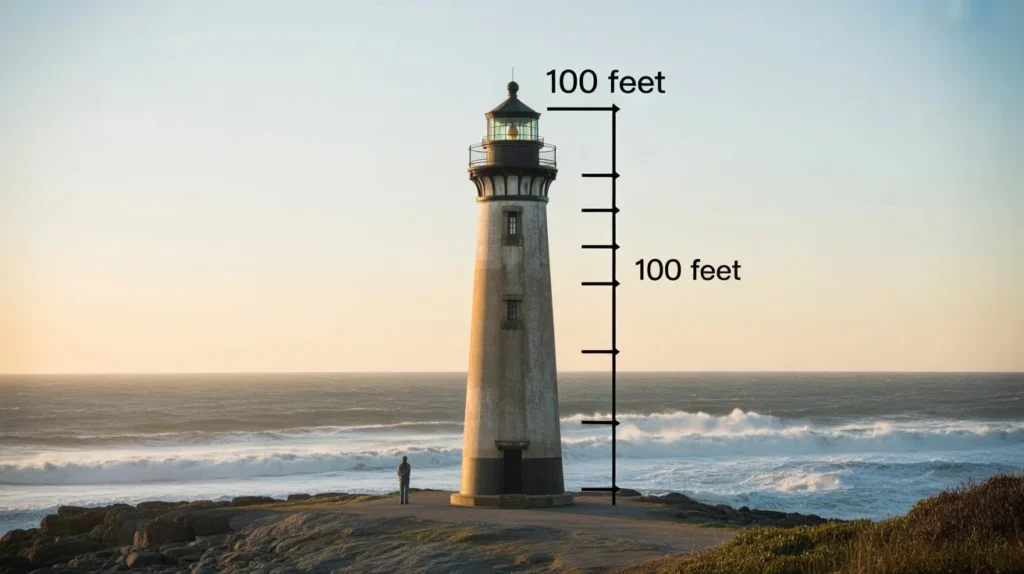
Many historic U.S. coastal lighthouses measure around 100 feet tall. Cape Hatteras Lighthouse in North Carolina — the tallest brick lighthouse in the U.S. at 198 feet — dwarfs this scale, but thousands of smaller operational lighthouses across the Atlantic and Pacific coasts stand near the 100-foot mark.
Lighthouse height is determined by the elevation needed for the beam to reach ships at a safe distance offshore. A 100-foot tower provides reliable visibility for coastal navigation.
Wind Turbine Tower
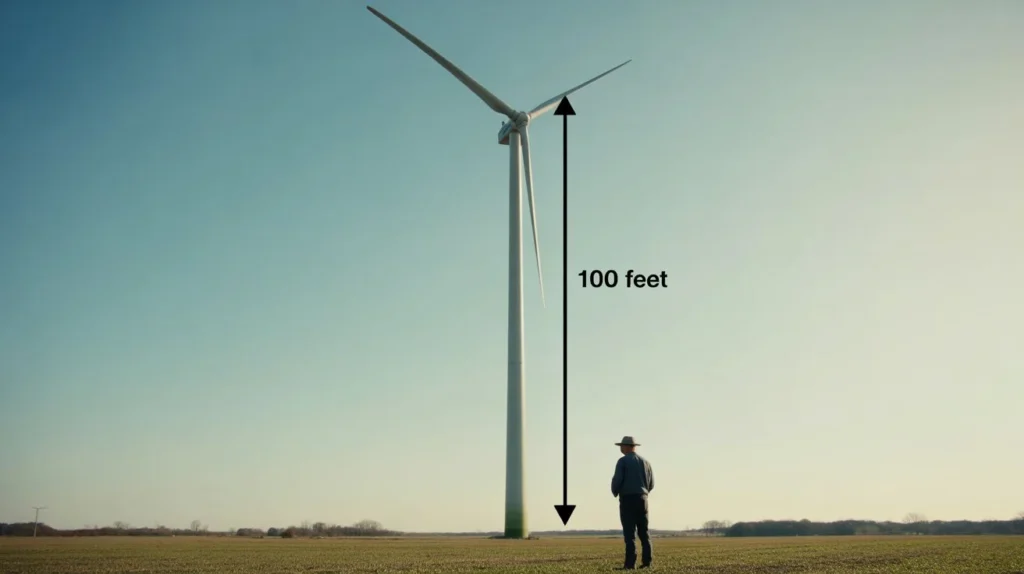
Smaller onshore wind turbines, common in community and agricultural installations, have towers that rise approximately 100 feet before the rotor hub begins. Larger utility-scale turbines go much higher, but the 100-foot class turbines serve rural American farms and smaller energy cooperatives.
This measurement matters because tower height directly determines wind energy output. Higher towers access stronger, more consistent wind currents above ground-level turbulence.
Mexican Fan Palm Tree
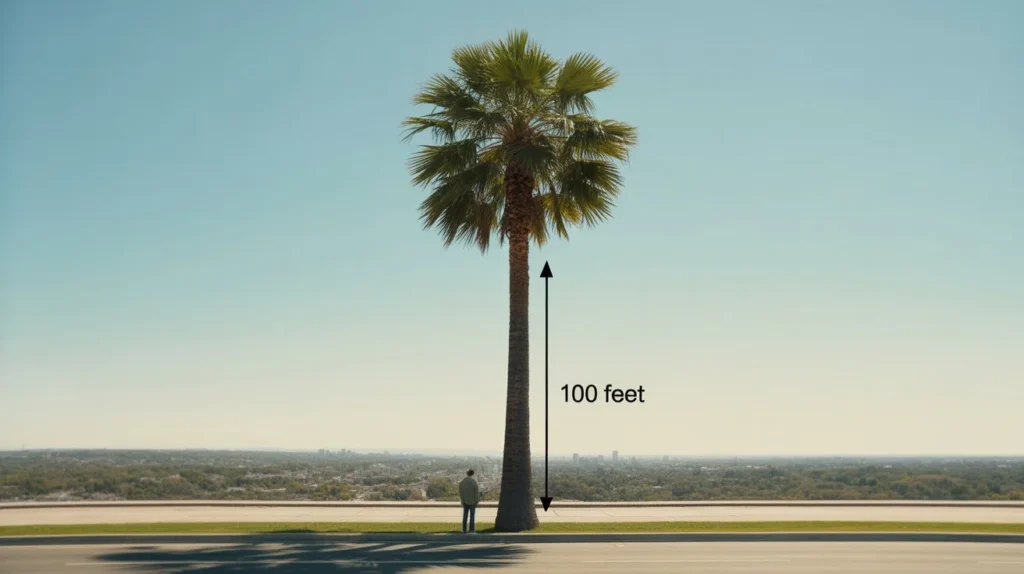
The Mexican fan palm (Washingtonia robusta) is one of the fastest-growing palm species and routinely reaches 100 feet in warm urban climates. These trees are iconic along boulevards in Los Angeles, Miami, and Phoenix.
Their tall, slender trunks with crowns high above the ground create a clean vertical line that makes height easy to read — making them an excellent natural reference for 100 feet.
Industrial Warehouse Width
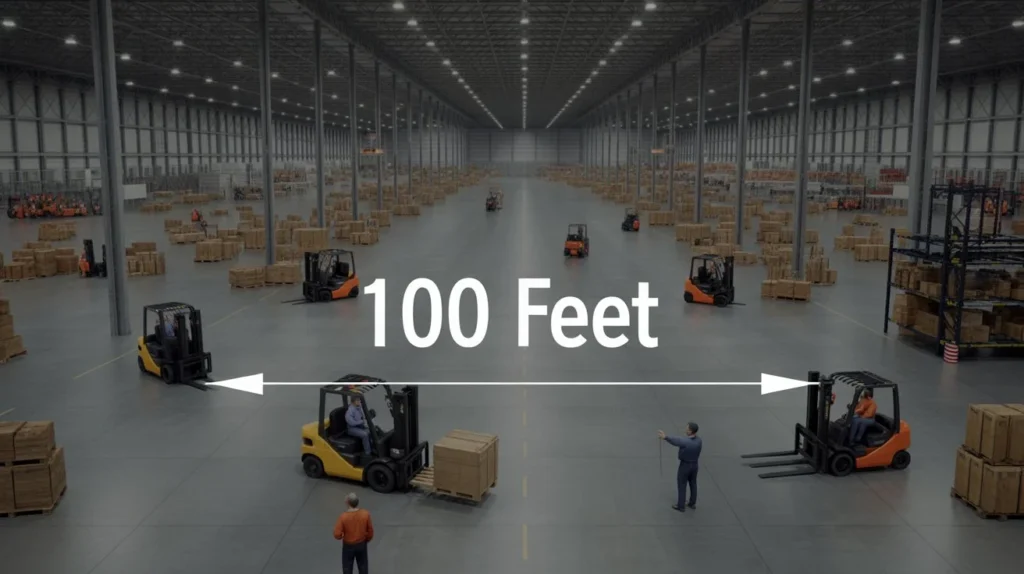
Standard large-format distribution warehouses and fulfillment centers in the U.S. are often designed in 100-foot wide modules. This width accommodates double rows of shelving, forklift corridors, and dock door spacing.
Walking across the open floor of an empty 100-foot-wide warehouse is a surprisingly effective way to feel the true scale of this measurement horizontally.
Statue of Liberty Without the Pedestal
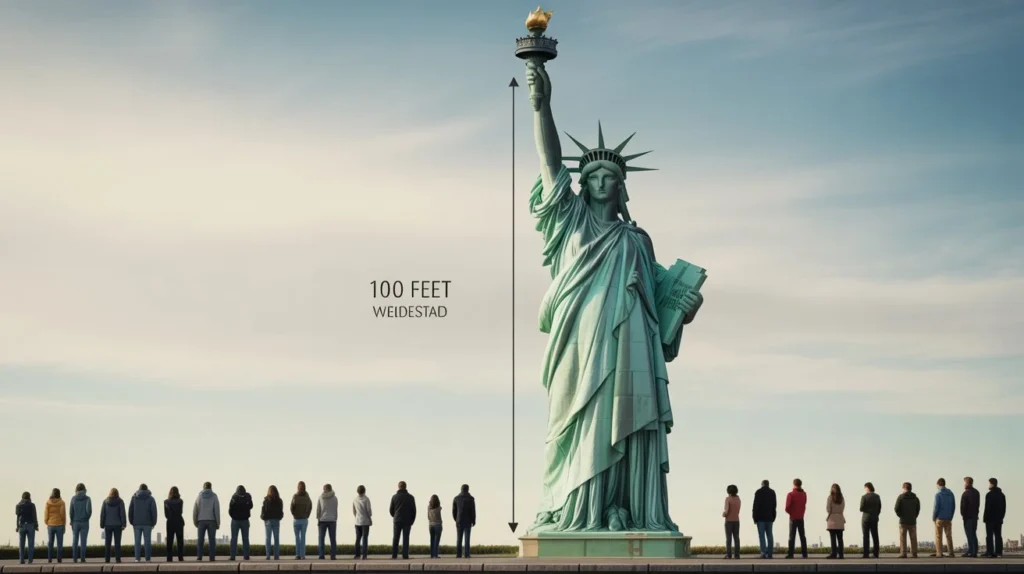
The Statue of Liberty herself — from heel to torch — measures approximately 111 feet tall. That puts her just slightly above the 100-foot mark. Without her pedestal, she would still tower over most nearby structures on Liberty Island.
She remains one of the most recognizable scale references in American culture and a powerful visual anchor for understanding 100-foot height.
Construction Crane Boom
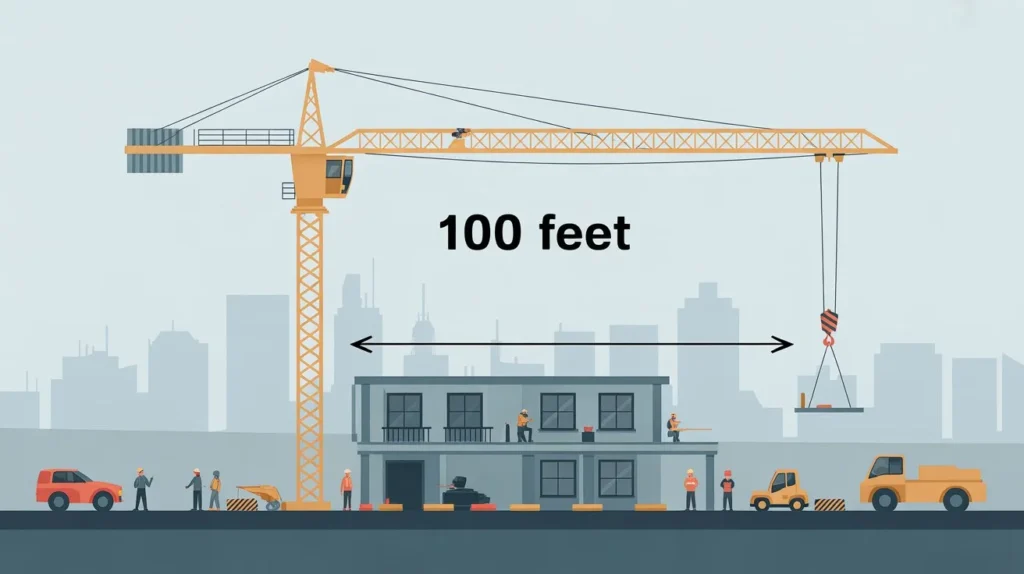
Tower cranes and mobile cranes used in mid-rise urban construction commonly operate with booms extending 80 to 100 feet. The boom length determines how far the crane can reach horizontally from its mast or base.
In major U.S. cities, you can watch these cranes operating overhead on new building projects. The fully extended boom gives a live, real-time demonstration of 100 feet in the air.
Niagara Falls — American Falls Height
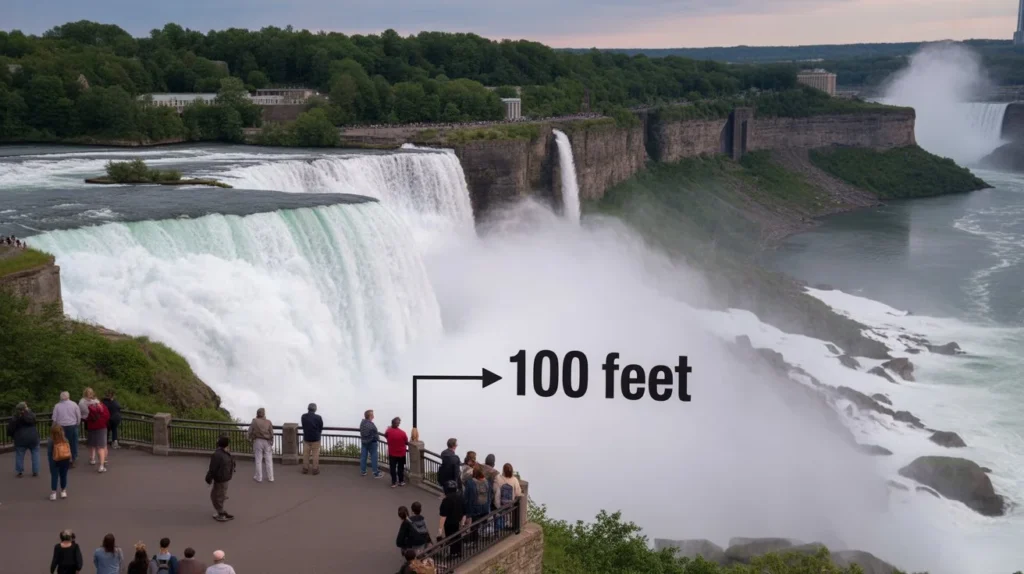
The American Falls section of Niagara Falls drops approximately 70 to 110 feet, with the central crestline measuring close to 100 feet. This is one of the most visited natural landmarks in the United States and a dramatic, real-world height reference that most competitors overlooked.
Standing at the observation deck and looking across to the falls gives you an immediate, visceral sense of what 100 feet of vertical drop truly looks like.
U.S. Government Flagpole

Standard government, military, and institutional flagpoles across the United States are commonly installed at 80 to 100 feet tall. The 100-foot flagpole is a specific regulated size used at federal buildings, military bases, and state capitols to ensure national and state flags are visible from a significant distance.
You walk past these poles regularly without registering their height. They are a quiet, everyday reference for 100 feet hiding in plain sight.
Space Shuttle External Fuel Tank

The NASA Space Shuttle External Tank measured 153.8 feet in length — but the liquid hydrogen tank section alone, which made up the majority of the structure, spanned close to 100 feet. It was the only part of the Space Shuttle stack that was not reused after each mission.
Full-scale replicas are on display at the Johnson Space Center in Houston and the California Science Center in Los Angeles, offering a direct encounter with this measurement.
Brachiosaurus — Full Body Length
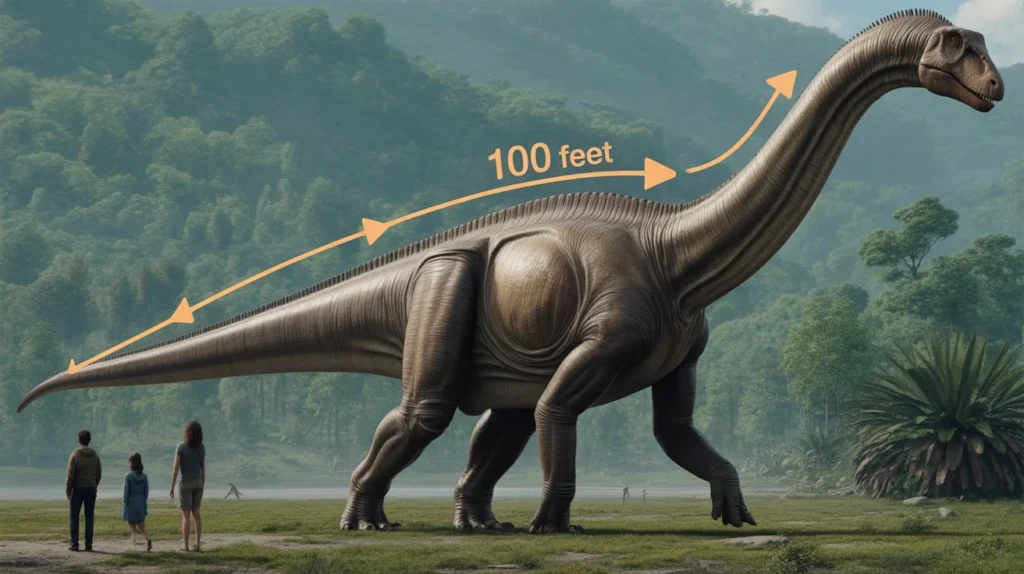
The dinosaur genus Brachiosaurus reached an estimated 85 to 100 feet in total body length from snout to tail tip. A resin cast of an original specimen is displayed at O’Hare International Airport in Chicago.
This prehistoric scale reference connects 100 feet to the natural world in a way that captures attention — especially for younger audiences trying to build spatial awareness.
Baseball Diamond — Home to Second Base
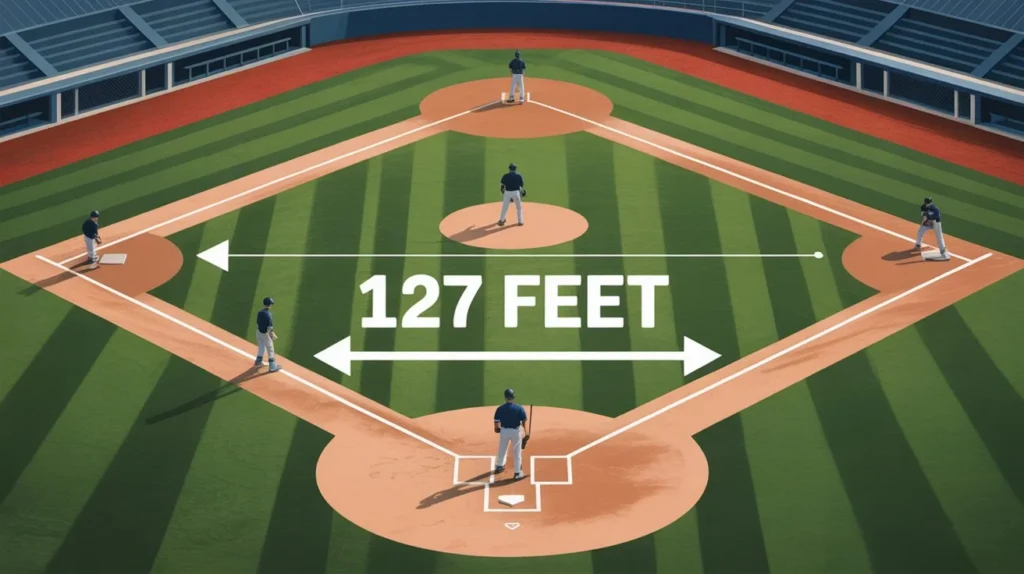
According to MLB Official Baseball Rules, the distance between baseball diamond bases is 90 feet. The diagonal distance from home plate to second base, however, measures approximately 127 feet — and from first base to third base the same. The side-to-side width of the infield square sits at exactly 90 feet per baseline, putting it just under the 100-foot mark.
Baseball fields are standardized worldwide. This makes them one of the most reliable sports references for understanding measurements in the 90-to-100-foot range.
A Cricket Pitch Plus Outfield Buffer
Per the Marylebone Cricket Club (MCC) and International Cricket Council regulations, a cricket pitch measures exactly 66 feet from bowling crease to bowling crease. Adding the run-up areas and outfield buffer zones behind each wicket brings the total playing corridor close to 100 feet.
For American audiences, this reference adds international context and connects a globally played sport to the 100-foot scale.
Ha’Penny Bridge, Dublin — Two-Thirds Comparison
The Ha’Penny Bridge in Dublin, Ireland measures 141 feet in total span. Two-thirds of that bridge equals almost exactly 100 feet. Over 30,000 pedestrians cross it daily, making it a highly trafficked real-world reference.
Understanding landmark comparisons like this helps readers build mental size libraries that work across contexts — not just domestic ones.
Nelson’s Column, London — 60% Height
Nelson’s Column in Trafalgar Square, London stands 169 feet from the pedestal base to the top of the statue’s hat. One hundred feet represents about 60% of the column’s total height — roughly at the level of Admiral Nelson’s feet.
Global landmark comparisons strengthen topical authority and give USA readers international scale context.
100-Foot Measuring Tape Fully Extended
The most literal example. A standard 100-foot steel measuring tape — the kind used by professional surveyors, contractors, and landscapers — stretched end-to-end across a flat surface is the most honest demonstration of this distance.
When professionals extend this tape during property surveys or foundation marking, people nearby almost always remark that it looks longer than they expected. That reaction captures exactly why these visual comparisons matter.
De Gooyer Windmill, Amsterdam
The tallest windmill in Amsterdam, De Gooyer (a.k.a. De Funenmolen), stands 89 feet tall in structural height, with sail spans of about 59 feet. It sits just below the 100-foot mark — making it a useful near-miss comparison reference for understanding the scale.
This historic 18th-century structure has been relocated twice across Amsterdam and now stands near the Oostelijk Havengebied harbor district.
Must Visit: 25 Common Things That Are 15 Inches Long (Real-Life Size Examples)
How to Visualize 100 Feet Without a Measuring Tape
You do not need equipment to estimate 100 feet. These practical methods work anywhere.
Count 40 steps. An average adult step covers about 2.5 feet. Forty steps in a straight line equals approximately 100 feet.
Line up seven cars. A standard sedan is 14 to 16 feet long. Seven vehicles parked bumper-to-bumper in a parking lot equals about 100 feet.
Use a football field. Walk from the goal line to the 33-yard line. That one-third of the playing field equals exactly 100 feet.
Count ten building floors. Look at any commercial building and count ten stories up from street level. That height is approximately 100 feet.
Time your walk. Walk at a normal, relaxed pace for 33 to 40 seconds in a straight line. That distance equals roughly 100 feet.
Where 100 Feet Matters in Real Life (USA Context)
This measurement is not just a trivia number. It shapes real decisions across multiple industries in the United States.
Building codes and zoning. Many U.S. municipalities set 100 feet as a maximum building height for mid-rise zoning districts. This controls density, preserves sight lines, and manages infrastructure load.
Fire safety clearances. The NFPA and local fire codes frequently reference 100-foot setbacks for fire apparatus access lanes and aerial ladder deployment zones around buildings.
FAA drone regulations. The FAA requires recreational drones to fly below 400 feet in most airspace. The 100-foot mark is a common informal guideline for low-altitude operations near structures and trees.
Real estate and lot dimensions. Standard residential lots in many American suburbs are listed with 100-foot frontage or depth. Understanding this measurement helps buyers and sellers evaluate yard space and development potential accurately.
Emergency response planning. Incident commanders use 100-foot perimeters as initial staging zones for hazmat responses, structural collapses, and active fire events in urban settings.
Sports facility design. Court lengths, field widths, and pool dimensions are all engineered around standardized measurements that fall near the 100-foot mark. These standards ensure fair play across all competitive levels.
FAQs About 100 Feet
How much is 100 feet visually?
One hundred feet visually equals the height of a 10-story building, the length of seven standard cars parked end-to-end, or one-third of an American football field. Standing at ground level and looking straight up at a 10-story structure gives the clearest visual anchor for this measurement.
How many stories tall is 100 ft?
One hundred feet equals approximately 10 stories in a standard commercial building. This assumes each floor measures about 10 feet, including ceiling height and structural floor thickness. Residential buildings with 9-foot ceilings would have about 11 stories in the same height.
How many car lengths is 100 ft?
One hundred feet equals approximately 6 to 7 car lengths depending on vehicle size. A compact car at 12 to 14 feet gives you 7 to 8 vehicle lengths. A mid-size sedan at 15 to 16 feet gives you roughly 6 to 7 lengths bumper-to-bumper.
How many school buses equal 100 feet?
A full-size school bus measures approximately 35 to 40 feet in length. That means two and a half school buses placed end-to-end equal roughly 100 feet. Two full buses reach 70 to 80 feet. Adding a half-bus covers the remaining distance.
How tall is a 72-passenger school bus?
A standard 72-passenger full-size school bus stands approximately 6 feet tall from ground to roofline — excluding any rooftop vents or emergency hatches. These Type C and Type D buses follow federal FMVSS school bus safety standards.
How tall is a bus?
A standard American city transit bus measures approximately 10 to 11 feet in height. Double-decker buses used in some U.S. cities and heavily on overseas routes stand about 13 to 14 feet tall. School buses are slightly shorter at 6 to 7 feet. Coach and charter buses typically measure 11 to 12 feet in overall height.
Conclusion
One hundred feet shows up everywhere — in the buildings above you, the fields you play on, the vehicles on the highway, and the trees in your neighborhood. Once you connect this number to real, familiar objects, it stops being abstract.
Use these references the next time you need to estimate building heights, judge property dimensions, plan a project, or simply understand the scale of the world around you.
From a 10-story building to a blue whale to a luxury yacht, 100 feet is bigger than most people expect — and now you know exactly what it looks like.